
Beyond Sentiment: Why Social Topology is the "Silent Killer" of New Product Innovation
Social network structure-based framework for innovation evaluation and propagation for new product development
This paper proposes a social network structure-based framework for evaluating and propagating innovation in New Product Development (NPD). By integrating sentiment analysis with Influence Maximization (IM) models, the authors quantify the "budget" required to flip neutral/negative social opinions into positive acceptance for new product ideas.
TL;DR
In the world of New Product Development (NPD), sentiment analysis is no longer enough. This paper introduces a framework that doesn't just ask "Do people like this idea?" but "How much will it cost to make the entire network like it?" By combining deep learning-based sentiment extraction with the Linear Threshold Model of influence, the authors demonstrate that an idea's success depends less on its average rating and more on the structural position of its early adopters.
The "Loud Minority" Fallacy in Idea Screening
Most product designers use User Generated Content (UGC) to screen ideas. If the sentiment is positive, the project gets the green light. However, this method suffers from a fatal flaw: it ignores the passive nodes—the millions of potential customers who haven't spoken yet.
The authors argue that an individual's decision to adopt an innovation is heavily dependent on their peers. A single negative influencer in a high-degree "hub" position can kill a brilliant idea, while a mediocre idea might thrive if seeded correctly in a scale-free network.
Methodology: The Four Pillars of Innovation Propagation
The proposed framework moves beyond static evaluation into dynamic simulation.
1. Data Collection & Sentiment Extraction
Using Recursive Neural Tensor Networks (RNTN), the framework parses complex product reviews into five levels of sentiment. Unlike standard bag-of-words models, RNTN understands the structural logic of sentences, allowing for more accurate "seed" sentiment values.
2. Budget Approximation (The Technical Core)
This is where the magic happens. The authors utilize the Linear Threshold Model (LTM).
- The Logic: A node (user) becomes "active" (accepts the innovation) only if the weighted sum of its active neighbors exceeds a specific threshold (e.g., 50%).
- The Metric: "Budget" is defined as the minimum number of initial neutral nodes that must be "convinced" (targeted through marketing) to trigger a cascade that covers the whole network.
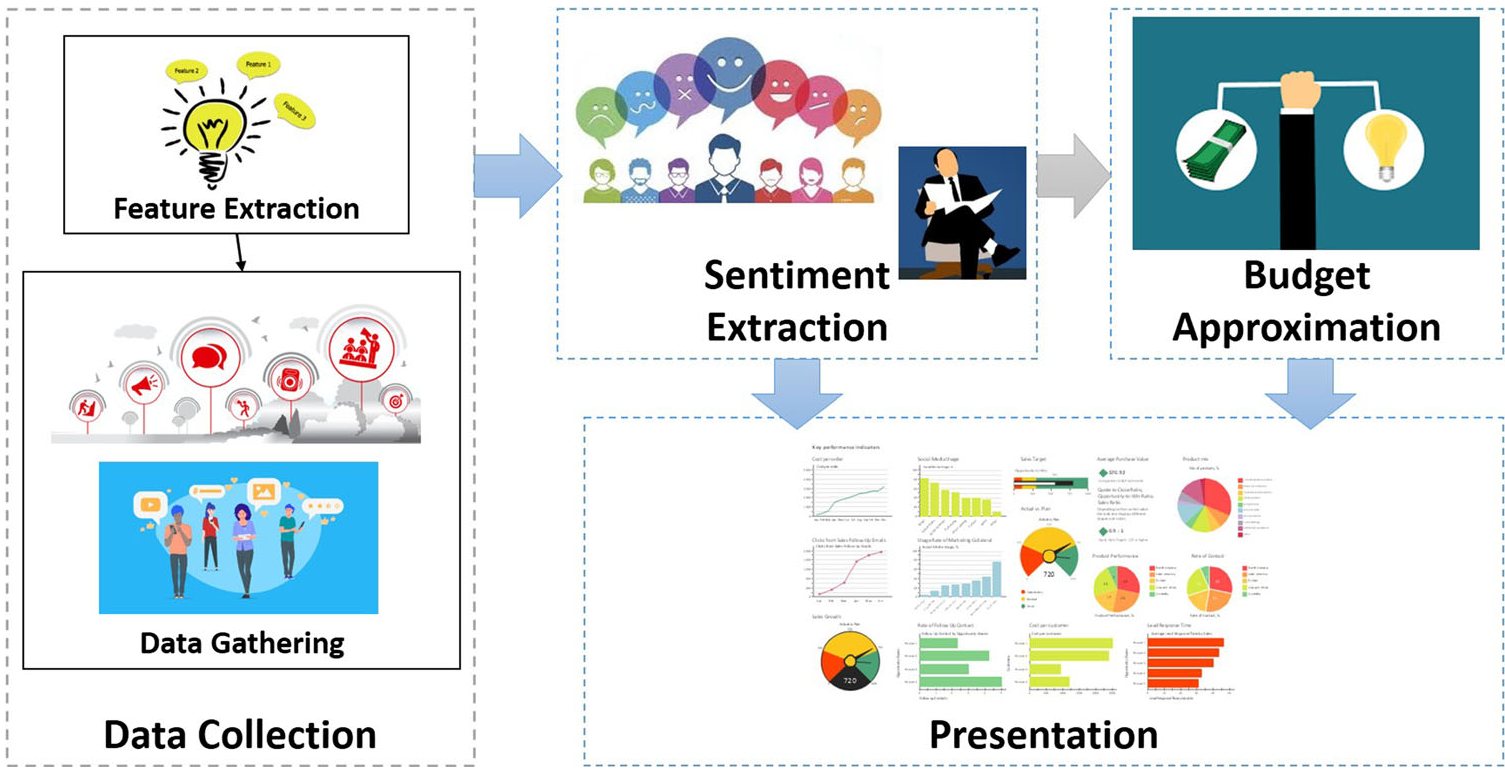 Figure 1: The Four-Component Framework for Innovation evaluation.
Simulation: Graph Topology Matters
The researchers tested the framework across four types of social structures:
- Complete Graphs: Everyone knows everyone.
- Random Graphs: Connections are distributed evenly.
- Watts-Strogatz: Small-world networks with high clustering.
- Scale-Free: Dominated by a few powerful "hubs."
Key Insight: The Hub Effect
In Scale-Free networks, the "MaxMin" strategy (targeting high-degree nodes) showed exponential efficiency. By activating just the top influencers, a positive opinion could sweep through 90% of the network with a budget of nearly zero. In contrast, in Watts-Strogatz networks, the high clustering actually hindered propagation because opinions got trapped in local "echo chambers."
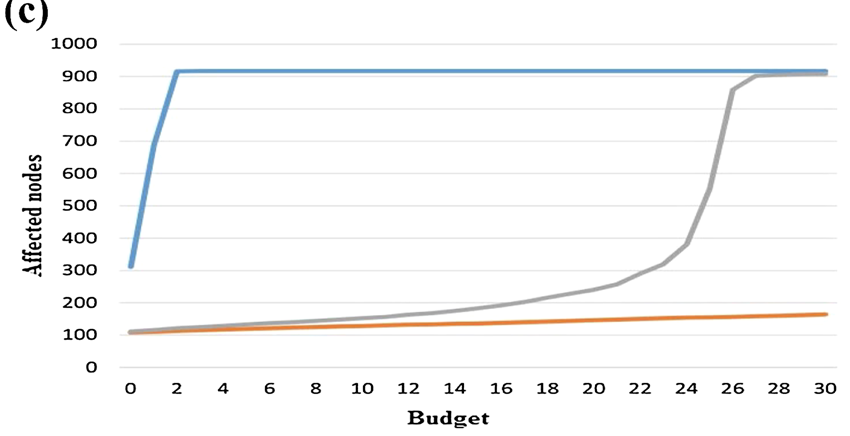 Figure 2: Comparative analysis of budget vs. influence across different graph topologies.
Results: A New Ranking for Innovation
The most striking result is found in Figure 11 of the paper. When comparing 23 innovative ideas:
- Idea 12 looked like the winner in simple random graphs.
- However, Idea 1 emerged as the superior choice in Scale-Free environments because it was perfectly positioned to "infect" the entire community, even if its initial sentiment was lower.
Professional Insight & Future Outlook
This work shifts the focus of NPD from Content to Context. It treats innovation not as an inherent property of a product, but as a contagion process.
Limitations: The current model assumes we know the social graph. In reality, product designers often only have partial data. Furthermore, the "cost" of changing a person's mind is treated as constant, whereas in the real world, "stubborn" nodes (detractors) are much more expensive to flip than neutral ones.
Final Takeaway: If you are a product manager, don't just look at your Net Promoter Score (NPS). Map your users. If your biggest fans are in "dead ends" of the social graph, your innovation is likely to fail—no matter how many stars the reviews have.