
Forensic Trust in Dishonest Networks: Detecting Selfish Behavior in Video Fingerprinting
Impact of Social Network Structure on Multimedia Fingerprinting Misbehavior Detection and Identification
This paper investigates "traitor-within-traitor" behavior in multimedia social networks, focusing on detecting selfish colluders who manipulate fingerprinted video copies to minimize their own risk. It proposes two forensic frameworks—Centralized and Distributed—to identify misbehavior while preserving anti-framing security, achieving high accuracy even under coordinated attacks.
TL;DR
In the "thieves among thieves" world of multimedia collusion, some attackers try to cheat their partners by pre-processing their videos to reduce their own risk. This paper introduces a robust forensic framework to identify these "selfish colluders" within video-sharing social networks, providing solutions for both centralized (ringleader-led) and distributed (peer-to-peer) architectures.
The Motivation: A Traitor Among Traitors
Digital fingerprinting allows content owners to trace illegal copies back to specific users. While colluders often band together to average out their fingerprints (diluting the risk), a new problem arises: The Selfish Colluder.
A selfish colluder might apply temporal filtering to their copy before the group collusion occurs. This lowers their own individual risk but disproportionately increases the risk for their partners. The challenge? Colluders cannot simply "check" each other's files because sharing raw copies allows a partner to frame them—a classic Catch-22 of forensic security.
Methodology: Mining the MSE Distribution
The authors' core insight is that any pre-collusion processing (like temporal interpolation) deviates from the host signal's expected statistical properties.
1. The MSE Metric
By calculating the distance between pairs of colluded copies, the researchers found that honest pairs follow a distinct distribution compared to pairs involving a selfish colluder.
- Honest-Honest pairs: Low distance (Sum of fingerprint energies).
- Honest-Selfish pairs: High distance (Sum of energies + host signal distortion).
2. Network Architectures
The paper proposes different solutions based on the social structure:
- Centralized: A trusted ringleader acts as a "clearing house," decrypting copies and broadcasting the distance histograms.
- Peer-Structured: Since no one is trusted, users are split into subgroups. "Assistants" from one group help calculate distances for the other using additive noise to mask the actual content.
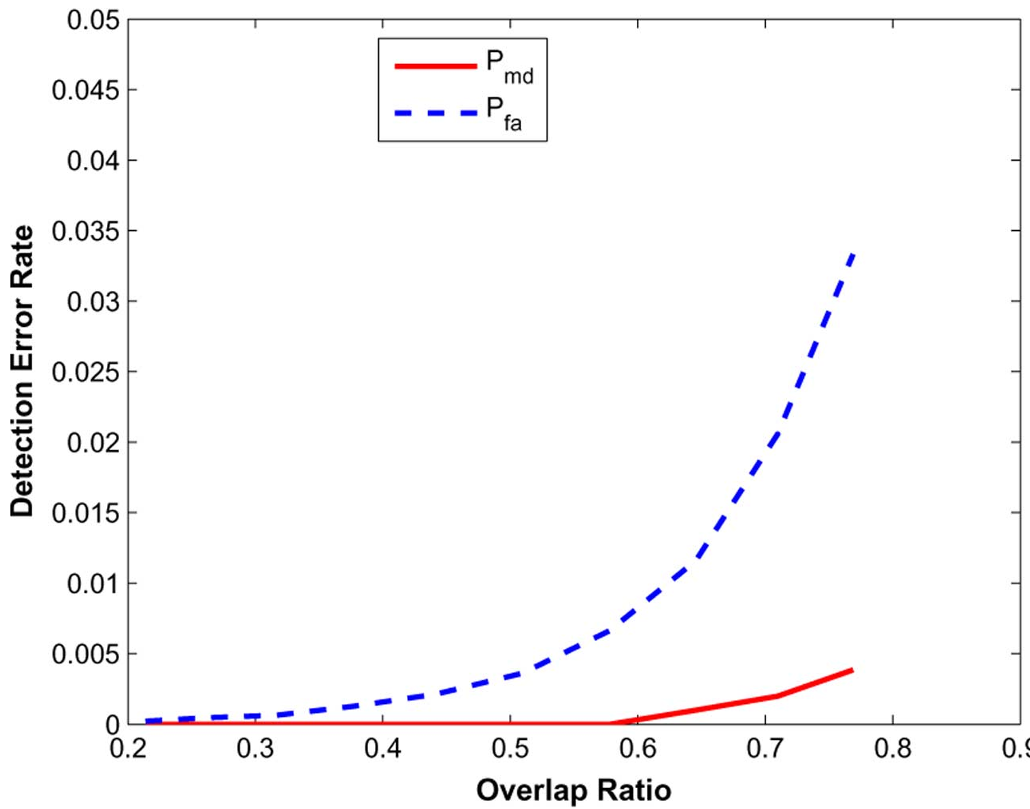 Figure 1: Protocol for calculating distance between peer copies without exposing raw data.
Experiments & Critical Results
The effectiveness is visualized through the bimodality of the MSE histogram. When a selfish colluder is present, the histogram splits into two clear peaks.
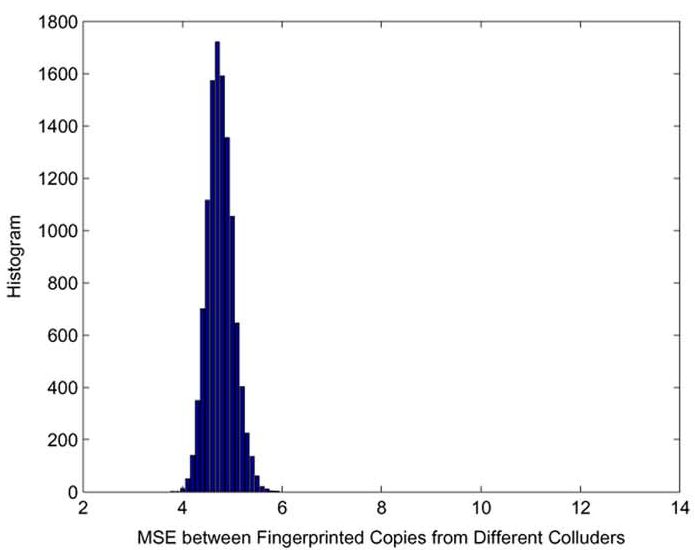 Figure 2: Histogram showing the separation of distributions when a selfish colluder is present.
- Accuracy: The system accurately identifies traitors even when the two distributions overlap by as much as 75%.
- Robustness: In the distributed mode, the authors used a Majority Vote system among multiple assistants. This prevents a small clique of selfish colluders from lying about the distance results.
- Anti-Framing: By shuffling vectors and only sending partial content to assistants, the paper proves that even if 5% of users are malicious "framers," they can never reconstruct enough of a victim's copy to frame them.
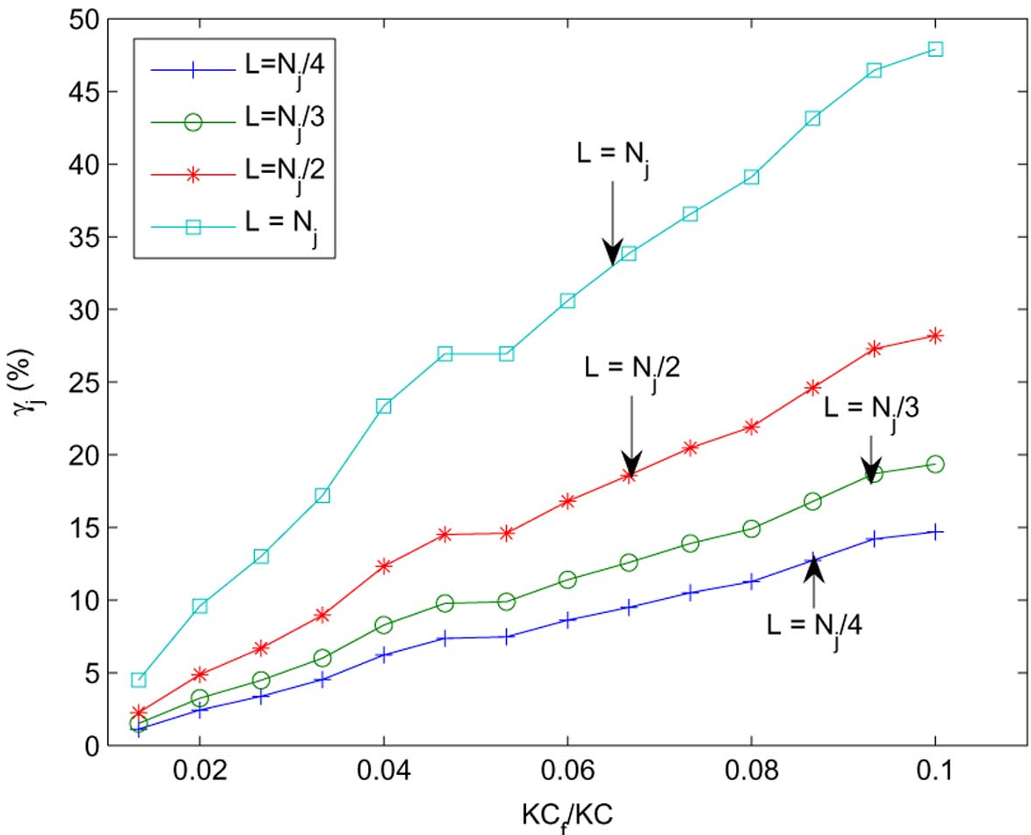 Figure 3: Quantification of framing resistance relative to the number of malicious nodes.
Deep Insight & Conclusion
The brilliance of this work lies in its recognition that forensics is a social problem as much as a mathematical one. By shifting the focus from "content protection" to "behavioral monitoring," the authors provide a mechanism to stimulate cooperation in environments where trust is naturally absent.
Limitations: The current model assumes colluders have similar channel quality (SNR). If one user is on a "lossy" connection while others are not, the system might mistake network packet loss for intentional pre-collusion tampering.
Future Outlook: This framework sets the stage for "Cheat-Proof" social protocols, potentially applicable beyond video fingerprints to decentralized finance (DeFi) or federated learning, where verifying the integrity of a peer's contribution is paramount.