
KIOM Social Network: Building a Semantic Bridge for Oriental Medicine Researchers
A Social Network System Based on an Ontology in the Korea Institute of Oriental Medicine
The paper proposes a specialized Semantic Social Network for the Korea Institute of Oriental Medicine (KIOM), utilizing OWL and FOAF ontologies. It aims to revitalize Korean Medicine research by enabling intelligent collaborator discovery and secure information sharing among institutional researchers.
TL;DR
Researchers at the Korea Institute of Oriental Medicine (KIOM) have developed a Semantic Social Network by combining OWL (Web Ontology Language) and FOAF (Friend of a Friend). Unlike generic social media, this system uses ontological reasoning to automatically discover experts, mentors, and hidden professional circles, specifically tailored for the highly specialized field of Korean Medicine.
Background & Motivation: Beyond the "Like" Button
In the academic world, professional networking is more than just "following" someone. It involves complex hierarchies, such as the relationship between a doctoral advisor and a student, or the nuanced collaboration between a primary investigator and a contributing researcher.
The authors identified that existing platforms (Google OpenSocial, Facebook F8) focus on horizontal connectivity but fail to understand the semantic depth of research collaboration. Furthermore, the openness of the internet prevents researchers from sharing private, high-value research results. The KIOM system solves this by creating a closed, secure, and semantically-aware environment.
Methodology: The Architecture of Scientific Connections
The backbone of the system is a multi-layered ontology that aligns with the SUMO (Suggested Upper Merged Ontology). This ensures that the data is not just a flat list but a structured hierarchy of "Physical" agents (people) and "Abstract" entities (experiences, attainments).
1. Modeling with FOAF and OWL
By using FOAF, the KIOM network remains compatible with the wider Semantic Web. However, the use of OWL allows for intelligent inference. For example, the system distinguishes between "Institute Personnel" and "External Personnel," applying different property constraints to each.
2. Capturing Sequence in Collaboration
A critical technical detail is the use of rdf:Seq. In research papers and patents, the order of authors matters immensely (e.g., 1st author vs. corresponding author). Standard RDF is unordered; using rdf:Seq allows the system to recognize who led a study, which is vital for the "Mentor Relationship" inference.
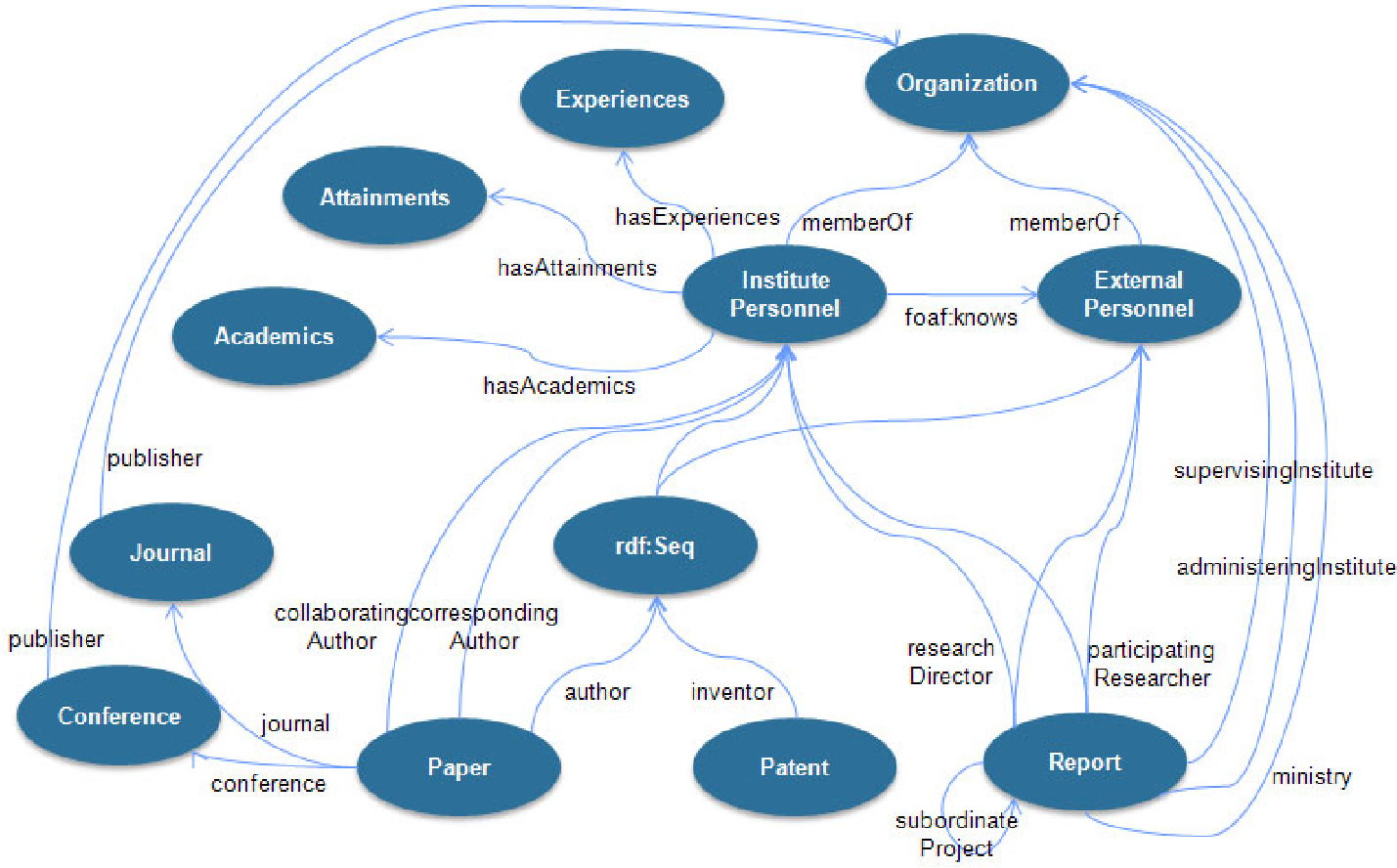 Figure 1: Relationship between core classes in the KIOM social network ontology.
The Power of Inference: Finding the "Hidden" Mentor
One of the most impressive features of this system is its ability to derive new knowledge from existing data points. The authors define several types of "Relationship Inferences":
- Expert Discovery: Matches keywords from patents, papers, and majors to find the most relevant expert on subjects like "Ginseng," while weighting recent publications more heavily.
- Mentor Relationship: Automatically identifies potential mentors by looking for researchers who hold senior positions (Team Leader) or served as the 1st/Corresponding author on papers where the user was a contributor.
- Personal Contact Logic: If two researchers share an academic advisor or worked at the same company simultaneously, the system infers a "senior-junior" or "intimate" relationship.
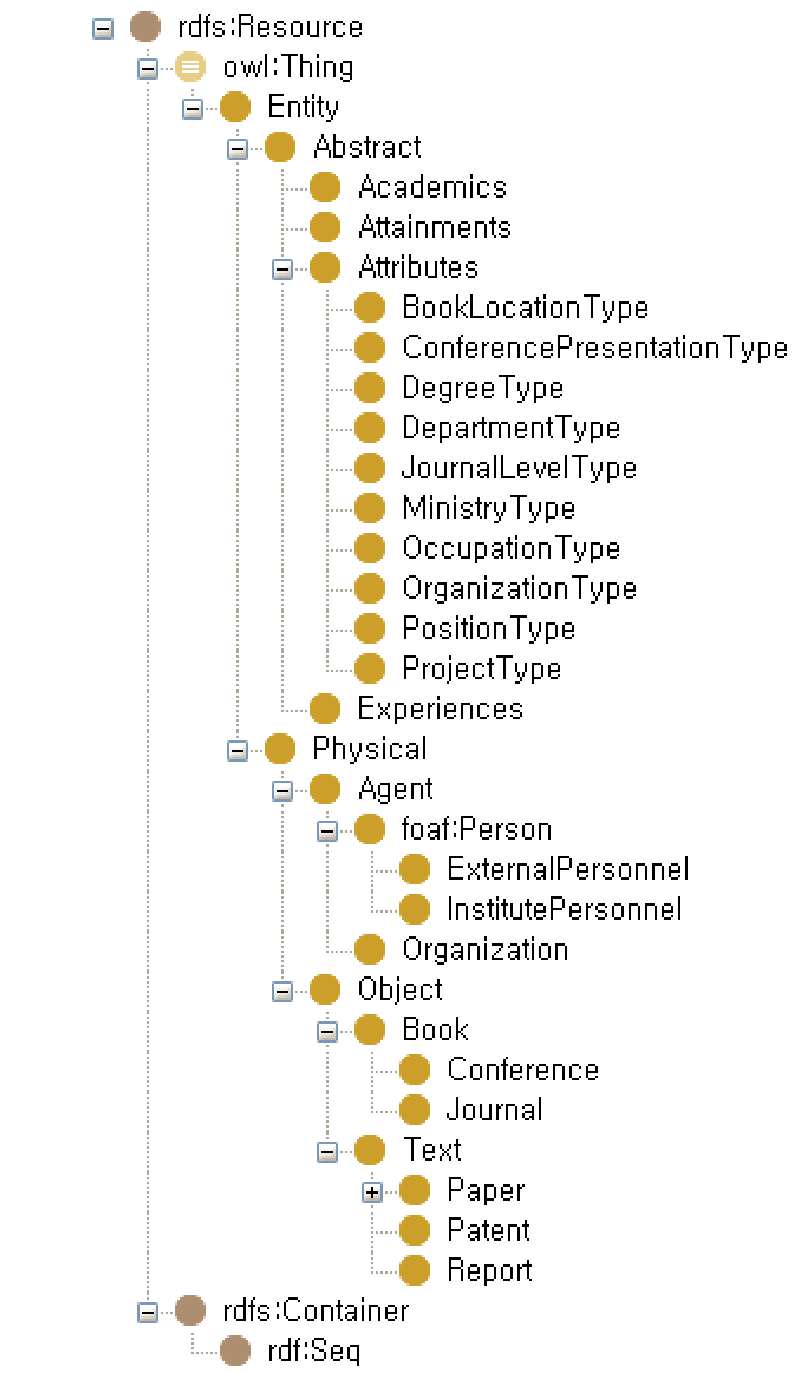 Figure 2: The class hierarchy as seen in TopBraid Composer, showing the integration of Abstract and Physical entities.
Experimental Analysis & Insights
The study demonstrates that a closed network is actually an advantage for institutional knowledge management. By limiting the scope to KIOM, the system can digest much more granular data—including private project reports and sensitive patent applications—that users would normally be hesitant to upload to a public SNS.
However, the authors honestly note a current limitation: the system is excellent at managing outgoing links (who the researcher knows) but lacks visibility into incoming links from the broader scientific community.
Critical Analysis & Future Outlook
The KIOM social network represents a significant shift from "Social Media" to "Knowledge Media." By moving beyond simple keyword matching and using ontological reasoning, it provides a blueprint for how research institutions can manage human capital.
Takeaway: The real value of AI in networking isn't just "connecting" people, but interpreting the nature of their connection.
Future Work: The authors plan to open the system to the entire Korean Medicine field after stabilizing the internal reasoning engine, potentially creating a national-scale knowledge graph for traditional medicine.
Disclaimer: This analysis is based on the paper "A Social Network System Based on an Ontology in the Korea Institute of Oriental Medicine" by Kim et al.