
Social Ties as a Safety Net: How Networking Hardens Teachers Against Job Insecurity
A social network theory perspective on how social ties influence perceived employability and job insecurity: evidence from school teachers
This study investigates how social network ties influence Perceived Employability (PEM) and Job Insecurity (JIS) among school teachers in Pakistan. Utilizing Social Network Theory (SNT), the researchers demonstrate that strong ties significantly boost PEM and reduce JIS, achieving a model that explains 35% of the variance in employability.
TL;DR
In the face of aggressive educational reforms, school teachers often feel the looming shadow of unemployment. This research explores how Social Network Theory (SNT) provides a blueprint for survival. By leveraging both Strong Ties (family/close friends) and Weak Ties (acquaintances), teachers can enhance their Perceived Employability (PEM), creating a psychological buffer that significantly reduces the fear of job loss.
Background & Motivation: The Reform Pressure
Globalization and "agentic career" paradigms have shifted the burden of career management from the organization to the individual. In Pakistan, recent government reforms have introduced performance-based promotions and restructuring, leaving many teachers feeling vulnerable. The authors argue that in such high-stakes environments, a teacher’s social capital is not just about "who you know" for a favor, but a structural mechanism for gathering information and securing professional transitions.
The Core Mechanism: Strong vs. Weak Ties
Drawing on Granovetter’s (1973) Social Network Theory, the study distinguishes between two types of social connections:
- Strong Ties: Highly emotional, frequent interactions (e.g., family). These provide redundant but reliable support.
- Weak Ties: Casual acquaintances or "friends of friends." According to SNT, these are the primary sources of novel information—the kind that helps you find a new job.
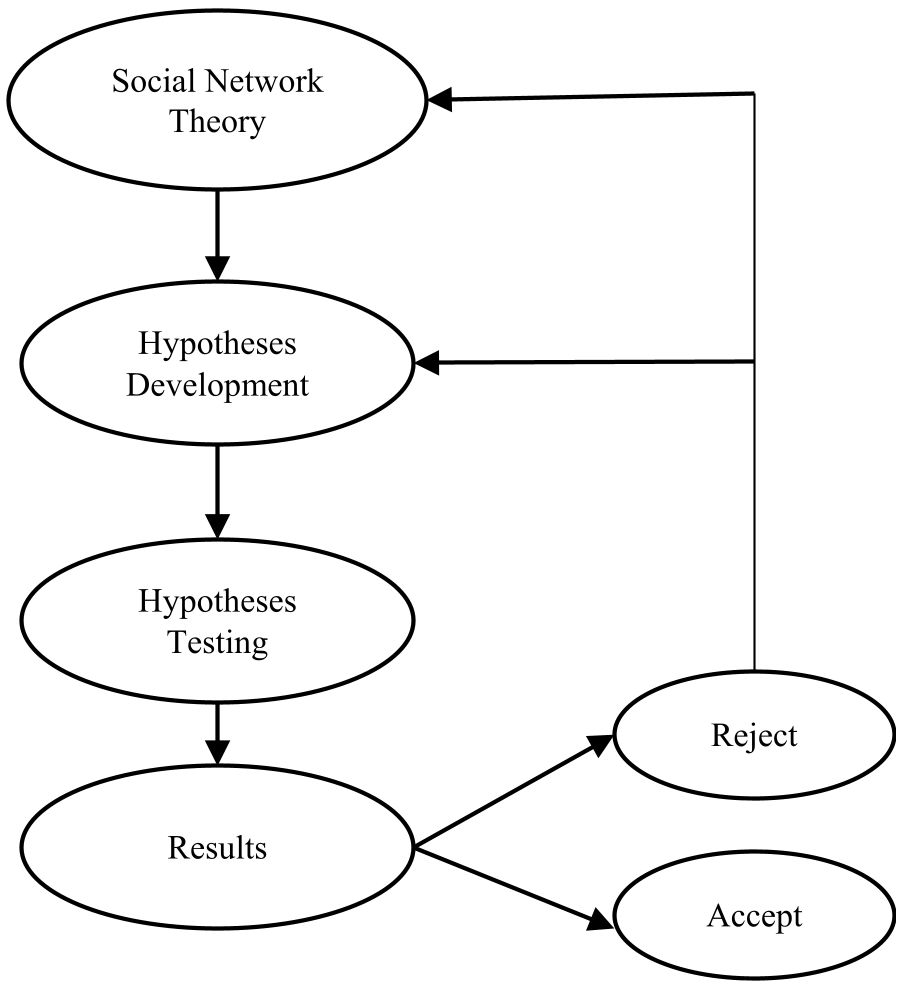
The authors proposed that these ties don't just reduce insecurity directly; they do so by making a teacher feel more "employable" in the open market.
Methodology: Testing the Social Fabric
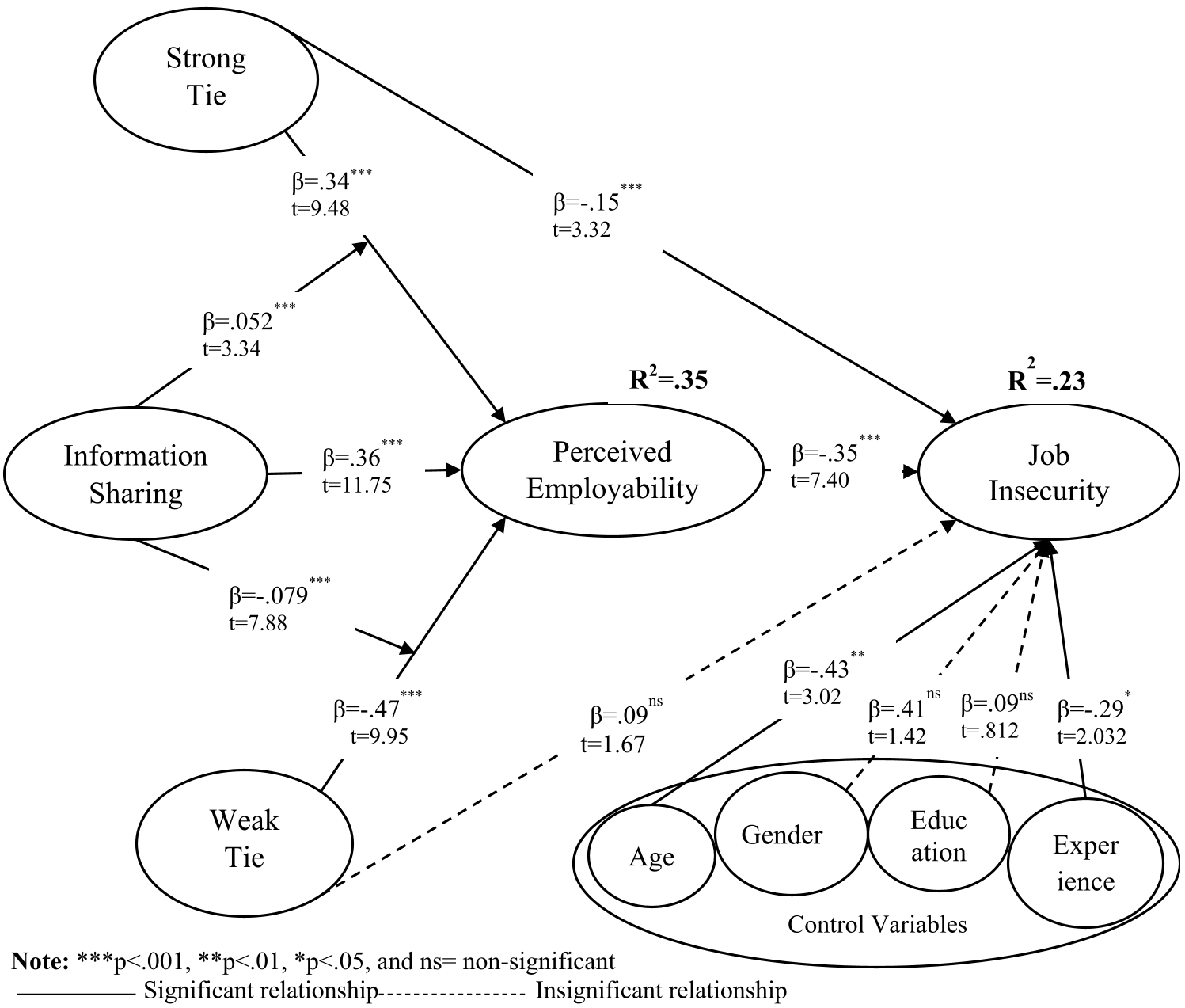
The researchers surveyed 571 teachers from government schools in Faisalabad. They used Structural Equation Modeling (SEM) to validate a complex path: Social Ties → Perceived Employability → Job Insecurity. They also looked at Information Sharing as a catalyst that could speed up this process.
Key Findings
- Strong Ties are Essential: Close relationships directly improved a teacher's sense of being employable (β = 0.34) and significantly lowered their anxiety about losing their current position.
- The Mediation Effect: Perceived Employability is the "bridge." Social ties alone aren't enough; they work by convincing the teacher that they have the skills and connections to find a job elsewhere, which makes their current job feel less precarious.
- The Moderation of Information Sharing: This was a critical insight. For weak ties to be effective, there must be a high level of information exchange. Without active sharing, weak ties can actually feel more like a source of uncertainty.
Deep Insight: Why Why This Matters for Policy
This study proves that networking is a survival strategy. For policymakers, the takeaway is clear: if you want a workforce that is resilient to change, don't just provide technical training. You must provide "community spaces" and networking opportunities. When teachers share information, their collective "Employability Capital" rises, reducing the paralyzing effects of job insecurity.
Limitations & Future Scope
While robust, the study is cross-sectional (a "snapshot" in time). Future research should utilize longitudinal data to see how networking helps teachers after they actually lose a job. Additionally, exploring digital networks (LinkedIn, specialized WhatsApp groups) could provide a more modern look at how "virtual ties" compare to traditional face-to-face social capital.
Conclusion
Social ties are the "game-changers" of the modern career. For the government school teacher, a strong network isn't just about social grace—it is a tangible asset that protects mental well-being and career longevity in an era of constant reform.