
The "Connector" DNA: Why Propensity to Connect (PCO) Trumps Personality in Social Networks
Social networkers: Measuring and examining individual differences in propensity to connect with others
This paper introduces and validates the construct of Propensity to Connect with Others (PCO), a psychometric measure designed to assess individual differences in the tendency to form strong, weak, and bridging social ties. Through two empirical studies (N=144 students, N=197 healthcare employees), the authors demonstrate that PCO significantly predicts social network characteristics like size and betweenness centrality, outperforming traditional Big Five traits like Extraversion.
TL;DR
Why do some people naturally become "hubs" while others remain on the periphery? This paper moves beyond the structural "luck of the draw" to identify a specific psychological trait: Propensity to Connect with Others (PCO). By breaking PCO down into strong, weak, and bridging ties, the researchers prove that being a "connector" is a distinct, measurable skill set that predicts professional influence and personal well-being more accurately than just being an extrovert.
Beyond the Big Five: The Motivation to Network
In the world of organizational psychology, we've long known that where you sit in a network—your "structural hole" or "centrality"—determines your power. But we rarely ask how you got there.
Standard personality traits like Extraversion or Emotional Stability provide a blurry picture. You can be an extrovert who is loud but doesn't actually build bridges between disparate groups. The authors argue that we need a proximal motivational antecedent: a specific desire and ease in forming ties.
Methodology: Decoupling the "How" from the "What"
The researchers developed the PCO scale to measure three distinct "flavors" of networking:
- Making Friends (Strong Ties): The foundation of social support and solidarity.
- Making Acquaintances (Weak Ties): The gateway to new information and job opportunities.
- Joining Others (Bridging Ties): The active role of a "broker" who connects person A to person B.
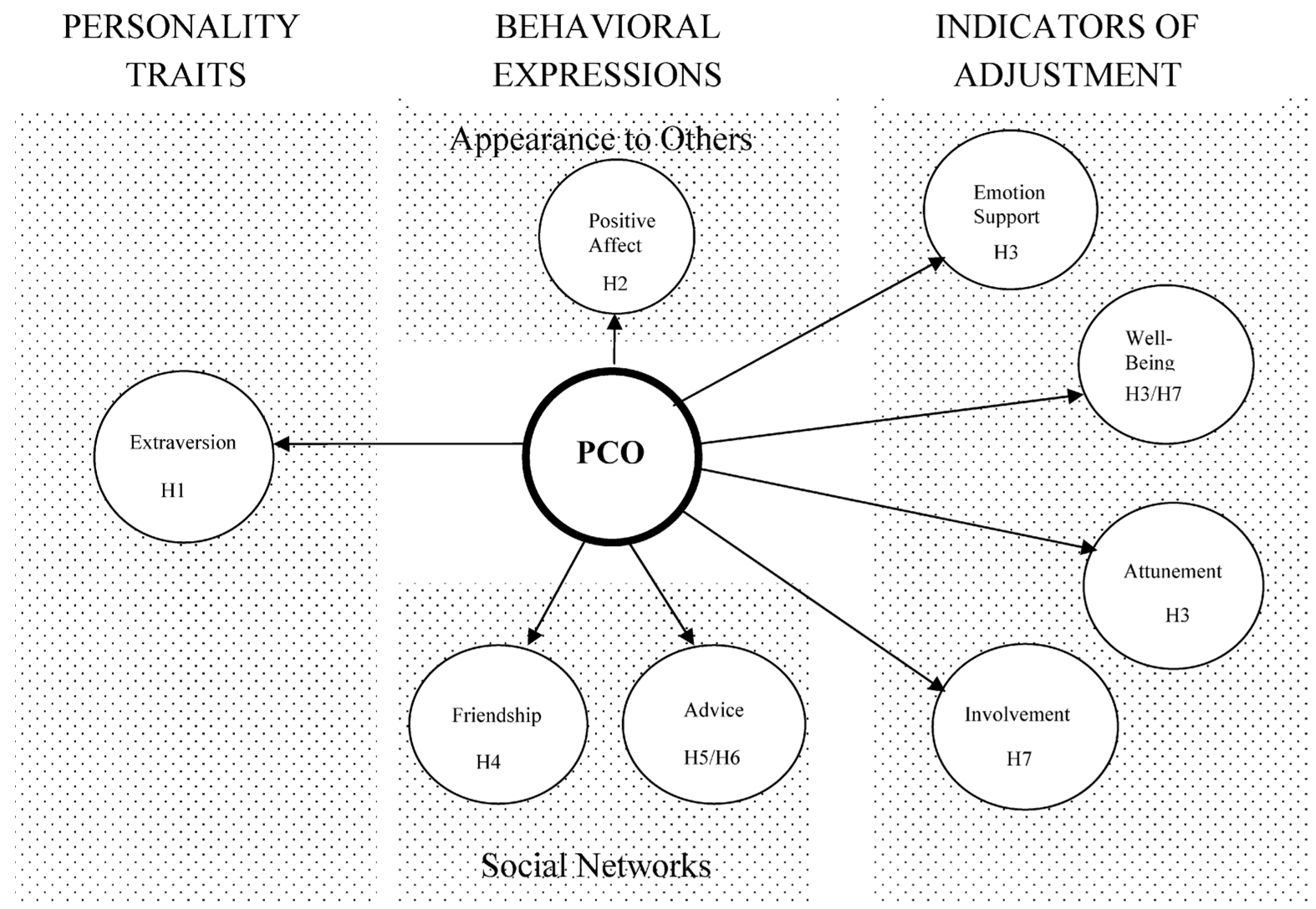 Figure 1: The hypothesized nomological network connecting PCO to personality, behavioral expression, and network structure.
High-Stakes Findings: Expertise + Connection = Influence
The most profound insight from the study of healthcare employees was the interaction effect. Simply wanting to connect isn't enough to become a central "advice hub."
The data showed that for advice networks, you need a combination of Propensity to Connect and Work Expertise. If you are eager to connect but have no knowledge, you are just a "lovable fool." If you have knowledge but no PCO, you are a "competent jerk." True organizational influence—and high betweenness centrality—comes when high expertise meets a high propensity to join others.
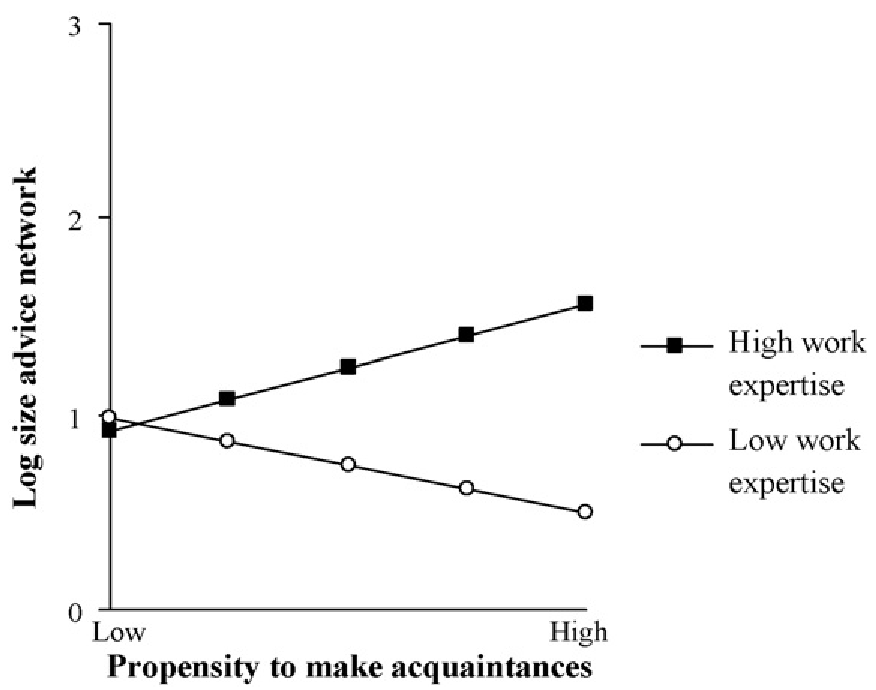 Figure 2: The synergy between making acquaintances and expertise in attracting advice-seekers.
Experimental Results: The PCO Advantage
- Performance: In students, the "making friends" component was a significant predictor of academic attainment (r = .30), likely due to better access to peer-shared resources.
- Well-being: Individuals with high PCO reported feeling more relaxed and supported. Interestingly, they were perceived by others as more "enthusiastic" even after only a two-minute interaction.
- Innovation: High PCO (specifically the "Joining Others" component) was linked to "suggestion-making"—the ability to synthesize ideas from different parts of the network to propose innovations.
Critical Analysis & Conclusion
The PCO scale offers a vital tool for understanding Individual Agency. It suggests that social capital is not just something you inherit by being in a specific job role; it is something you cultivate based on your psychological predisposition.
Limitations: The study relies heavily on self-reports for the PCO trait, which could be prone to social desirability bias. Furthermore, while PCO predicts suggesting ideas, it does not necessarily predict implementing them—execution still requires different organizational muscles.
Future Outlook: As work becomes increasingly virtual, the "physical" cues of PCO (appearing enthusiastic) may fade. Future research must examine how PCO manifests in digital-first environments where "bridging ties" are formed via Slack and LinkedIn rather than coffee chats.
Takeaway for Leaders: Don't just hire for "culture fit" (Extraversion). Hire for PCO to ensure your organization has the "glue" (strong ties) and the "bridges" (weak ties) necessary for both resilience and innovation.