
Social Networking Federation: Breaking the Silos of Modern Social Media
Social networking federation: A position paper q
This paper introduces the concept of Social Networking Federation, a semantic framework designed to integrate disparate Social Network Services (SNS) like Facebook, LinkedIn, and Twitter. Utilizing an extended FOAF (Friend of a Friend) ontology called SSRA, the authors propose a "Federation Gateway" to provide users with a unified, machine-readable view of their cross-platform social connections and resources.
TL;DR
Imagine if you could send a Twitter DM to your LinkedIn connections or query your entire social circle across all platforms with a single command. This paper proposes Social Networking Federation, a technical framework that uses Semantic Web technologies to fuse fragmented social networks into a unified, programmable "logical" network via a Federation Gateway.
Background & Motivation: The "Pete" Problem
Most users today live in a state of "Social Fragmentation." A user (referred to as "Pete" in the paper) has contacts scattered across multiple sites. This leads to several critical pain points:
- Inconsistency: Updating a phone number on one site doesn't sync with others.
- Closed Gardens: Data is trapped behind site-specific APIs.
- Low Intelligence: You cannot easily run complex rules (e.g., "Find all my business contacts in London who also follow me on Twitter").
The authors argue that we need a Social Networking Federation, similar to federated databases, where multiple autonomous systems are transparently integrated via a meta-management mechanism.
Methodology: The SSRA Extension
At the heart of this solution is an expansion of the classic FOAF (Friend of a Friend) ontology. The authors introduce SSRA, which adds four critical pillars to the semantic model:
- SNS Mapping: Standardizing how different service providers (REST APIs, OAuth) are described.
- Social Ties (st): Moving beyond the simple "friend" tag. Connections are modeled as objects with attributes (duration, priority) and operations (e.g., a "transaction" tie allows viewing credit history).
- Resources (rc): Associating a person with shared content like bookmarks or tags.
- Security (se): Managing access control and trust levels (friendship levels) across the federated graph.
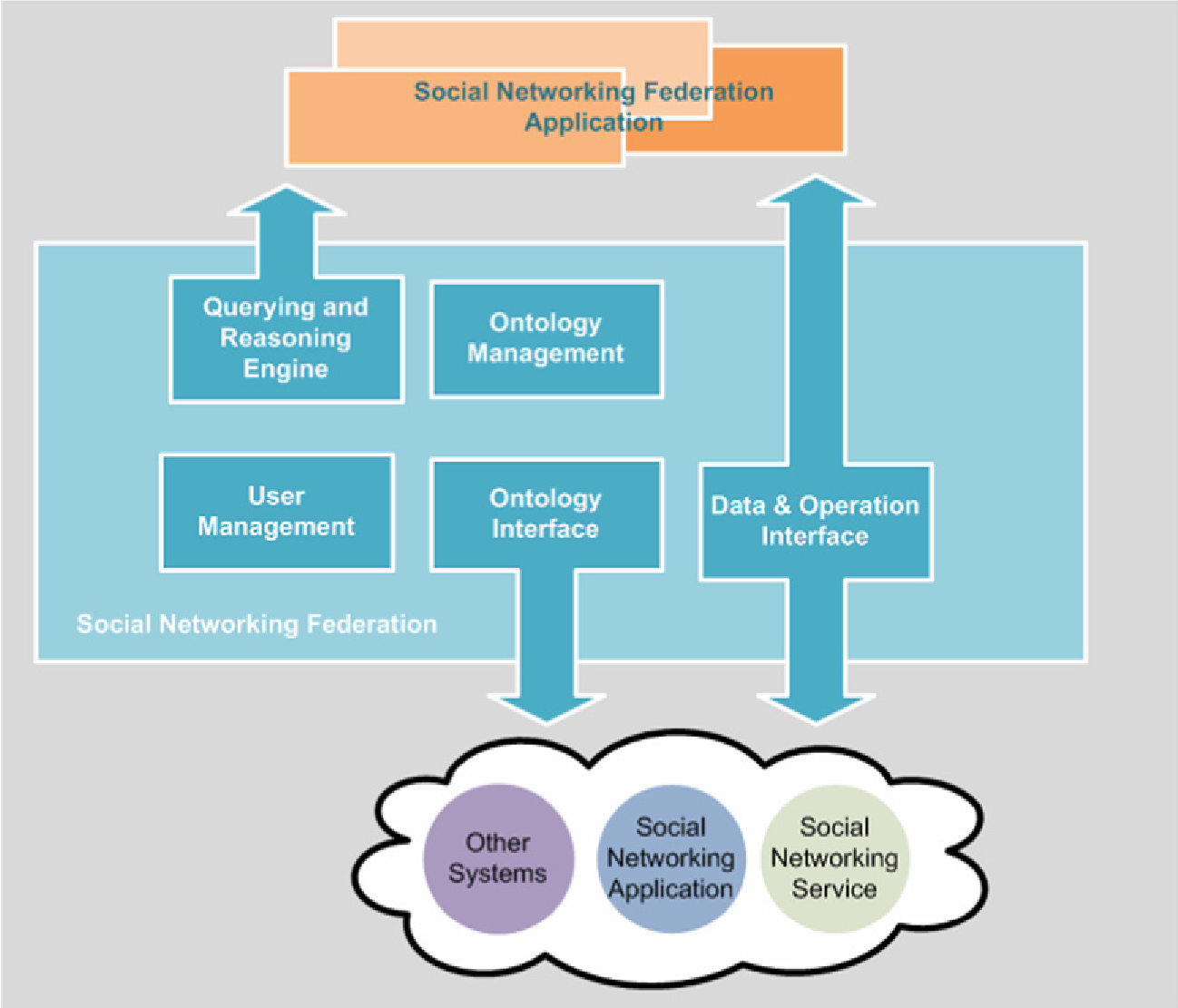 Figure 1: The overall architecture where the Federation Gateway acts as the broker between SNS and Applications.
The Federation Gateway
The Gateway serves as a distributed server that:
- Provides a Unique Identifier (URI/OpenID) for each user.
- Stores the FOAF/SSRA ontology.
- Acts as a Proxy for API calls, allowing developers to interact with any SNS through a uniform interface.
Experimental Validation: "Linked.Twitter.In"
To prove the concept, the authors developed Linked.Twitter.In. This application allows a user to login with their Federation ID, authenticate via LinkedIn (OAuth), and then send Twitter messages directly to their LinkedIn contacts.
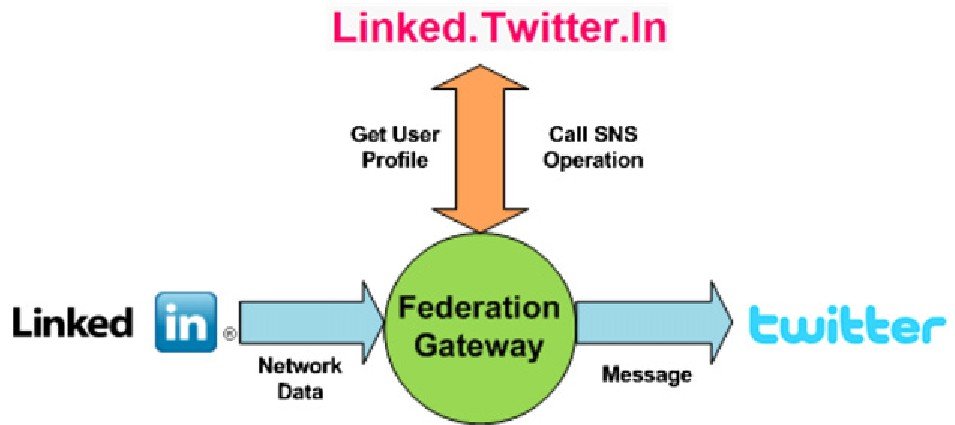 Figure 2: The prototype application consuming data from multiple SNS via the Federation Gateway.
The breakthrough here is that the application developer never had to write code specific to merging the two databases; they simply queried the federated semantic model.
Critical Insight: Social Networking Virtualization
The paper’s most forward-thinking concept is Social Networking Virtualization. Much like virtual machines decouple hardware from software, federation decouples the logical social network (who you know) from the physical SNS (where that data is stored).
This allows for:
- Contextual Views: A "Job Network" view or a "Family Network" view derived from the same global graph.
- Intelligent Tasks: Using SPARQL to automate complex social interactions (like sending digital Christmas cards based on friendship seniority).
Conclusion & Limitations
While highly visionary, the authors acknowledge that the success of this model depends on:
- Industry Participation: Major players (Facebook, Google) must support open protocols.
- Scalability: The Federation Gateway can easily become a bottleneck, requiring a decentralized network of gateways to balance the load.
In the era of Web3 and Decentralized Social (DeSoc), this 2012 position paper remains a remarkably prescient blueprint for the interoperable social web we are still trying to build today.