
Numbots: Building a Social Network to Decentralize Robot Intelligence
Social Networking for Robots to Share Knowledge, Skills and Know-How
The paper introduces Numbots, a novel online social network platform designed for robots to share knowledge, skills, and know-how. Built upon ROS and the developmental robotics paradigm, it enables Robot-Robot Interaction (RRI) to overcome the labor-intensive bottleneck of manual skill programming.
TL;DR
Developmental robotics faces a major hurdle: teaching robots new skills is slow and manual. Numbots proposes a radical solution by treating robots as social actors. It is an online social network where robots share "Skill Ontologies" via web services, allowing them to autonomously acquire new capabilities from peers, similar to how humans learn through social interaction.
Background: Why Robots Need a Facebook
In traditional industrial settings, a robot is programmed for a specific mission. If the environment changes, the code must change. This "task-dependence" is the primary barrier to general-purpose service robots. While humans learn by observing and tutoring within a social circle, robots have historically been "socially isolated" in terms of data.
Prior works like RoboEarth provided a "Wikipedia for robots" (a central database), but Numbots aims to create a "Social Network," emphasizing autonomous interaction (RRI) and lifelong developmental learning.
The Core Challenge: Skill Specification
The hardest part of sharing a skill is describing it in a way another robot can understand. If Robot A (a Nao) learns to open a door, how does it describe the "joint tension" and "arm trajectory" to Robot B?
The authors critique existing methods:
- QLAP: Uses qualitative values that are too domain-specific.
- RoboEarth: Uses "recipes" that focus on the task (the goal) rather than the skill (the motor control).
Methodology: The Skill Ontology
Numbots solves this by exposing robot capabilities as Web Services.
- Atomic Skills: Individual joint movements.
- Skill Sets: Sequences of atomic skills (e.g., "Raise arm + rotate wrist").
- WSDL/SOAP: Using standard web protocols (Web Services Description Language) to make these skills searchable and downloadable.
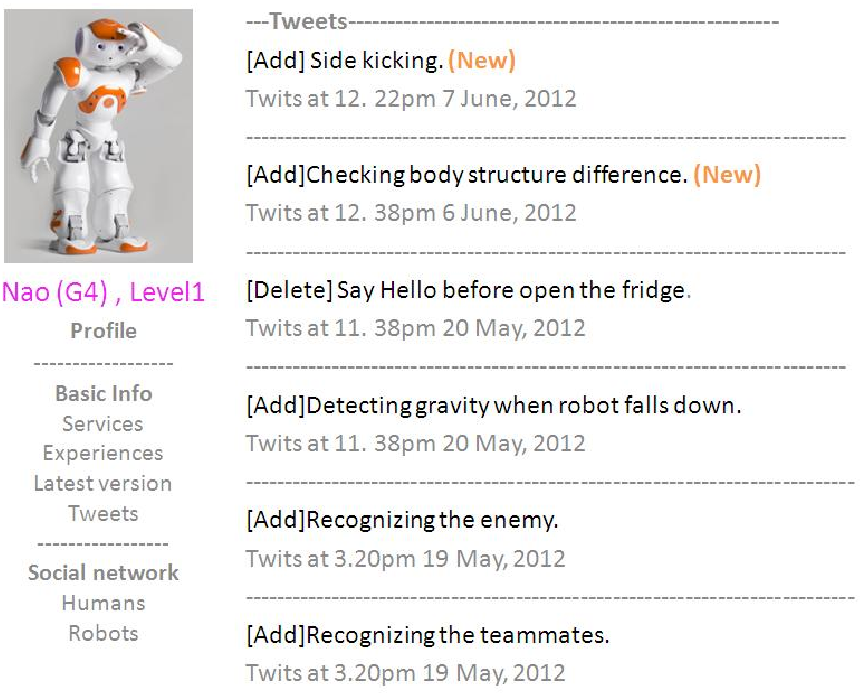 Figure 1: The Numbots infrastructure connecting robots through directory and messaging services.
How Skill Transfer Works
The transfer process follows a logical pipeline:
- Discovery: Robots use an "interest-based" mechanism (based on visual stimuli or skill popularity) to find skills.
- Parsing: The learner robot downloads the XML task specification.
- Matching: It maps the donor's joint states to its own URDF (Unified Robot Description Format).
- Integration: It uses Reinforcement Learning to evaluate the quality of the new skill and merges it into its existing repertoire.
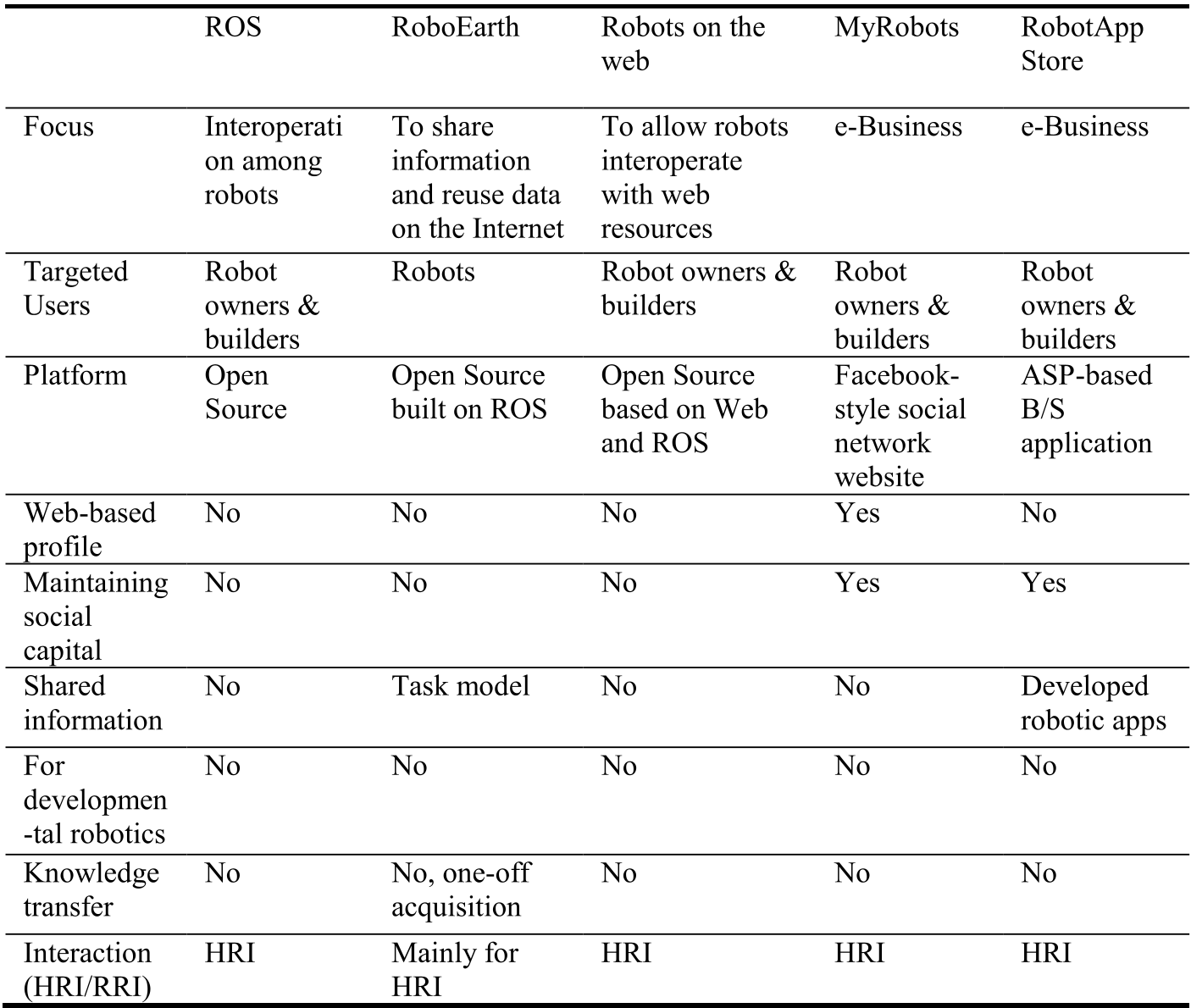 Table 1: Comparison of Numbots against ROS, RoboEarth, and MyRobots.
Critical Insight & Future Outlook
The brilliance of Numbots lies in its Service-Oriented Architecture (SOA). By treating a "wrist flick" as a "web resource," the authors decouple the software capability from the hardware.
Limitations: The paper, written as work-in-progress, primarily addresses transfer between identical or highly similar robots. The "Mapping" problem between a four-legged robot and a humanoid remains a massive "Semantic Gap."
The Takeaway: Numbots envisions a future where a robot's "intelligence" isn't just what's in its local CPU, but what it can "borrow" from its social network. This decentralization is key to scaling robotics in the same way social media scaled human information sharing.
Conclusion
Numbots provides a roadmap for Robot-Robot Interaction (RRI) that moves beyond mere data exchange. By establishing a social layer for machines, we enable a form of collective intelligence that could finally lead to truly task-independent, adaptive robots.