
Beyond the Feed: Decoding the Role of Social Networking in Modern E-Learning
The role of Social Networking Sites in e-learning
This paper investigates the role of Social Networking Sites (SNS) in e-learning platforms through a mixed-methods study involving computing students. It identifies key drivers for SNS adoption in education, such as collaboration and resource sharing, and highlights Facebook as the dominant platform for these activities.
TL;DR
Is Facebook just for scrolling, or can it be a classroom? This study reveals that while computing students are eager to use Social Networking Sites (SNS) for learning, they treat them as a "supportive extra" rather than a primary tool. While collaboration and ease of use drive adoption, privacy concerns and the lack of authoritative content remain significant roadblocks.
Background: The Social Gap in Digital Education
Modern education theory suggests that learning is a social process—it thrives on interaction and the "reconstruction" of knowledge through peers. However, traditional Learning Management Systems (LMS) like Blackboard often feel like "academic silos," lacking the personal profiles and social "stickiness" that drive engagement. The authors posit that SNS could bridge this gap by providing a personalized environment for spiral understanding.
The "Why": Motivation and Friction
The research highlights a fascinating contradiction: students have the technical skills and the desire to use tools like Facebook for study, yet few do so frequently. Why the hesitation?
- The Privacy Paradox: Users enjoy social sharing but fear the overlap of their "private" social lives with "public" academic scrutiny.
- The Authority Deficit: In the hierarchy of information, Google Search and Lectures reign supreme. SNS is viewed as a place for chat, not necessarily for "truth."
- Technical Hurdles: Latency, synchronization, and the inability to easily input complex data (like math equations) hinder the shift from social to academic usage.
Methodology: A Deep Dive into Student Sentiment
The researchers conducted a mixed-methods study at a New Zealand tertiary institution. By combining a 25-question survey with in-depth interviews, they categorized technical and psychological factors influencing SNS adoption.
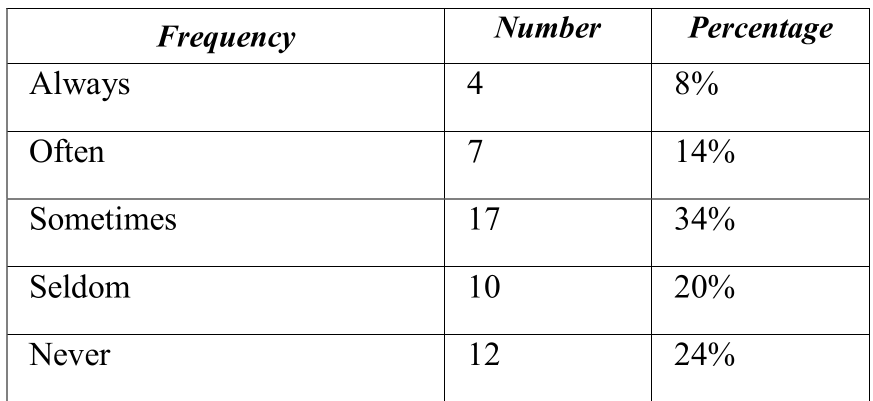 Table 1: Despite high literacy, "Always" using SNS for learning is rare (only 8%).
The study identified FaceBook as the undisputed leader in this space (see Figure 1), followed by Twitter and MySpace (contextual to the study's timeframe), proving that "where the students already are" is the most logical place to start e-learning integration.
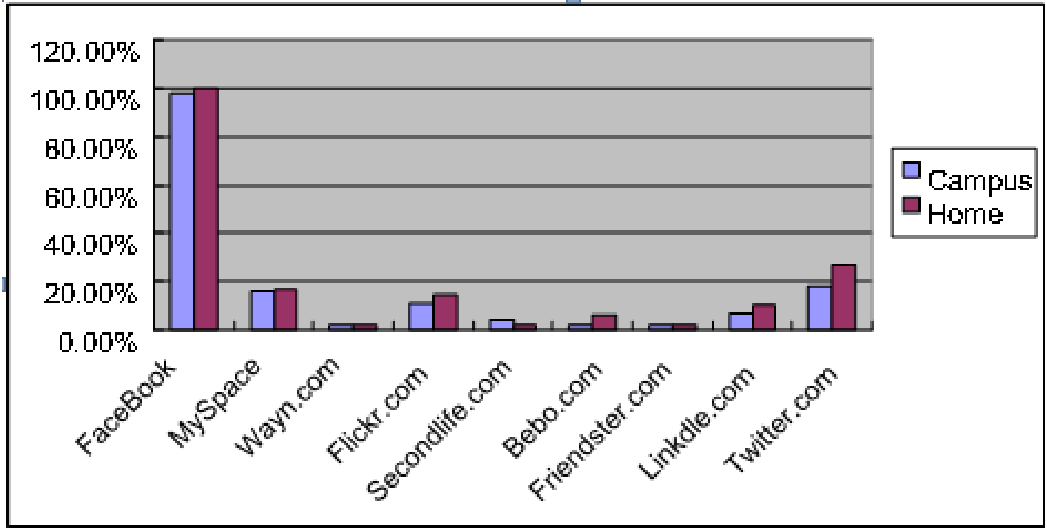 Figure 1: Facebook dominates the social-academic landscape.
Key Results: Barriers to Entry
The most striking find was the list of "preventative factors." Privacy and Security were not just minor concerns; they were foundational barriers for nearly 90% of combined "important/very important" responses.
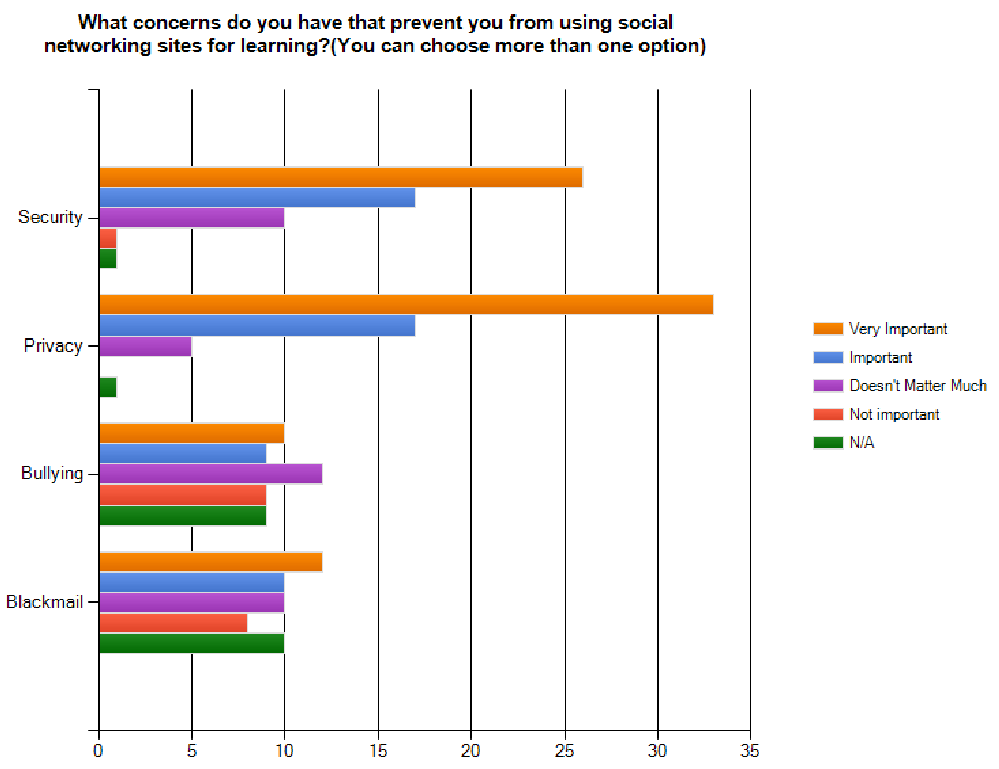 Figure 4: Privacy and Security are the primary gatekeepers preventing educational SNS adoption.
Furthermore, when students need answers to specific course questions, SNS ranks significantly lower than seeking help from a classmate or a lecturer directly. It suggests that SNS is currently used for coordination rather than deep knowledge acquisition.
Critical Insight: The Supportive Role
The study concludes that the potential of SNS remains untapped. To move from "social tool" to "learning tool," the authors propose several guidelines:
- Selection & Training: Students need pedagogical training, not just technical help, to use these sites effectively.
- Planned Activities: Spontaneous learning is rare; educators must design specific tasks (milestones, roles) within the SNS environment.
- Integration: The future likely lies in "Social LMS"—platforms that combine the security and authority of Moodle with the collaboration features of YouTube and Facebook.
Conclusion & Outlook
SNS provides a vital "supportive" layer to education. While they are unlikely to replace the lecturer or the formal textbook, their ability to facilitate Instant Messaging, Resource Sharing, and Social Influence makes them an indispensable part of the future learning ecosystem. As network speeds increase and digital legislation addresses privacy concerns, the "Social Classroom" will likely become the standard, not the exception.