
Social Media as the Multi-Channel Bridge: More Than Just a Digital Storefront
Exploring social networking sites for facilitating multi-channel retailing
This study investigates the role of Social Networking Sites (SNS), specifically Facebook fan pages, in multi-channel retailing (MCR). Using Partial Least Squares (PLS) to analyze data from 205 users, it validates a 10-hypothesis framework connecting physical store trust, SNS engagement, and online/offline purchase intentions.
TL;DR
Is a Facebook fan page just a place for memes and complaints, or a genuine sales engine? This study reveals that SNS fan pages act as a crucial mediator in multi-channel retailing. By analyzing 205 users via Partial Least Squares (PLS), the research proves that while social media rarely triggers an "impulse buy" directly, it is the primary engine driving the online information search that leads to final conversion.
The "Click-and-Mortar" Dilemma
In the early 2010s, retailers faced a paradox: consumers trusted physical stores but were hesitant to shop on those same retailers' websites. The missing link was a "social hub" that could transfer offline trust into digital momentum. Most prior work focused on either the website or the store; this paper looks at the Web 2.0 layer (SNS) as the connective tissue.
Methodology: The Path to Purchase
The authors constructed a structural model (Inner Model) to test 10 hypotheses. Their core insight was that consumer behavior in a multi-channel environment is a sequential process:
- Trust Foundation: Everything starts with trust in the physical brick-and-mortar presence.
- Social Hook: Trust leads users to join the SNS community.
- Information Catalyst: The community triggers a desire to search for specific product details.
- Conversion: High-intent search finally results in an online transaction.
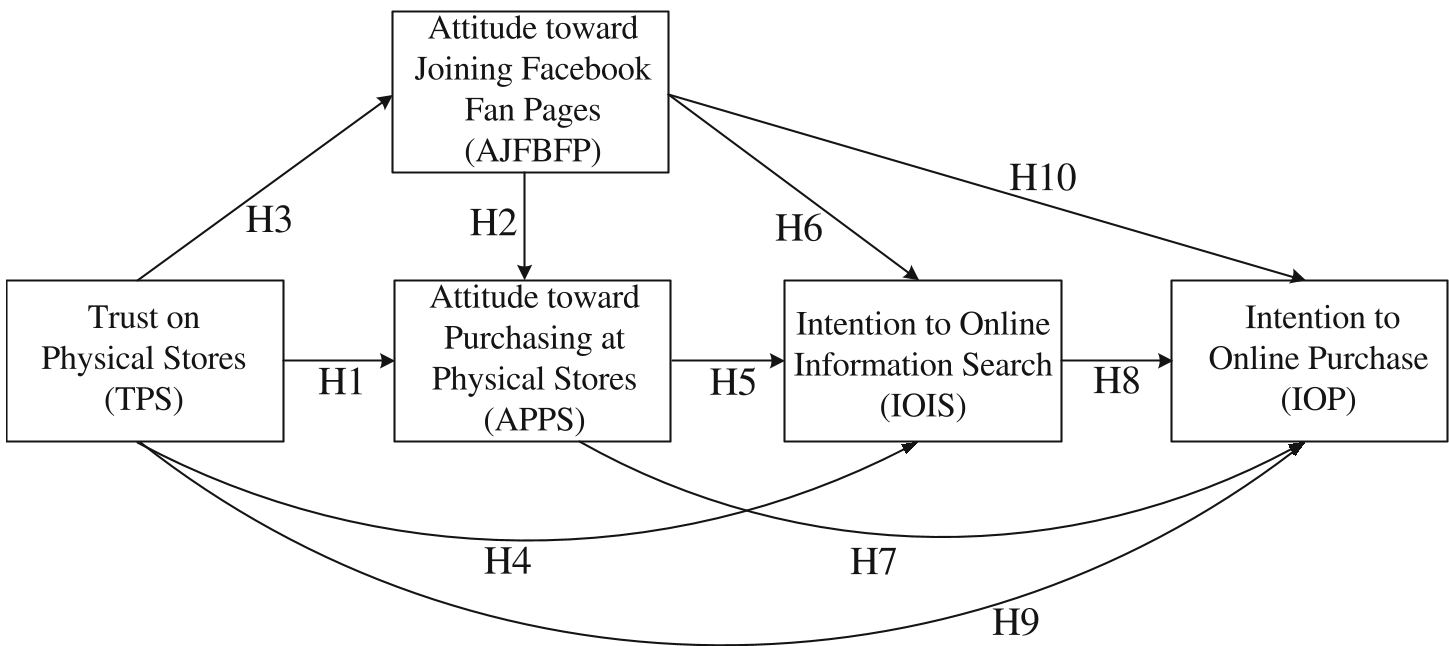 Figure 1: The proposed research model connecting trust, SNS attitude, and purchase intentions.
Key Findings: The "Information" Gatekeeper
The empirical results provided several "aha!" moments for retail strategists:
- Trust Transfers to Social: Consumers don't join fan pages for random brands. There is a direct positive relationship (β = 0.389) between Trust on Physical Stores (TPS) and the willingness to join a Facebook Fan Page (AJFBFP).
- The Search Pivot: One of the most significant findings was that joining a fan page does not directly increase online purchases (H10 was rejected). Instead, it increases Intention to Online Information Search (IOIS).
- The Conversion Engine: Online purchase intention is almost entirely dependent on the intensity of the information search (β = 0.410, p < 0.001).
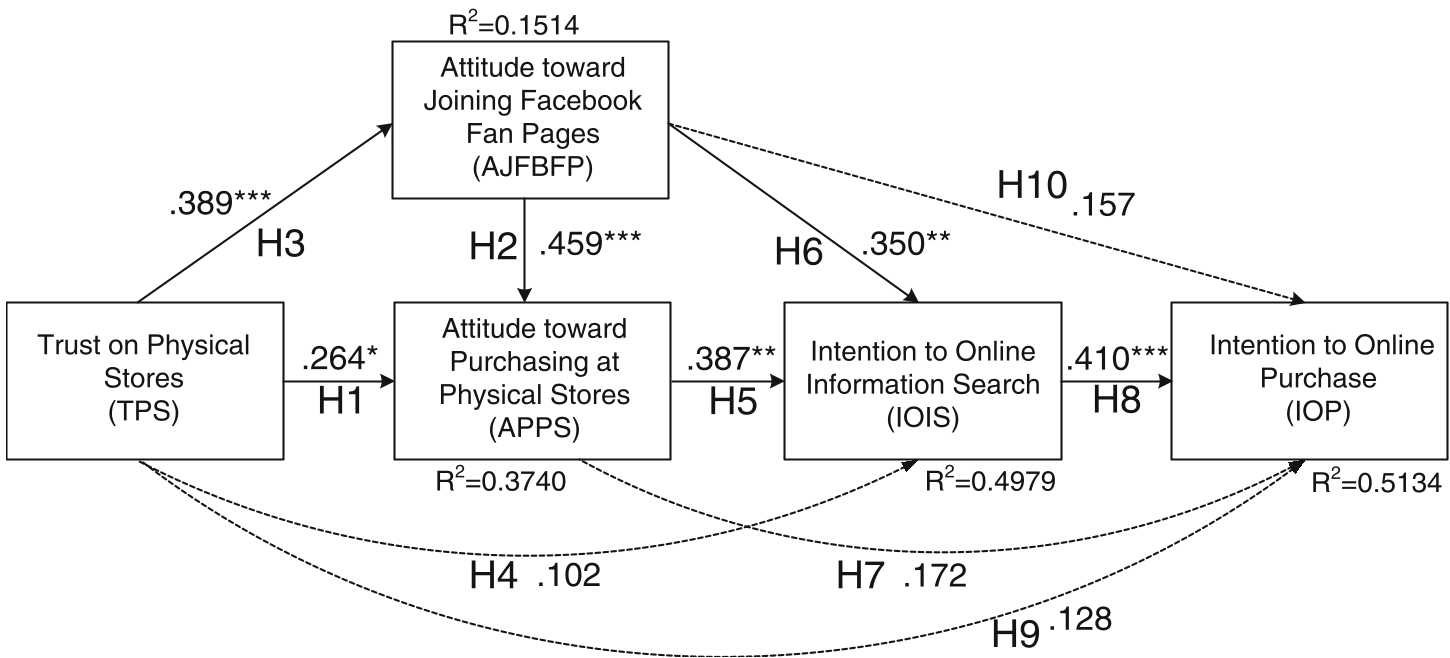 Figure 2: Validated path coefficients showing the indirect route from SNS to Online Purchase.
Analysis: Why "Direct Buy" Failed
Retailers often expect social media to be a "Buy Now" button. However, this study suggests that SNS serves the pre-purchase phase.
- Contextual Risk: Even if users trust a store, online payment still carries "perceived risk."
- The Role of Content: SNS fan pages provide user-generated content (UGC) and peer reviews, which satisfy the user's need for "social proof" before they commit to a digital cart.
Strategic Takeaways for Retail Managers
- Bridge the Gap: Use "Check-in" features and QR codes in physical stores to funnel existing trust into your SNS pages.
- Search Optimization: Since information search is the bottleneck for sales, the "landing page" linked from social media should be optimized for comparison, technical specs, and customer reviews.
- Community Over Commerce: Focus your SNS strategy on engagement and information sharing rather than aggressive sales pitches, as the former is what actually moves the needle on search intent.
Conclusion & Evolution
While this study was conducted in the context of Facebook's early dominance, its core finding remains relevant: Social media is a trust-transfer mechanism. The limitation, however, is that "Social Commerce" (buying directly within an app) has evolved significantly since 2013, potentially shortening the path between "Joining" and "Purchasing" that was found to be insignificant here.