
Deciphering Digital Ethnicity: How Culture Shapes Product Communication on Social Media
Use of social networking sites for product communication: A comparative study of Hispanics and non-Hispanic whites
This study applies the Uses and Gratifications (U&G) theory to investigate product communication on Social Networking Sites (SNSs), specifically comparing Hispanic and non-Hispanic white consumers in the U.S. using Structural Equation Modeling (SEM). It identifies how distinct motivations like information-seeking, socializing, and entertainment influence attitudes and behavioral outcomes such as interactive use and site recommendation.
TL;DR
This research investigates the psychological drivers behind why different ethnic groups use social networking sites (SNSs) to discuss products. By applying the Uses and Gratifications (U&G) theory, the study reveals that while everyone seeks information, Hispanics are driven by socializing, whereas non-Hispanic whites are motivated by entertainment.
Problem & Motivation: Beyond "One Size Fits All"
In the era of hyper-personalized marketing, the "average user" is a myth. Most prior research treated SNS usage as a monolithic behavior, failing to account for the Inductive Bias introduced by cultural backgrounds.
The authors argue that ethnicity—specifically the contrast between the individualistic nature of non-Hispanic whites and the collectivist orientation of Hispanics—fundamentally changes the "Why" behind social media engagement. If marketers don't understand these nuances, their engagement strategies for Electronic Word-of-Mouth (E-WOM) will remain inefficient.
Methodology: The Integrative U&G Model
The study utilizes a rigorous Structural Equation Modeling (SEM) approach to test an integrative model.
The Core Framework:
- Motivations (The 'Why'): Information, Entertainment, Socializing, and Passing Time.
- Mediator: Attitudes toward the site as a product communication platform.
- Usage Outcomes (The 'How'): Interactive use (sharing/posting), Recommendation (advocacy), and Intensity (time spent).
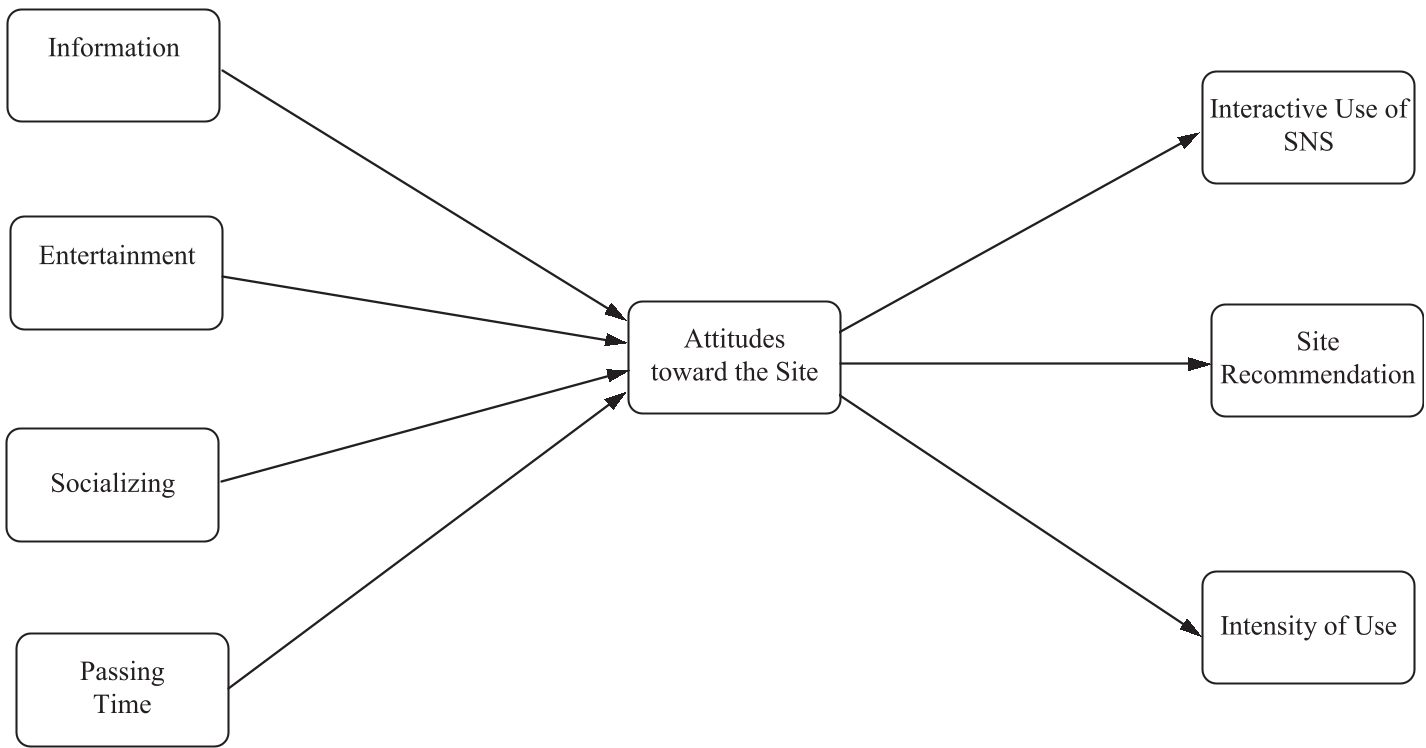 Figure 1: Conceptual model of SNS usage for product communication.
Experiments & Results: Cultural Divergence
Through an Internet-based survey (N=595), the researchers found striking differences in the structural pathways for each group.
1. The Information Universal
For both groups, seeking product information is the strongest baseline. If a brand provides value-added info, both segments develop favorable attitudes.
2. The Socializing vs. Entertainment Split
- Hispanics: Socializing significantly predicts positive attitudes. The "Social" in Social Media is literal here—product talk is an extension of building community.
- Non-Hispanic Whites: Entertainment is the key driver. Engagement is viewed as a leisure activity or a "fun" break.
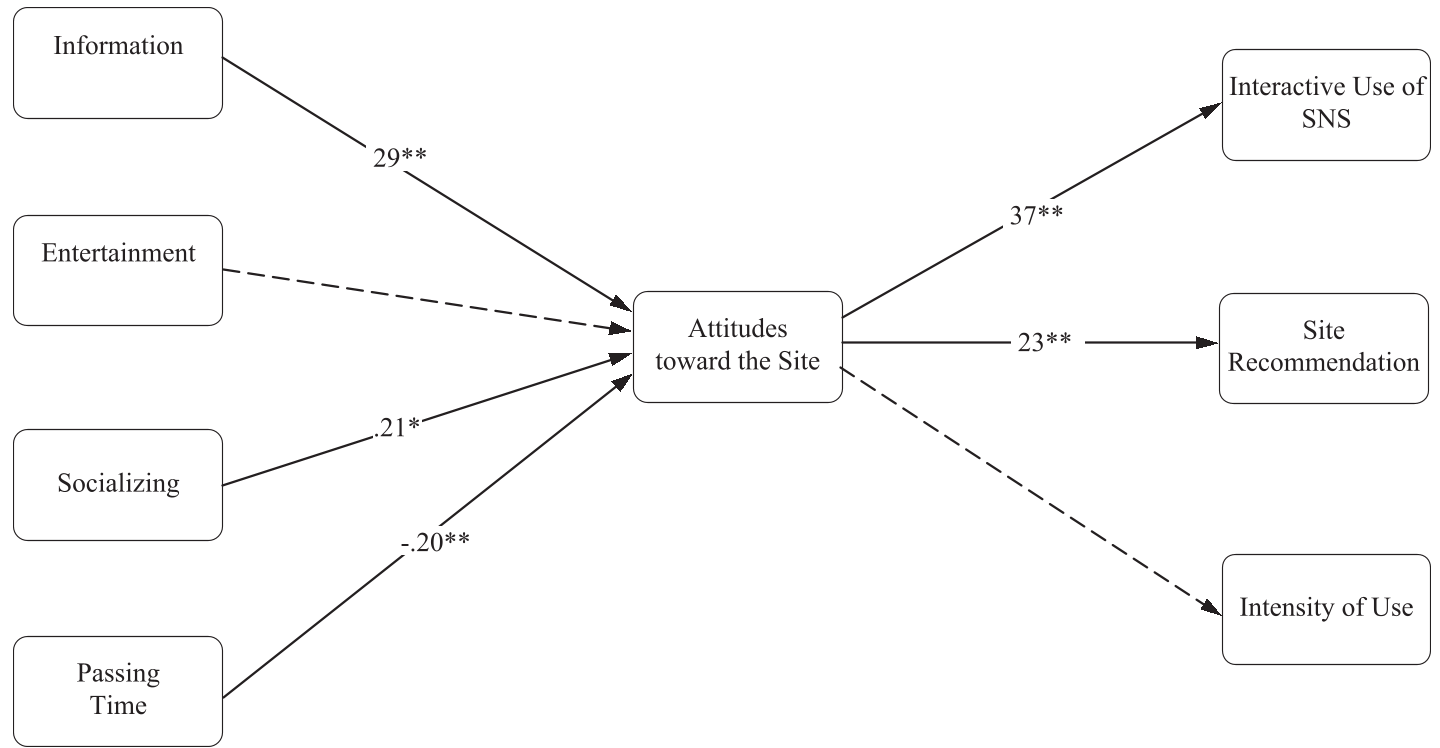 Figure 2: SEM results for the Hispanic sample, highlighting the significant socializing path (p < .05).
| Motivation | Hispanic Impact | Non-Hispanic White Impact |
|---|---|---|
| Information | Significant (+) | Significant (+) |
| Socializing | Significant (+) | Not Significant |
| Entertainment | Not Significant | Significant (+) |
| Passing Time | Significant (-) | Not Significant |
Critical Insight: Managerial Implications
The study provides a clear "Playbook" for brand managers:
- For Hispanic Segments: Move beyond "broadcasting." Focus on relationship nurturing. Use social references and community-centric messaging that encourages users to share with their tight-knit networks.
- For Non-Hispanic White Segments: Focus on content aesthetics. Information should be wrapped in humorous, visually appealing, or interactive "edutainment" formats to trigger positive attitudes.
Conclusion & Future Outlook
This work proves that ethnicity is not just a demographic label but a behavioral predictor. While the study effectively utilizes SEM to show that these differences exist, future research should dive deeper into Human-to-Message vs. Human-to-Human interactions to see if the socializing drive in Hispanics leads to higher trust in user-generated content over official brand posts.
Takeaway: In social commerce, the medium is the message, but the culture is the filter.