
Perceptions vs. Reality: Does Social Networking Actually Tank College Grades?
Patterns of social networking use and academic performance: Examining the link between quality and frequency of social networking use and academic performance among college-level students
This study investigates the relationship between Social Networking Site (SNS) use patterns—specifically frequency, duration, and problematic use—and academic performance among college students. Using PLS-SEM analysis, the authors demonstrate that while intensive SNS use significantly impacts students' perceived performance expectancy, it lacks a statistically significant correlation with actual academic achievement (R-scores).
TL;DR
The debate over whether social media ruins academic performance has long been polarized. This study finds a fascinating disconnect: while high-frequency and "problematic" social media use strongly dictates how students think they will perform (Perceived Expectancy), it has virtually no significant impact on their actual, objective grades (R-scores). Essentially, the anxiety of usage might be more potent than the usage itself.
Background: The Academic Paradox
In the era of 2.41 billion Facebook users and ubiquitous digital connectivity, researchers have struggled to find a consensus on the "SNS-Academic Link." Is social media a tool for collaborative learning (the adaptive view) or a black hole of distraction (the maladaptive view)?
The authors of this paper argue that the confusion arises because we often measure quantity (how long you stay online) instead of quality (why you are online and if you can stop).
The "Why": A Self-Determination Perspective
Instead of viewing students as rational utility-maximizers, this study applies Self-Determination Theory (SDT). It posits that students use SNS to fulfill three basic psychological needs:
- Autonomy: Feeling in control of one’s actions.
- Competence: Feeling effective in one's environment.
- Relatedness: Feeling connected to others.
When school environments fail to meet these needs, students turn to SNS as a "protective" or compensatory mechanism. This creates a complex socio-affective loop where usage patterns are symptoms of deeper motivational states.
Methodology: Mapping the Digital Habits
The researchers recruited 96 pre-university students in Canada and employed Partial Least Squares Structural Equation Modeling (PLS-SEM) to test the strength of relationships between various usage "inputs" and performance "outputs."
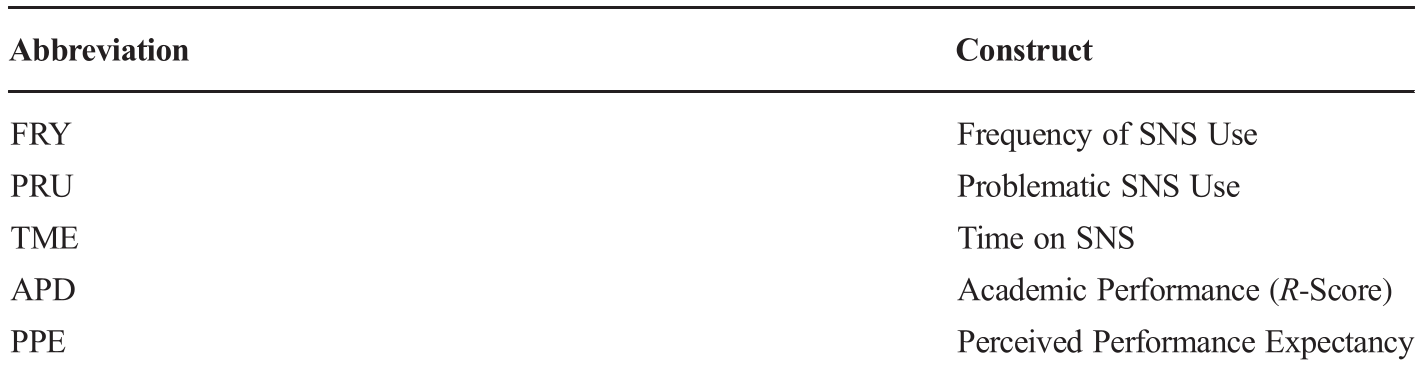
The study tracked:
- FRY/TME: Frequency and Time spent.
- PRU: Problematic/Compulsive use.
- PPE: What the student thinks their grade will be.
- APD: The actual, objective R-score (standardized grade).
Key Findings: The Great Disconnect
The results from the structural model (Table 3) provide a striking insight into the student psyche.
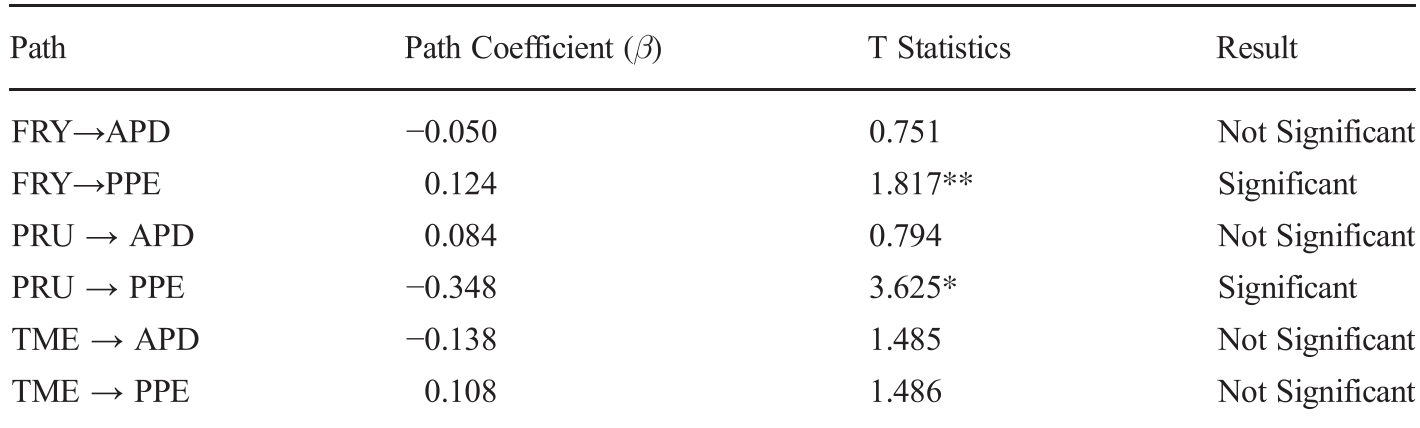
- The Psychology of Problematic Use: Problematic SNS use (PRU) had a strong negative path to Perceived Performance (β = -0.348). Students who feel they use social media "too much" or compulsively are convinced it is hurting their grades.
- The Reality Check: Despite the heavy psychological weight, the path to Actual Academic Performance (APD) was non-significant across all categories.
- Frequency vs. Time: Interestingly, simply checking SNS frequently (FRY) had a slight positive link to perceived performance, possibly suggesting that staying "in the loop" offers a sense of social competence that boosts confidence, even if it doesn't boost grades.
Critical Insight: Rethinking "Digital Addiction"
The study suggests that "Problematic Use" might be a matter of perception rather than a direct inhibitor of cognitive ability. A student might feel "addicted" and anxious, and that anxiety is what colors their expectation of failure.
Limitations
- Sample Size: With only 96 participants, the study is an exploratory "snapshot."
- Cross-Sectional: It cannot prove causality—we don't know if poor expectations lead to more SNS use, or vice versa.
Conclusion: A Socio-Affective Future
This research moves us beyond the "myth of the solely-rational actor." Education technology shouldn't just focus on "ease of use" or "blocking apps." Instead, we must understand the social and affective lives of students. If a student is compulsively using SNS, the solution might not be a screen-time limit, but rather a more engaging, supportive classroom environment that fulfills their needs for autonomy and relatedness.
Takeaway: Your social media habits might be stressing you out and making you feel like a worse student, but as long as you maintain your core study behaviors, your actual grades might be safer than you think.