
The Smartphone Gourmet: How Social Media Shapes Restaurant Choices in Salinas
Influence of Social Networks from Cellphones to Choose Restaurants, Salinas – 2016
This study investigates the influence of social network comments accessed via smartphones on restaurant selection decisions in Salinas, Ecuador. Using a mixed-methods approach (focus group and surveys), it identifies Facebook as the dominant platform and highlights staff service quality and food quality as the most critical decision factors.
TL;DR
In the digital age, a restaurant's flavor is often judged before the first bite is taken. This research conducted in Salinas, Ecuador, reveals that over 65% of consumers decide where to eat based on social media comments. While Facebook remains the king of influence, the study proves that "Electronic Word of Mouth" (eWOM) is the most powerful tool for modern restaurateurs—provided they get the "Staff Attention" and "Food Quality" right.
Motivation: The Decline of Traditional Marketing
Gone are the days when a glossy brochure or a radio ad could fill a dining room. The research identifies a shift toward narrative-based information. Consumers today seek "authentic" experiences from their peers to reduce uncertainty. The motivation for this study was to decode the "how" and "why" behind these digital interactions: Does gender matter? Does age dictate digital trust? And which platform actually moves the needle for business?
Methodology: A Multi-Layered Approach
The researchers didn't just look at numbers; they started with the "Why" via focus groups at the Equinoctial Technological University. This qualitative insight helped build a robust 342-person survey designed to measure:
- Demographics: Age, Gender, and Income.
- Platforms: Facebook, Instagram, Twitter.
- Decision Factors: Price, Location, Quality, and Service.
Key Insights: What Drives the Visit?
1. The Quality Components
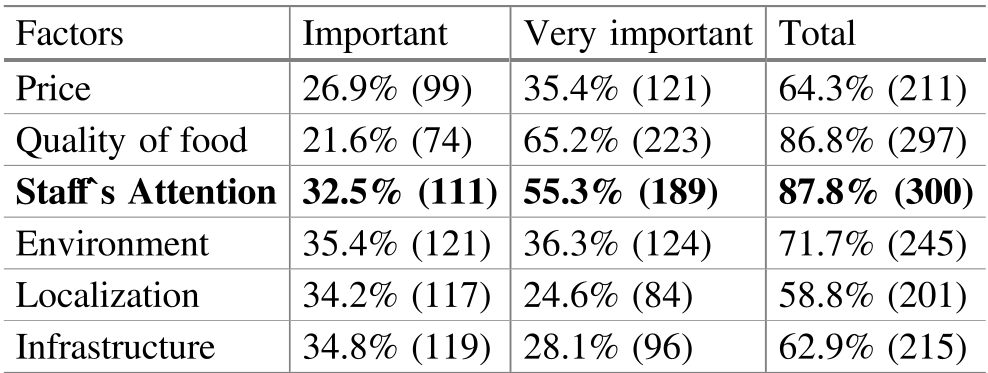
Contrary to what many budget-conscious owners might think, Price (64.3%) ranked behind Staff Attention (87.8%) and Food Quality (86.8%) in terms of importance. This suggests that positive eWOM is generated primarily by the human element and the core product, rather than just discounts.
2. The Platform Hierarchy
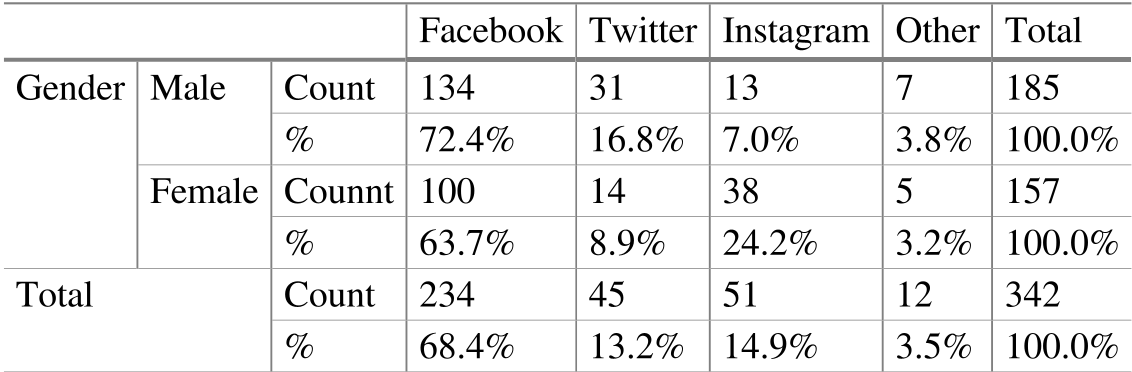
In Salinas, Facebook (68.4%) is the undisputed leader for restaurant discovery and reviews. However, an interesting gender split emerged: Instagram showed higher resonance with female users (24.2%) compared to males (7.0%), suggesting that visual marketing should be tailored by demographic platform preference.
3. The Generative Gap
The study utilized ANOVA testing to confirm that age is a "Laggard" factor. Users aged 20-39 are significantly more influenced by digital comments than those aged 50+. For businesses targeting a younger demographic, a social media presence isn't just a bonus—it's their primary identity.
Critical Analysis & Future Outlook
While the study provides a vital snapshot of 2016 Salinas, it highlights a universal truth: Trust has moved from the brand to the consumer.
Limitations: The study relied on convenience sampling within a specific parish, meaning the results might differ in high-density urban centers or purely rural areas. Furthermore, the "App" preference section suggested that users want integrated features like menus and reservations, a trend that has only accelerated post-pandemic.
The Takeaway for Restaurateurs: If you aren't monitoring your Facebook comments, you are invisible to 65% of your potential market. Prioritize staff training—as "Staff Attention" is the #1 driver of positive sentiment—and ensure your food is "Instagram-ready" for the demographic that values visual social proof.
Conclusion
Social networks have democratized restaurant reviews. In the palm of their hand, a consumer holds the power to build or break a reputation. This study serves as a scientific reminder that in the world of Web 2.0, the customer is once again "The King."