
SITAC: Bridging Social Networks and IoT through Energy-Aware Clustering
Social Networks and Internet of Things, an Overview of the SITAC Project
The SITAC project introduces a unified, platform-neutral reference architecture designed to converge Social Networks (SN) and the Internet of Things (IoT). The core contribution is the "Intouch" application, which utilizes energy-aware clustering to enable seamless data exchange between humans and devices across heterogeneous network environments.
TL;DR
The SITAC (Social Networks and Internet of Things) project proposes a transformative reference architecture that shifts the IoT focus from simple device connectivity to a "Social Internet of Things" (SIoT). By integrating human behavior with machine data, and introducing the Intouch application for energy-efficient clustering, the project solves the fragmentation between social platforms and hardware ecosystems.
Background & Motivation: Beyond M2M
Traditionally, the Internet of Things (IoT) has been viewed through the lens of Machine-to-Machine (M2M) communication. However, as data volumes double every year, the industry faces a bottleneck: current systems are too rigid to handle the proactive, context-aware needs of human users within social environments.
The authors argue that the missing link is a unified ecosystem where humans, sensors, and actuators interact autonomously. The pain point is twofold:
- Data Explosions: The need for "in-flow" management rather than just storage.
- Energy Inefficiency: Mobile devices often waste power by relying on long-range infrastructure when peer-to-peer (P2P) proximity would suffice.
Methodology: The SITAC Functional Architecture
The heartbeat of SITAC is its Platform-Neutral Reference Architecture. It categorizes the complex world of IoT into "super-generalized" entities: Actors, Spaces, Flows, and Data.
Core Components:
- The Core: Handles identity management, storage, and communication protocols via unified APIs.
- The Front-end: A marketplace where services are analyzed and delivered to the end-user.
- The Intouch Use Case: A specific implementation by the Portuguese partners focusing on "energy-aware clustering."
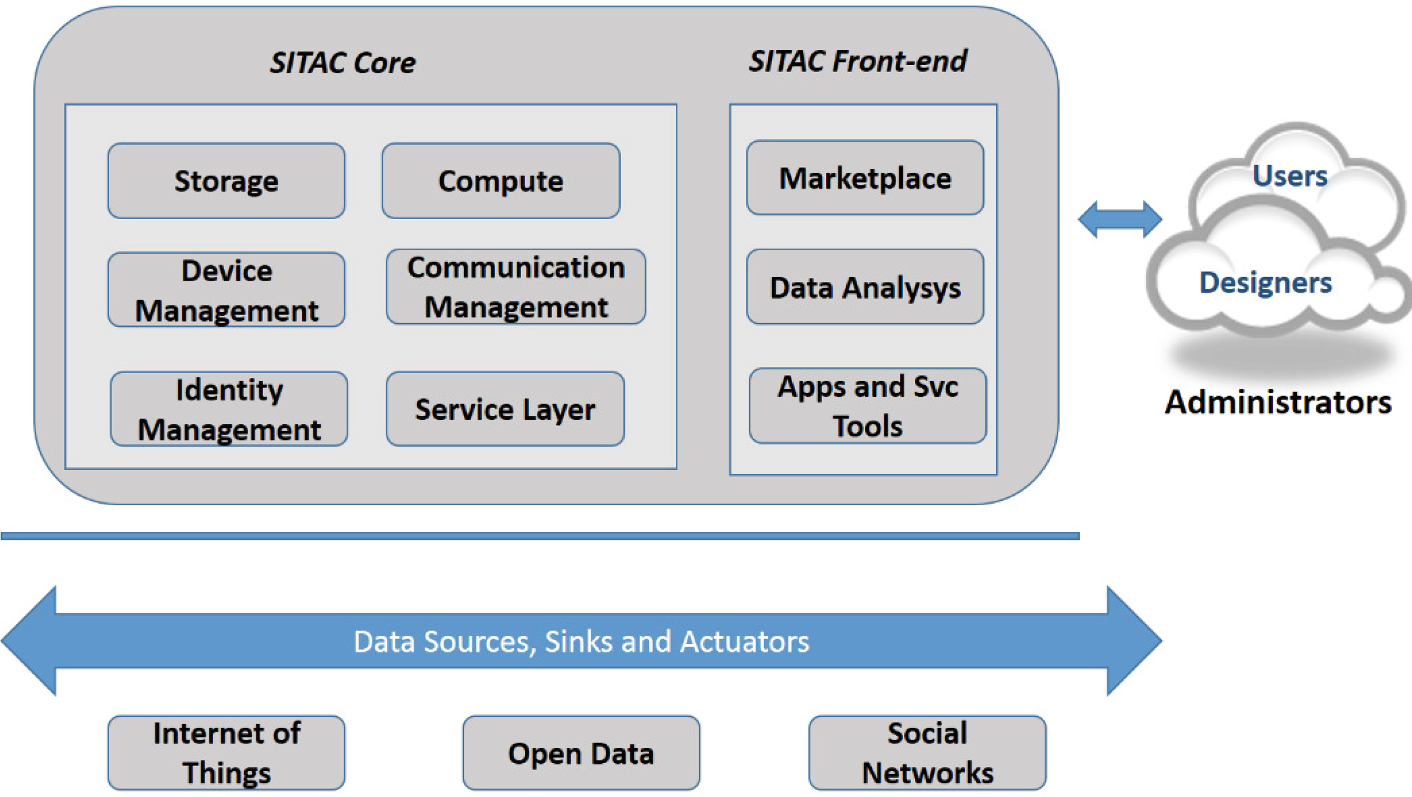
The architecture leverages Cloud-based management while allowing edge devices to form local clusters, reducing the burden on the main cellular network.
The "Intouch" Innovation: Smart Social Clustering
The Intouch application serves as the primary validation of the SITAC vision. It operates on a dual-mode communication strategy:
- Short Range (D2D): Using WiFi-Direct, devices form a cluster. A "Cluster Head" is selected based on energy primitives to coordinate data exchange, minimizing total power consumption.
- Long Range (Infrastructure): If devices are out of range, the system dynamically switches to LTE/LTE-A (eUTRAN) to exchange data via the cloud.
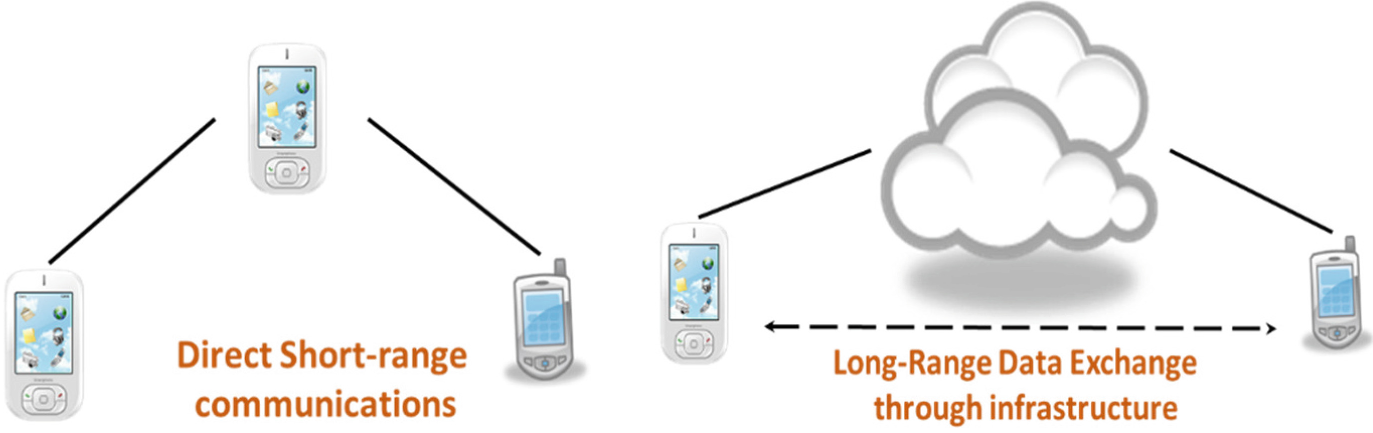
This hybrid approach ensures that the "Social" part of the network—sharing interests and data—doesn't kill the battery life of the "IoT" sensors involved.
Critical Insight & Conclusion
The real value of SITAC lies not just in the connectivity, but in its Biological/Societal Inspiration. By treating IoT clusters like social communities, the system gains robustness and scalability.
Key Takeaways:
- Semantic Interoperability: IoT success depends on devices understanding context, not just transmitting bits.
- Energy as a Priority: Energy-aware clustering is the "Green" engine for the next decade of SIoT.
- Limitations: While the architecture is sound, the paper's quantitative data on specific energy savings in high-density environments remains a topic for future "Crowd Based" demonstrations.
SITAC represents a significant step toward a world where your social status and your thermostat are part of the same, energy-efficient digital conversation.