
Beyond Repositories: Leveraging Social Networks for Knowledge Management
Analysis of a Social Network as a Knowledge Management Tool Uma análise do uso de Redes Sociais como ferramenta para Gestão do Conhecimento
This paper presents a five-year action research study at C.E.S.A.R, an innovation institute, evaluating the implementation of "a.m.i.g.o.s," a Web-based social network used as a Knowledge Management (KM) tool. The research explores moving beyond traditional technocratic KM schools toward a behavioral "organizational school" approach, achieving localized operational success in knowledge sharing.
TL;DR
Knowledge Management (KM) often dies in neglected databases. This paper details a 5-year longitudinal action research study at C.E.S.A.R, an innovation institute, which replaced traditional document repositories with a custom social network called a.m.i.g.o.s. The study proves that informal, network-driven interactions are superior for capturing the "tacit" knowledge of experts, though institutional backing remains a critical failure point.
The "System School" Trap vs. The Social Intuition
Most organizations default to the "Systems School" of KM: build a database, tell employees to upload documents, and hope for the best. The authors argue this misses the mark. Knowledge—especially in innovation—is inherently social and often tacit. Existing approaches fail because:
- They don't value the individual's network.
- They ignore the "fear of exposure" or "threat to image" that prevents experts from sharing.
- They lack the informal "Ba" (space) required for spontaneous creation.
The authors pivot toward the "Organizational School", leveraging social network theory to make "who knows what" visible, reducing organizational forgetting.
Methodology: The Three-Cycle Action Research
The research followed a rigorous Action Research (AR) methodology across three phases:
- Validation: Comparing the social network (a.m.i.g.o.s) against the incumbent KM system.
- Process Mapping: Mapping social features (profiles, feeds) to a generic KM lifecycle (Creation, Storage, Distribution, Application) and defining metrics.
- Evolution & Stress Testing: Integrating a "Projects" module to align with the institute's work structure and observing the system's resilience after the core team was disbanded.
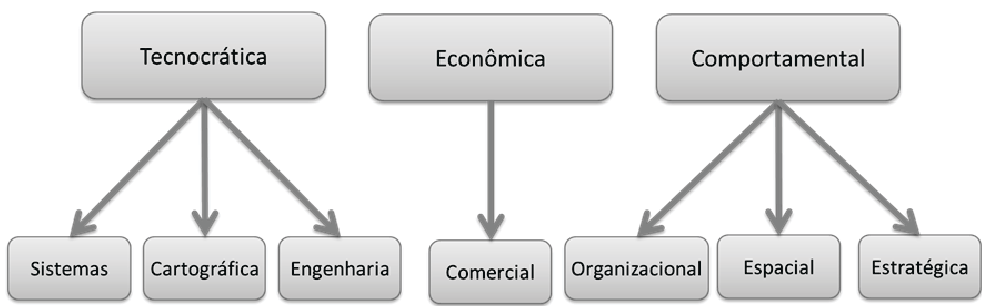 Figure 1: Michael Earl’s Taxonomy of KM Schools, highlighting the behavioral shift of this research.
Architecture of Knowledge Flow
The a.m.i.g.o.s platform was not just a Facebook clone; it was a calibrated KM instrument. By introducing "social translucence," it allowed users to see the activity of others, fostering trust. Trust is the currency of knowledge transfer. When users felt part of a "Community of Practice," the barriers to sharing dropped significantly.
Experimental Results & Observations
The quantitative data revealed a fascinating "Novelty Spike" pattern. Every time a new version or feature (like the Projects module) was released, user engagement surged. However, without formal organizational policies requiring its use, engagement tended to drift back to baseline levels.
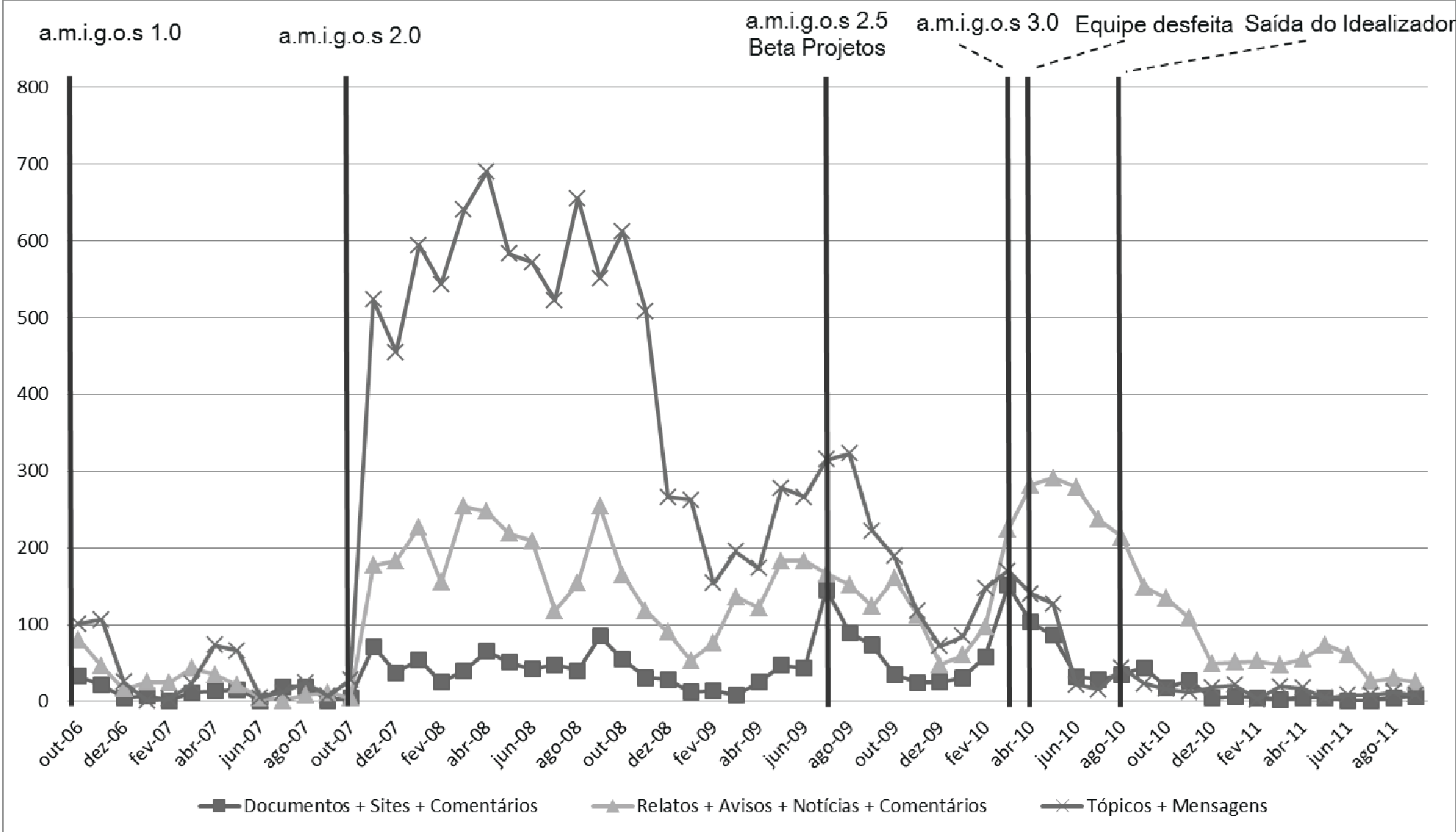 Figure 2: The correlation between system updates (Milestones) and knowledge creation metrics.
Key Findings:
- Cultural Alignment: In software-heavy innovation hubs, social tools feel more natural than "bureaucratic" repositories.
- Fragility of Initiatives: The departure of a "champion" (the primary advocate) leads to a rapid decline in usage, regardless of tool quality.
- Localized Success: High-secrecy projects found the tool indispensable for internal coordination, showing that KM can thrive in "isolated cells" even if the whole organization isn't fully committed.
Critical Insight & Conclusion
The paper’s most profound takeaway is that KM is 20% technology and 80% culture. Even a technologically successful platform like a.m.i.g.o.s, which survived in the wild for five years, eventually hit the "glass ceiling" of organizational policy.
For future tech leaders, the message is clear: If you want to manage knowledge, don't build a library; build a coffee shop (digitally). But ensure the CEO is there buying the first round—institutional support and explicit usage policies are the only things that turn a "cool tool" into a permanent organizational asset.