
Mobile Learning Evolution: From Stationary E-Learning to the FRAME Model
Social Networks and Mobile Devices in Higher Education: Pilot Project
This paper presents a pilot study on integrating mobile-assisted learning and social networks at the University of Hradec Kralove. By evaluating students' device ownership and social media habits, the researchers justify the deployment of the Blackboard Mobile Learn™ platform to bridge formal and informal learning.
TL;DR
Higher education is at a crossroads where traditional e-learning on desktop computers no longer meets the needs of "digital native" students. This research explores the readiness of university students to embrace Mobile-Assisted Learning (m-learning) and social networking. By analyzing device ownership and social media literacy, the study lays the groundwork for a pilot project using the Blackboard Mobile platform, emphasizing a shift toward "mobile-first" instructional didactics.
Background Positioning
In the landscape of educational technology, this work serves as an implementation bridge. It moves beyond the theoretical promise of "anywhere, anytime" learning by conducting a localized empirical audit of student infrastructure. It situates itself within the Connectivism theory, where learning is viewed as a process of connecting specialized nodes or information sources.
The Core Friction: Why Traditional E-Learning is Failing
The paper identifies a significant cognitive gap: today's students—often termed "Digital Natives"—have brains physically structured differently due to their constant interaction with ICT. Traditional e-learning systems (LMS) designed for desktop use are:
- Too Rigid: Tied to physical locations and electrical supplies.
- Context-Agnostic: They fail to bridge the gap between formal university instruction and informal, social learning.
- Didactically Outdated: They often push long-form text that is unreadable on the very devices students use most.
Methodology: The FRAME Model
The authors adopt the FRAME (Framework for the Rational Analysis of Mobile Education) model. Unlike models that focus purely on the software, FRAME places the Mobile Device at the intersection of the Learner and Social contexts.
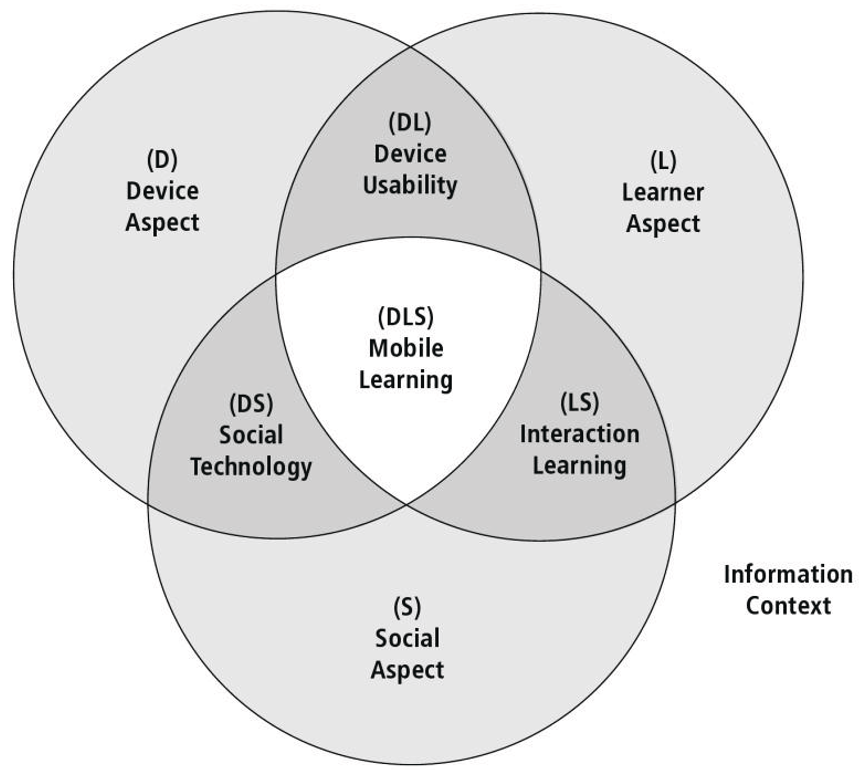
This model suggests that for m-learning to be effective, it must account for:
- Device Usability: Processor speed, storage, and screen size.
- Learner Interaction: Prior knowledge and emotions.
- Social Convergence: Social networking as a "knowledge convergence platform."
Insights from the Pilot: Results and Data
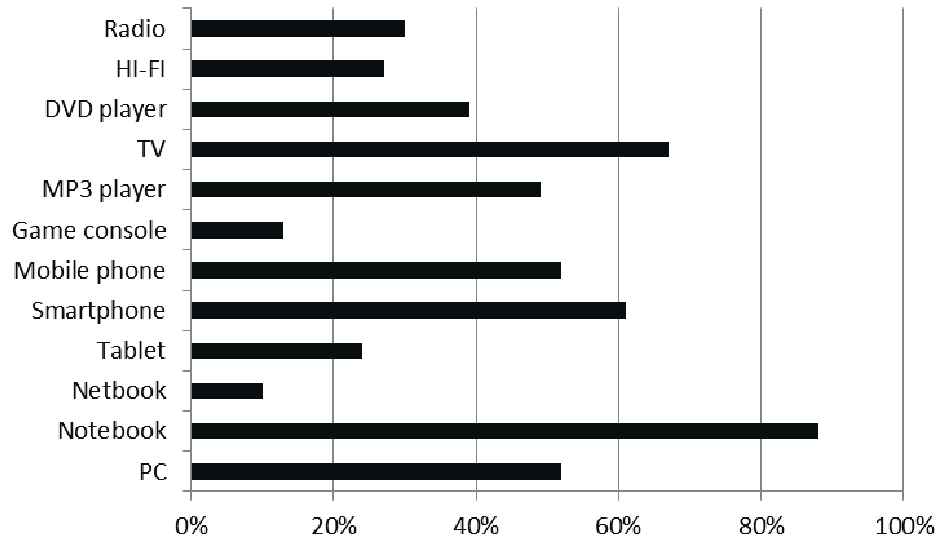
The survey conducted at the University of Hradec Kralove (n=203) revealed a high state of "Technical Readiness" but a disparity in "Social Readiness."
1. Device Ownership
The "Device Ecosystem" is robust. Nearly 90% of students own notebooks, and over 60% utilize smartphones. Interestingly, the study found that students often own multiple devices (Notebook + Smartphone), suggesting a multi-screen learning approach.
2. The Social Media Paradox
While students are "literate" in social networking, their literacy is heavily tilted toward entertainment.
- Facebook: Daily use is nearly universal.
- LinkedIn: 79% of students have never accessed it, indicating a massive untapped opportunity for professional development and formal networking within the curriculum.
Critical Analysis & Future Recommendations
The most striking takeaway is the authors' call for Mobile-Assisted Learning Didactics. Simply putting an LMS on a phone is not "m-learning"; it is just "mobile access to old content."
Strategies for the Future:
- Micro-Learning Content: Moving away from "long full-text materials" toward bulleted text and short video sequences optimized for small screens.
- Format Adaptation: Assessments must switch to mobile-friendly formats like True/False or Multiple Choice.
- The TPCK Framework: Integration of Technological, Pedagogical, and Content Knowledge is essential. Teachers need training not just on how to use the app, but how to teach through it.
Limitations
The study notes that while students are technically equipped, their "pedagogical readiness"—the ability to use these tools for learning rather than just socializing—remains unproven. Furthermore, the financial burden of mobile data in certain regions remains a potential barrier to "democratic access."
Conclusion
This paper serves as a vital blueprint for institutions transitioning to ubiquitous learning. It proves that the hardware is ready; now, the pedagogy must catch up. The future of higher education lies in the "Virtual Desktop" and the "Cloud," where the campus is extended into the student's pocket.