
Social Networks in P2P: Moving Beyond the Chaos of Gnutella Flooding
Social Networks in Peer-to-Peer Systems
This paper introduces a Semantic-Social routing approach for P2P systems, specifically targeting the Gnutella protocol. By enabling peers to maintain categorized "friends lists" based on past interactions, the method transforms random query broadcasting into an intelligent, interest-based routing mechanism that achieves SOTA-level efficiency in decentralized file searching.
TL;DR
In the early days of P2P, the Gnutella protocol was synonymous with "flooding"—a brute-force search method that choked networks with redundant messages. This paper proposes a Semantic-Social Routing approach, where peers stop acting like random repeaters and start acting like social beings. By maintaining "friends lists" based on shared interests, peers can route queries to those most likely to have the answer, reducing traffic by over 30% and finding files 40% faster.
The "Small World" Motivation
The fundamental flaw of Gnutella 0.4/0.6 is its lack of Inductive Bias. It treats every neighbor as equally likely to satisfy a query, ignoring the reality that users naturally form communities of interest.
The authors draw a parallel to the "Small World" phenomenon (the Milgram experiment). In human society, we don't ask random strangers for specialized medical advice; we go to our "social network." If our friends don't know the answer, they provide a referral to someone who does. The authors' insight is: Can a digital peer learn who its "expert friends" are?
Methodology: The Social-Semantic Architecture
The core of the methodology is the Friends List, which is built through a feedback loop of interactions.
1. Strength of Relationship
A peer doesn't just remember who responded; it quantifies how useful they were using the following formula:
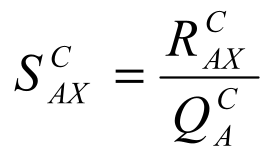
Where:
- : Strength peer assigns to peer in category .
- : Number of successful interactions.
- : Total queries issued in that category.
2. Semantic Routing
Instead of broadcasting to all 7 neighbors (Gnutella standard), a peer selects "best friends" from its list and random peers (to allow for exploration and discovery of new friends). This balance prevents the network from becoming a closed echo chamber.
Experimental Evidence
The authors utilized the JADE multi-agent platform to simulate 100 peers. They tested the model against a baseline "Standard Gnutella" environment.
Speed of Search (Hops)
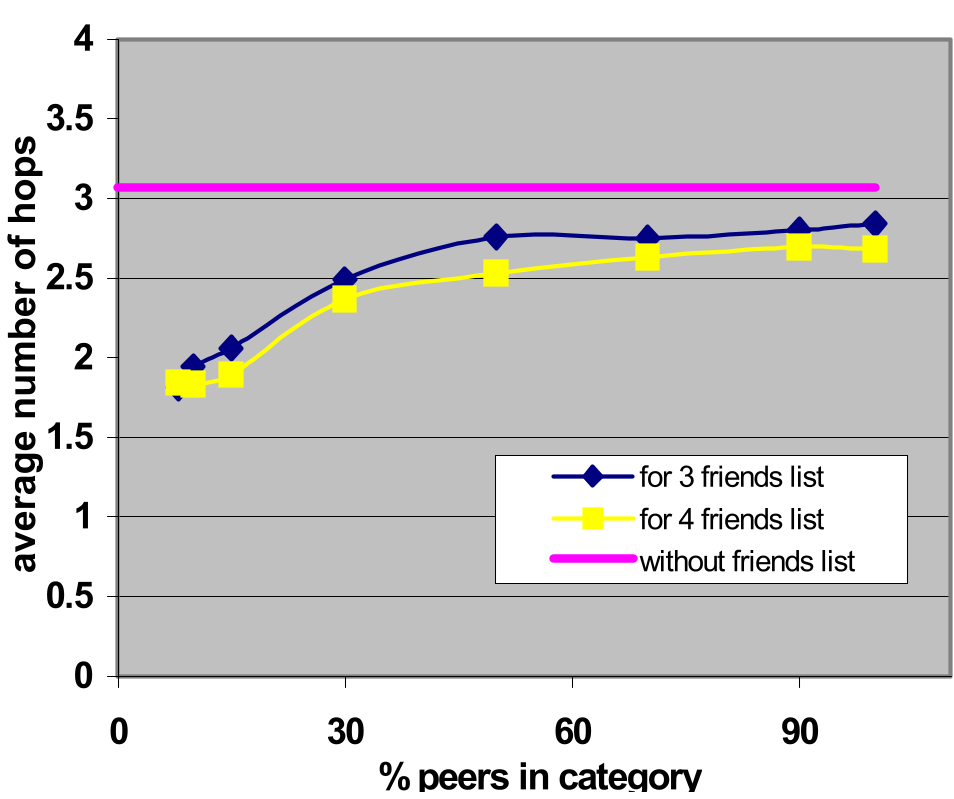 Fig 2. The social routing (lines with markers) consistently stays below the standard Gnutella baseline (straight line), especially when interest groups are small.
Traffic Reduction (Messages)
The results for network congestion were even more striking:
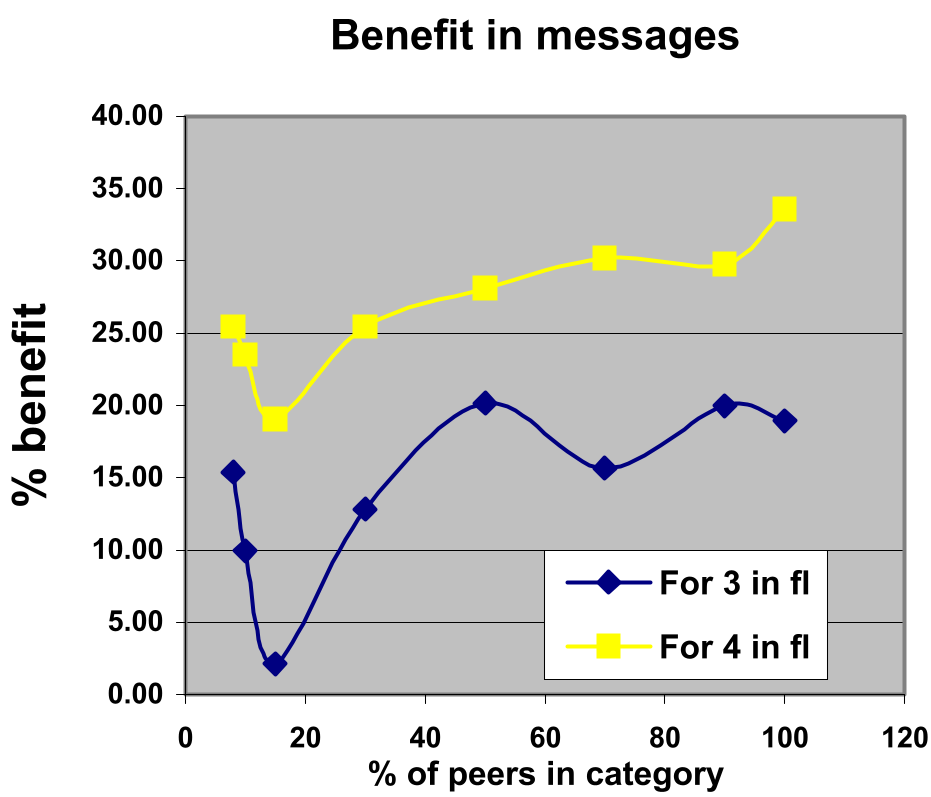 Fig 5. Using social lists results in a 15% to 33% reduction in the number of messages circulating in the system.
Critical Analysis & Takeaways
The beauty of this approach lies in its Subjectivity. Unlike centralized "Yellow Pages" or Napster-like directories, every peer builds its own worldview. A highly specialized peer might be "low quality" to the general public but "invaluable" to a specific researcher.
Key Takeaways for Future Systems:
- Context Matters: A "friend" in the "Music" category is not necessarily a "friend" in the "Academic Papers" category. Decentralized systems must maintain multi-faceted relationship weights.
- Exploration vs. Exploitation: The random neighbors are crucial. Without them, the network cannot adapt when peers change interests or new, better resources join.
While the simulation was limited to small clusters (50-100 users), the underlying logic of semantic shortcuts remains a cornerstone for modern decentralized protocols, from IPFS to DHT-based routing in blockchain networks.