
SOF: Optimizing Mobile Social Networks through Social Overlay-based Forwarding
A social overlay-based forwarding scheme for mobile social networks
This paper introduces the Social Overlay-based Forwarding (SOF) scheme for Mobile Social Networks (MSNs). By constructing a dual-layer asynchronous social overlay based on common neighbor similarity and refined contact probability, SOF effectively selects relay nodes in environments lacking stable end-to-end paths.
TL;DR
Mobile Social Networks (MSNs) are notoriously difficult for data routing because they rely on human movement rather than fixed cables. The Social Overlay-based Forwarding (SOF) scheme addresses this by creating a virtual "social overlay" that predicts who is likely to meet whom. It uses a hybrid approach: jumping across "clusters" of similarity and then using refined probability to reach the final destination, cutting down unnecessary network congestion significantly.
Background: The Chaos of Opportunistic Networking
In a "pure" Mobile Social Network, there is no central server and no guaranteed path between two points. Messages are moved in a Store-Carry-and-Forward manner. Historically, researchers used "Epidemic" routing (flooding the network) which works but destroys bandwidth, or probabilistic models like ProPhet which can be slow and inefficient in complex social structures.
The authors identify a gap: existing overlay methods rely on global information that a single mobile node simply doesn't have.
Methodology: The Two-Layer Social Overlay
The core "genius" of SOF lies in its asynchronous dual-layer architecture. It mimics how humans interact by looking at two specific metrics:
- Common Neighbor Similarity (The "Friend of a Friend" Logic): If Node A and Node B share many common contacts, they are likely part of the same community. SOF uses this to build Clusters.
- Contact Probability (The "Frequent Flyer" Logic): This isn't just "have we met?" but "how often, how long, and how regularly do we meet?" This refined probability is used to navigate the last mile to the destination.
The Forwarding Algorithm
- Cluster-based Forwarding: Messages are moved from low-similarity clusters to higher-similarity clusters (closer to the destination's "social circle").
- Probabilistic Forwarding: Once the message reaches the destination's social circle (the highest cluster), it switches to using contact probability to find the specific person.
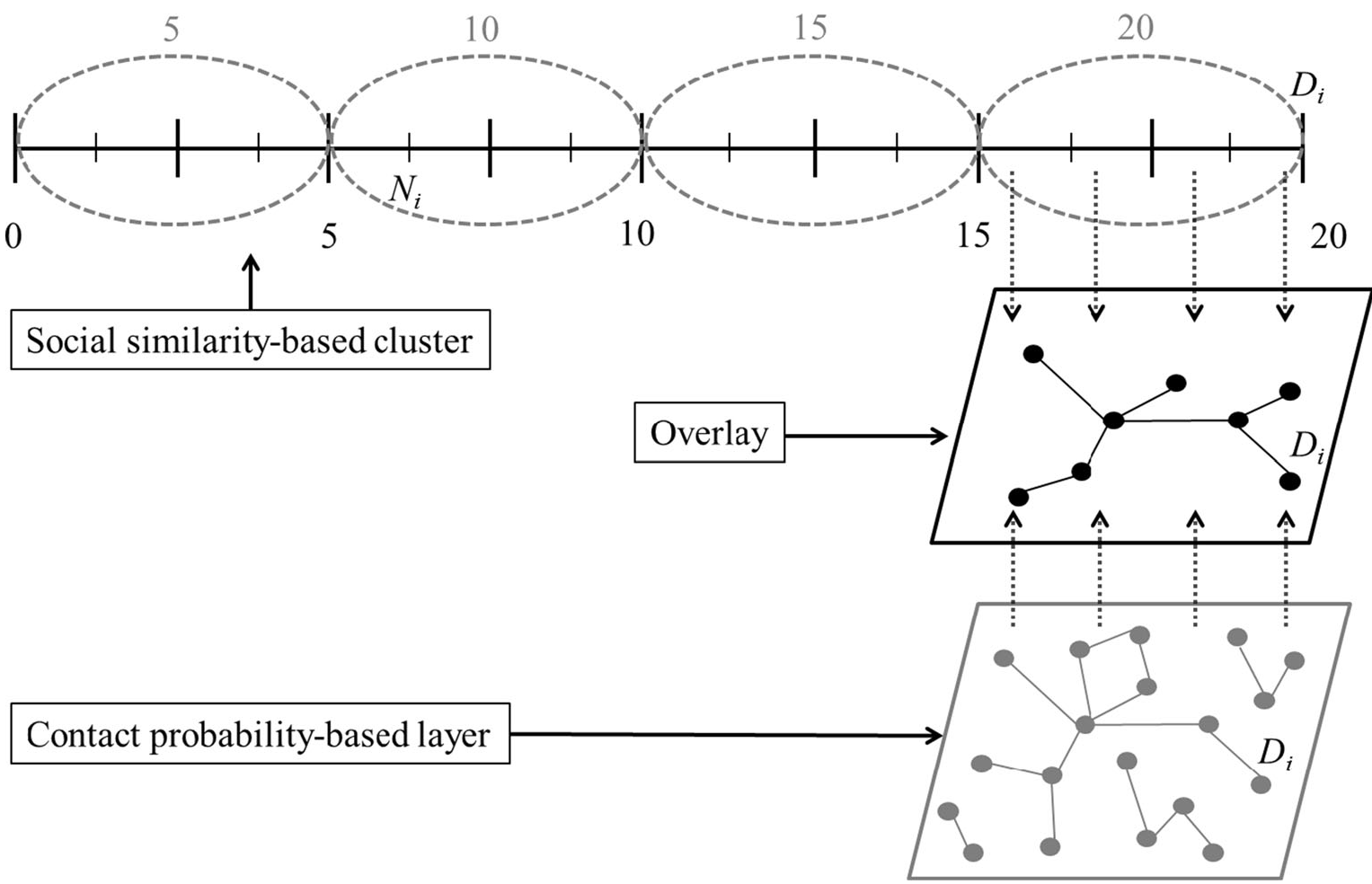 Figure 1: Illustration of how clusters are formed based on similarity scores and link into a social graph.
Experimental Validation
Using the NS-2 simulator and the HCMM (Home-Cell Community-based Mobility Model), the authors compared SOF against industry standards like Epidemic, ProPhet, and SimBet.
Key Findings:
- Traffic Efficiency: SOF drastically outperformed Epidemic and ProPhet in network traffic. Because it doesn't flood the network, it keeps "copies" of messages to a minimum.
- The "d" Variable: The study found that dividing the network into roughly 4 clusters (d=4) provided the perfect balance between transmission delay and traffic overhead.
- Scalability: As the number of nodes increases from 40 to 70, SOF's traffic remains relatively stable, whereas other methods see exponential growth in overhead.
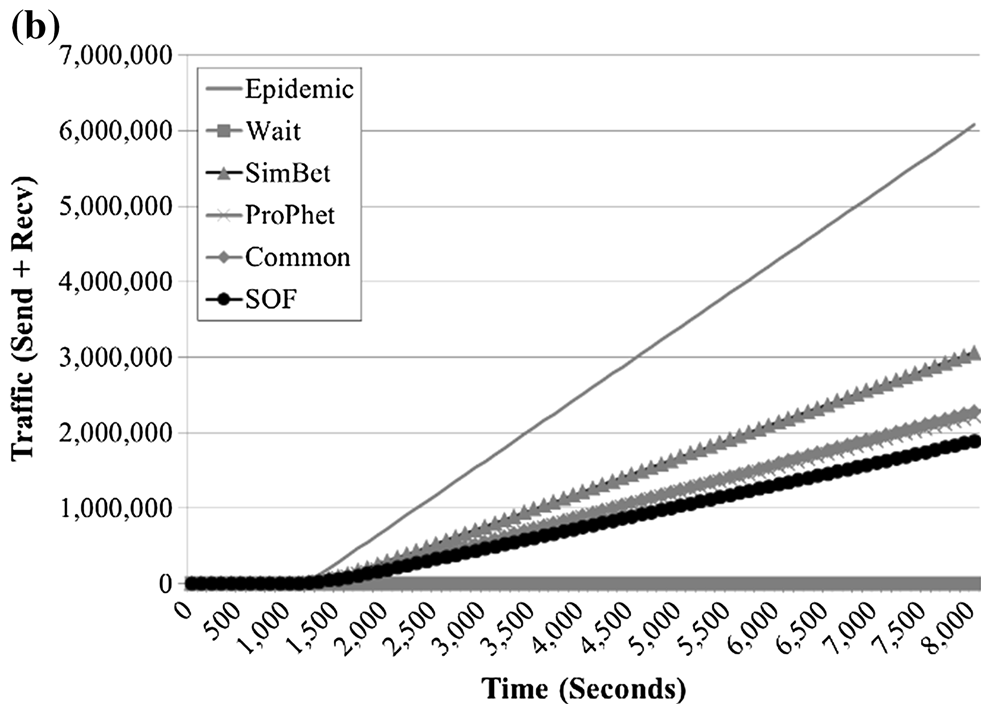 Figure 2: Performance analysis showing the delivery ratio and the massive traffic savings of SOF compared to other non-clustering schemes.
Critical Insight & Conclusion
The SOF scheme proves that in decentralized networks, Social Intuition > Raw Data. By modeling "friendship" (similarity) and "habits" (refined probability), the protocol avoids the "broadcast storm" problem of simple epidemic routing.
Limitations: The model assumes nodes are honest and cooperative. In real-world scenarios, "selfish" nodes might refuse to carry messages to save battery, a challenge that future iterations of SOF would need to address. However, as it stands, SOF provides a sophisticated blueprint for the next generation of delay-tolerant, human-centric communication systems.