
Beyond the Alphabetical Phonebook: Bayesian Context Modeling for Smart Recommendations
Social and Personal Context Modeling for Contact List Recommendation on Mobile Device
This paper introduces a hierarchical context modeling framework for mobile contact list recommendation. By leveraging Bayesian Networks (BNs) to infer high-level social and personal states (e.g., amity, emotion, busyness) from raw device logs, the system achieves a context-aware "Smart Phonebook" that ranks contacts based on semantic compatibility.
TL;DR
This research tackles the inefficiency of traditional mobile contact lists by proposing a social and personal context modeling system. Using Bayesian Networks (BNs) to infer high-level user states (Amity, Emotion, Busyness) and Hierarchical Context-Trees for matching, the system transforms a static phonebook into a proactive assistant. Experimental results show a nearly 70% accuracy for Top-5 contact recommendations in real-world settings.
Problem & Motivation: The Uncertainty of Being Mobile
Mobile devices are extensions of ourselves, yet their interfaces remain surprisingly "dumb." Finding a contact often requires tedious manual searching or scrolling. While context-aware systems exist, they typically struggle with:
- Sensor Noise: GPS and activity logs are rarely 100% accurate.
- Causal Uncertainty: Does "Night + Location: Home" mean the user is sleeping or just watching a movie?
- Low-Level Limits: Previous systems focused on raw data rather than high-level social concepts like "Amity" (how close you are to someone).
The authors argue that by modeling these uncertainties through probabilistic frameworks, a mobile device can "understand" the nuances of a user’s social situation.
Methodology: From Raw Logs to High-Level Intuition
The system architecture follows a sophisticated pipeline from data ingestion to recommendation.
1. High-Level Reasoning with Bayesian Networks
Instead of hard-coded rules, the authors use Bayesian Networks (see Figure 2 in the paper) to infer three primary high-level contexts:
- Amity (Social Context): How close the user is to a specific contact.
- Emotion (Personal Context): Simplified into four types based on the valence-arousal space.
- Busyness (Personal Context): Inferred from schedule density and communication frequency.
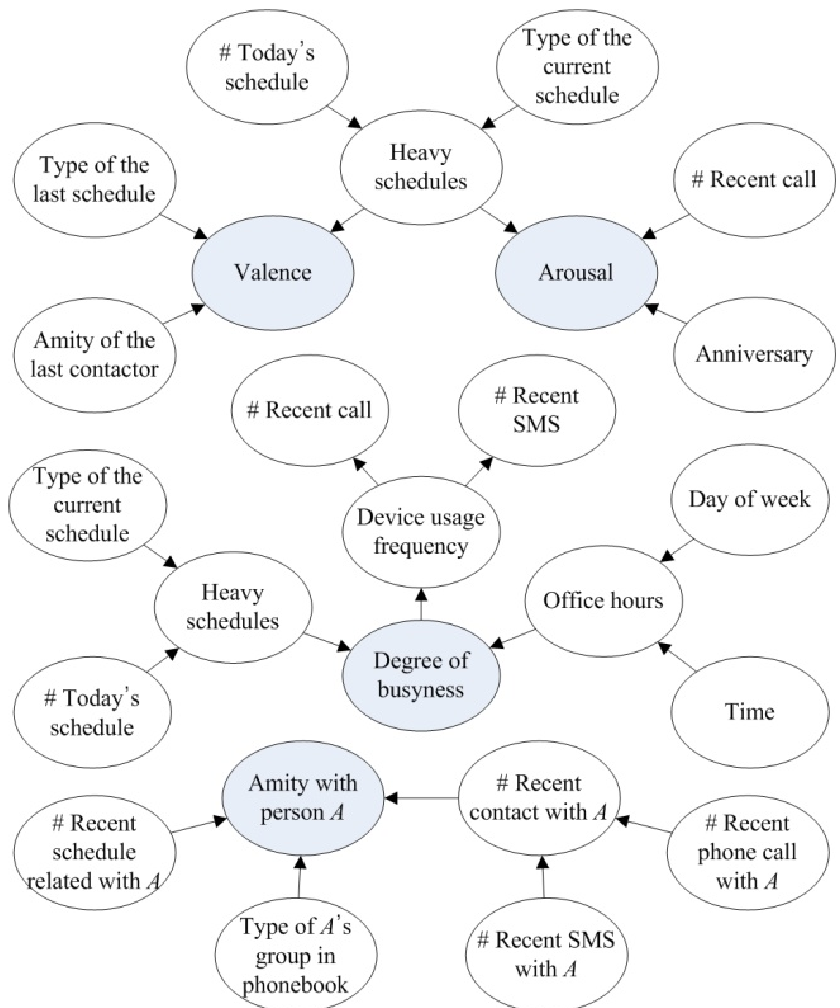 Figure 1: The overall architecture of the context-aware recommendation system.
2. Hierarchical Context-Trees
To handle the "fuzziness" of information, contexts are expanded into trees via domain ontology. If the user is in a "Business" meeting, the system doesn't just look for a exact string match; it navigates a tree where "Work" and "Professional Meeting" are semantically linked.
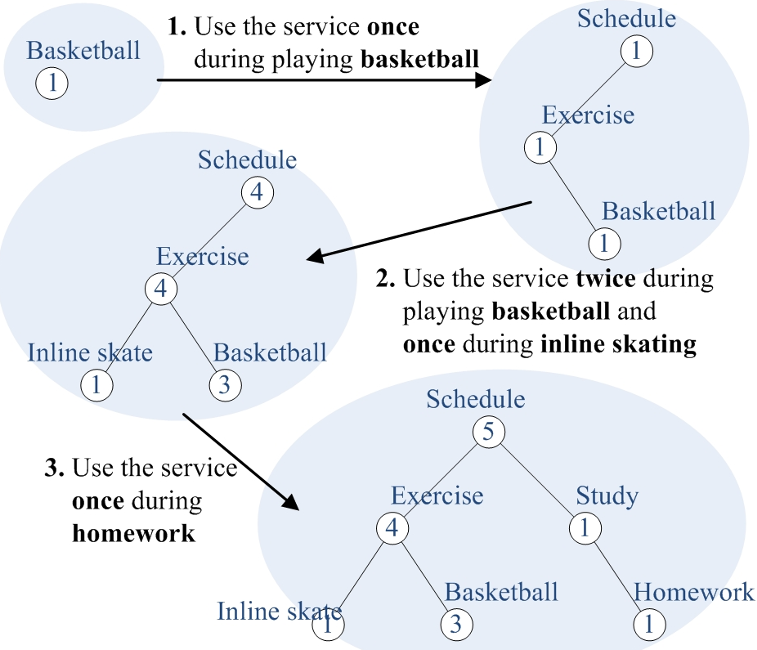 Figure 3: Example of a schedule context expanded into a hierarchical tree to capture semantic frequency.
The Similarity Score (Eq. 2) calculates the overlap between current trees and history, weighted by the "level" of the node—meaning abstract matches (like general "Friendship") contribute less than specific matches (like a specific "Lover" or "Business Partner").
Experiments & Results
The "Smart Phonebook" prototype was tested on a Windows Mobile platform. It doesn't just suggest names; it displays a "fitness score" via colored blocks and even provides a natural language reason for the recommendation (e.g., "Recommended because you have a friendship-type schedule now").
Key Performance Metrics:
- Top-1 Accuracy: 26.1%
- Top-5 Accuracy: 69.6%
- Failure Rate: 21.7% (primarily due to "cold start" calls to new numbers).
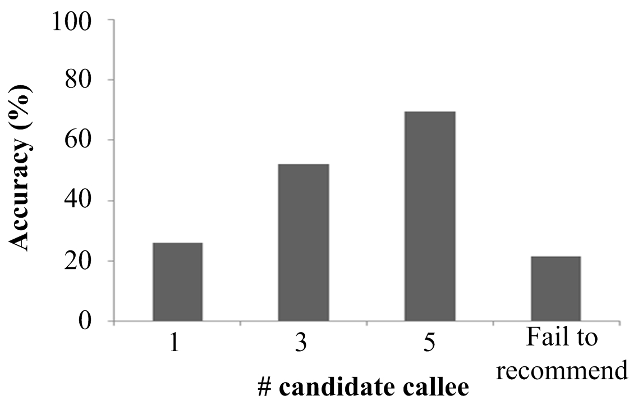 Figure 5: The Top-5 accuracy demonstrates the system's effectiveness in filtering relevant contacts.
Analysis showed that while the system excels in recurring social patterns, it struggles when a user is exceptionally busy, as the "behavioral irregularity" increases, making Bayesian inference more challenging.
Critical Analysis & Conclusion
Takeaway
This paper successfully demonstrates that semantic compatibility—matching the "vibe" and "context" of a situation—is a viable path for mobile UX. Moving from deterministic rules to probabilistic Bayesian modeling allows for a much more "human" interaction.
Limitations
- Manual Structure: The BN structure was specified manually based on domain knowledge. In a modern context, this would likely be learned via structural learning or deep latent variable models.
- Cold Start: The system has no way to predict calls to people never contacted before.
Future Outlook
As we move toward LLM-powered mobile agents, the "Context-Tree" logic seen here provides a blueprint for how agents might use long-term "social memory" to anticipate user needs before being asked.