
Social Ranking: Bridging the Trust Gap in Large-Scale Resource Scheduling
Social ranking criteria for pairwise gossiping in large-scale resource scheduling
The paper proposes a novel resource scheduling framework for large-scale networks by integrating Social Ranking Criteria into pairwise gossiping protocols. It leverages existing social trust relationships to bridge the gap in resource matchmaking between autonomous entities in grids and clouds.
TL;DR
This research tackles the scalability and trust issues in grid and cloud computing by transposing social network dynamics onto resource matchmaking. By using "Social Ranking Criteria"—such as friendship distance and interaction history—within a pairwise gossiping protocol, the authors demonstrate that social trust can effectively guide resource discovery in massive, autonomous networks without the need for centralized bottlenecks.
Background & Motivation: The Identity Crisis in Distributed Systems
In the era of massive grid and cloud computing, the "online presence" of non-technical users has exploded. However, two fundamental hurdles remain:
- Scaling: Centralized repositories for matchmaking (connecting resource seekers with providers) cannot handle the churn of millions of autonomous nodes.
- Trust: How does a node decide which remote provider is reliable without a centralized authority or a long shared history?
The authors argue that Social Networks (like Facebook) have already solved the "trust" problem. By leveraging these pre-existing human relationships, we can create Virtual Organizations where trust is inherited from social links, facilitating safer and more efficient resource sharing.
Methodology: Mapping Social Intuition to Gossip Protocols
The Pairwise Gossiping Framework
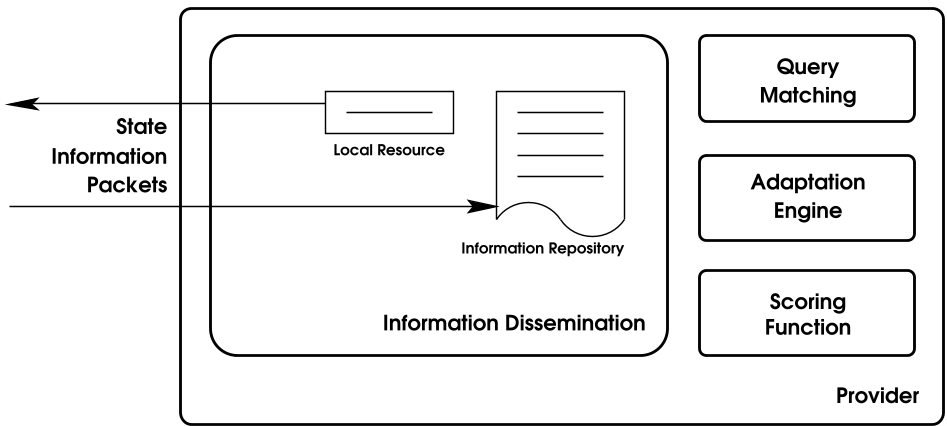
The core of the system relies on an adaptation of the Actualized Robust Random Gossiping (ARRG) protocol. Instead of broadcasting information to everyone (which creates massive traffic), nodes periodically pick a "peer" and exchange a subset of their resource caches.
Social Ranking Criteria
The breakthrough of this paper is the replacement of traditional "technical" ranking with "socially-aware" metrics:
- Recent Popularity: Based on the frequency of recent interactions (Analogous to Freshness).
- Trusted History: Based on the success rate of past collaborations between entities (Analogous to Execution History).
- Social Distance: Based on the number of links separating two people in a social graph (Analogous to Network Hop Count).
The protocol uses a Random Walk strategy for discovery and a scoring framework where nodes adjust their dissemination rates based on local, neighborhood, and grid-wide performance scores.
Experimental Insights
The authors simulated a 1,200-node environment using both Transit-Stub (traditional network) and Scale-Free (social network) topologies.
Key Findings:
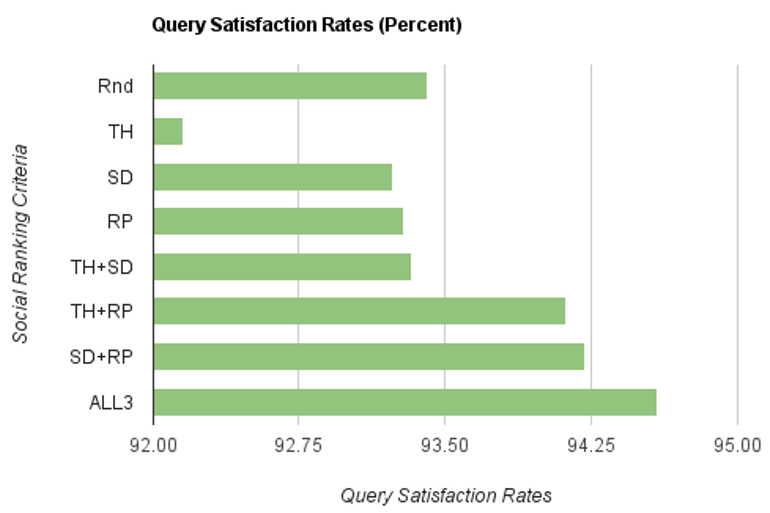
- Performance Parity: Social ranking criteria performed just as well as traditional technical criteria in terms of query satisfaction and response time.
- Distance Optimization: Using Social Distance (TTL) as a ranking factor resulted in the shortest "distance" for satisfied queries, suggesting that social proximity often correlates with network efficiency.
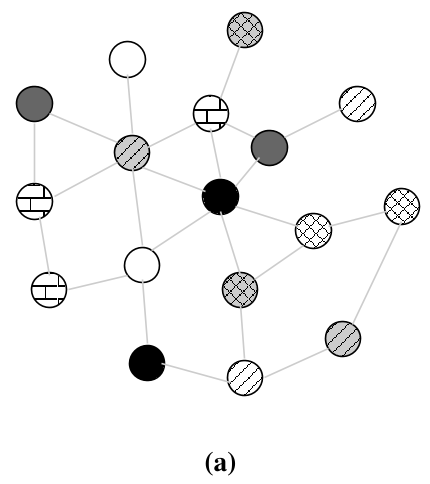
- Scalability: The formation of "Strict Neighborhoods" (where leaders aggregate and disseminate state) helped manage information bloat effectively.
Critical Analysis & Conclusion
Takeaway
The mapping of social attributes to technical parameters is more than a metaphor; it's a functional strategy. This work validates that human-centric trust metrics provide a robust Inductive Bias for resource scheduling in decentralized systems.
Limitations & Future Work
- Scale: The simulation was capped at 1,200 nodes. Real-world social networks are orders of magnitude larger and more complex.
- Overlay Realism: The current prototype is a proof-of-concept. The authors are currently moving toward a real-world social networking application to test these criteria under volatile, "noisy" human behavior.
In conclusion, as we move toward a "Social Cloud," the boundary between social interactions and computational resource management will continue to blur, making social-aware protocols a cornerstone of future decentralized architecture.