
BPtri-train: Bridging Social Relationship Gaps Across Heterogeneous Networks
Social relationship prediction across networks using tri-training BP neural networks
This paper proposes an asymmetric tri-training BP neural network model designed for cross-network social relationship prediction. By leveraging transfer learning and structural feature engineering, it achieves SOTA results in predicting link labels in target networks with zero ground-truth labels.
TL;DR
Predicting social ties in a new network without any labels is a classic "cold-start" challenge. This paper introduces BPtri-train, an asymmetric tri-training framework that uses three neural networks to transfer knowledge from a labeled source network to an unlabeled target network. By mixing common structural features with network-specific attributes, it boosts F1-scores by up to 22% compared to standard baselines.
The Motivation: Why is Cross-Network Prediction Hard?
In the world of social computing, we often have massive datasets for established platforms (like Epinions or Slashdot) but zero labels for emerging ones. Traditional link prediction assumes the training and testing data come from the same distribution. However, every network has a unique "social thumbprint":
- Domain Divergence: The distribution of "trust" in a trading network (Bitcoin Alpha) differs fundamentally from "collaboration" in an academic network (DBLP).
- The Label Scarcity: You cannot train a supervised model if the target network has no ground truth.
The authors' key insight: While networks differ, they share common topological motifs (like mutual friends), but these must be balanced with domain-specific features unique to the target's geometry.
Methodology: The Asymmetric Tri-Training Architecture
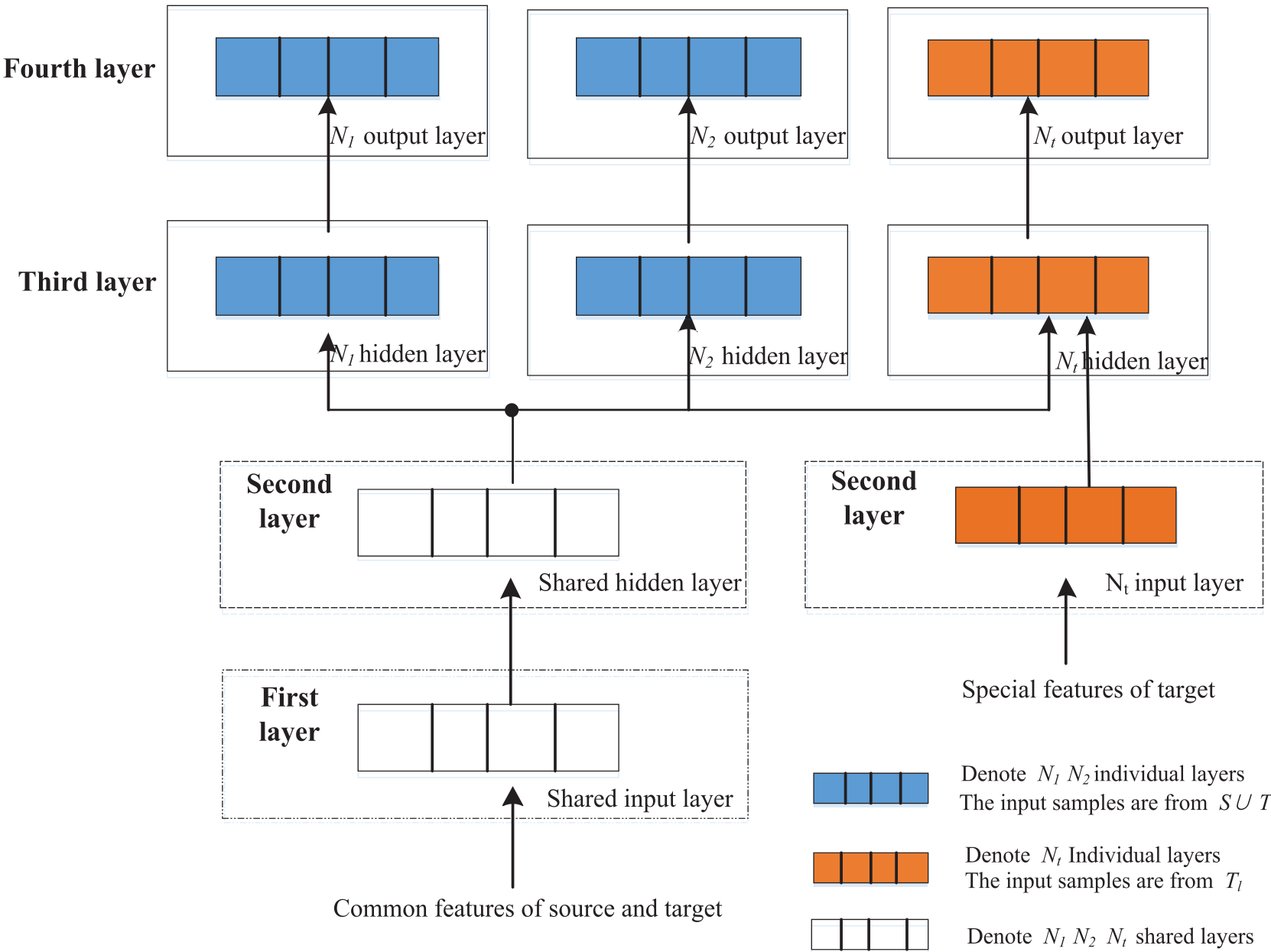
The core of the paper is the Tri-BP neural network framework. Instead of a single model, it uses three distinct networks () to create a robust self-labeling loop.
1. The Shared Feature Space
The model starts with a shared input layer that captures common features like Embeddedness (number of common neighbors) and Jaccard Similarity. This ensures the models speak a common language across networks.
2. The Asymmetric Learning Process
- and (The Pseudo-Labelers): These two networks are trained primarily on the labeled source data. They act as "experts" that scan the target network and assign labels to unlabeled samples where they both agree with high confidence.
- (The Specialty Learner): This third network is the "star" of the target domain. It is trained on the pseudo-labels generated by and . Crucially, it takes an additional input: Special Features unique to the target network (e.g., Edge Clustering Coefficient).
3. Structural Features: The Secret Sauce
The authors categorize networks into four types based on Average Clustering Coefficient (ACC) and Average Path Length (APL).
- High ACC/Low APL: Small-world networks like Bitcoin Alpha.
- Low ACC/High APL: Sparse networks like Epinions.
By identifying which category the target network falls into, the model selects specific features (like Linkness) that best describe that specific social fabric.
Experiments & SOTA Results
The authors tested their model across 6 major datasets, including Bitcoin OTC, WikiVote, and DBLP.
Key Findings:
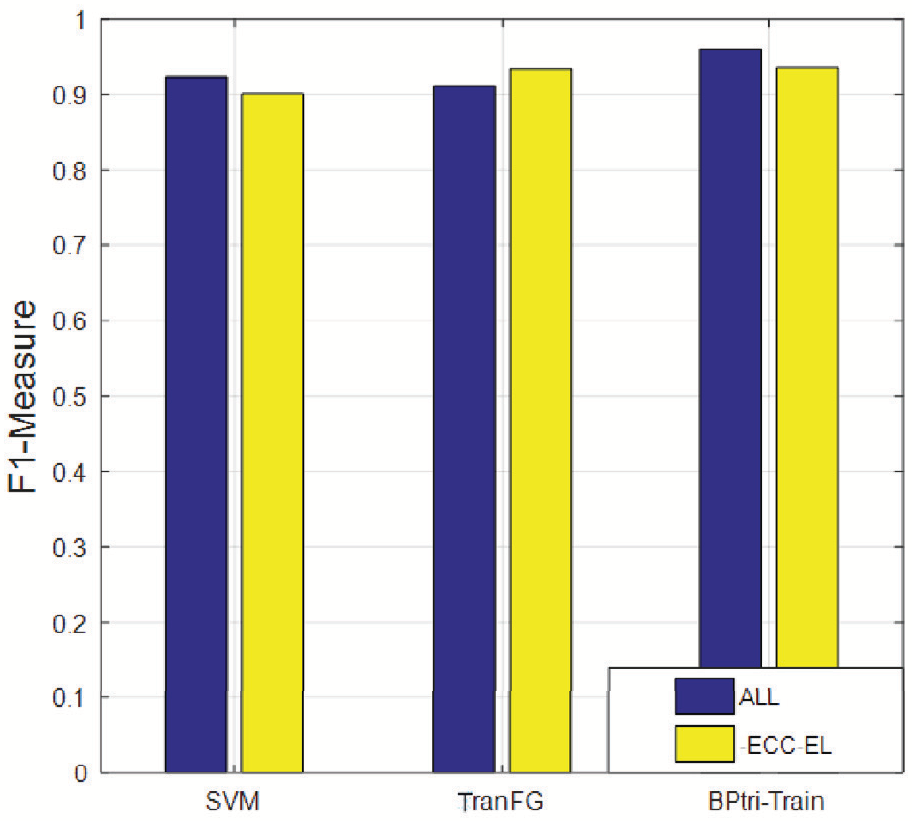
- Performance Leap: BPtri-train consistently outperformed TranFG and traditional Random Forest models. For instance, when transferring from Alpha to Slashdot, the F1-score soared compared to non-transfer methods.
- Convergence: Despite the iterative nature of tri-training, the model demonstrates rapid convergence, typically stabilizing within 10-20 iterations.
Deep Insight: Why Tri-Training?
The brilliance of the asymmetric approach lies in its theoretical grounding in the H-delta-H distance. By using two models to "label" and a third to "learn," the framework effectively minimizes the empirical risk on the target domain without ever seeing a true target label. The inclusion of special target features prevents the model from simply mimicking the source domain, allowing it to adapt to the specific "social rules" of the new environment.
Conclusion & Future Outlook
This work proves that you don't need labels to understand a new social network—you just need the right transfer mechanism. While the BP neural network used here is relatively simple, the tri-training logic could easily be extended to Graph Convolutional Networks (GCNs) or Transformers to capture even deeper relational nuances.
Limitations:
- The model currently focuses on binary relationships (Positive/Negative).
- It relies on manually selected structural features, which might be replaced by automated "graph representation learning" in future iterations.
Senior Editor's Note: This paper is a significant milestone for practitioners dealing with cold-start problems in social graphs and recommendation systems.