
SIoT Service Recommendation: Why Your Smart Fridge Should "Socialize" Like You
A Social-Relationships-Based Service Recommendation System for SIoT Devices
The paper proposes a novel service recommendation system for the Social Internet of Things (SIoT) that leverages social relationships between device owners to improve service discovery. By mapping human social patterns (Fiske’s relational model) onto IoT devices, the system achieves higher accuracy and diversity in service selection compared to traditional trust-based or location-based methods.
TL;DR
As the IoT ecosystem scales toward 25 billion devices, finding the right service in a sea of data is becoming impossible—a phenomenon known as the "services explosion." This paper introduces a Social-Relationships-Based Service Recommendation System that mimics human social structures. By clustering devices into communities based on their owners' friendships and interests, the system achieves superior accuracy and diversity in service discovery compared to traditional location or trust-only models.
Problem & Motivation: The Navigability Crisis
Modern IoT research faces a paradox: more connectivity often leads to worse navigability. Standard service discovery methods often fail because:
- Heterogeneity: Devices have different parameters and interest factors.
- Trust Deficit: In a "flat" network, it is hard to verify the quality of a service provider.
- Context Blindness: Most systems ignore the social context of the human owner, which is the strongest indicator of interest and trust.
The authors argue that by "socializing" devices (SIoT), we can use established human social patterns to filter services more effectively.
Methodology: Mapping Humanity to Hardware
The core of the system is the Social Graph Modeling and Community Detection. The authors categorize device relationships into five distinct types, such as Co-Location (CLOR) and Co-Work (CWOR), derived from Fiske's social interaction theory.
1. Community Detection Algorithm
Instead of simple clustering, the system uses a boundary-based algorithm. It identifies "Community Heads" (nodes with maximum connectivity) and expands the community by recursively adding neighbors whose "inner connectivity" is stronger than their "external connectivity."
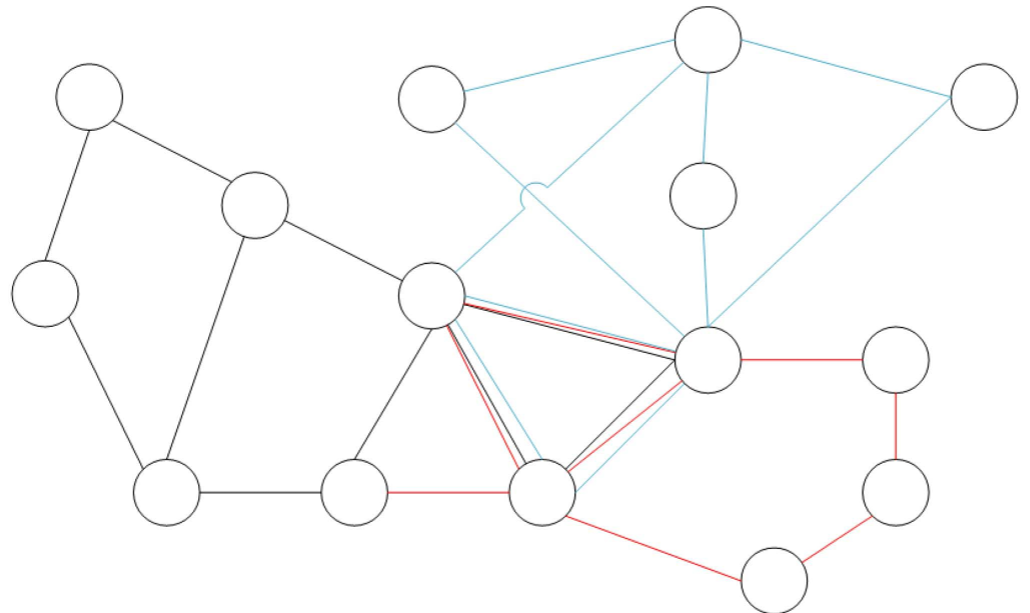 Figure 1: Visual representation of socially connected device communities forming over different relationship layers.
2. Hybrid Filtering and Groups of Interest
Once communities are formed, the system creates Groups of Interest. It uses the Jaccard similarity coefficient to compare owners' interests (e.g., from Twitter data) and combines this with device connectivity scores to generate a recommendation set (RS).
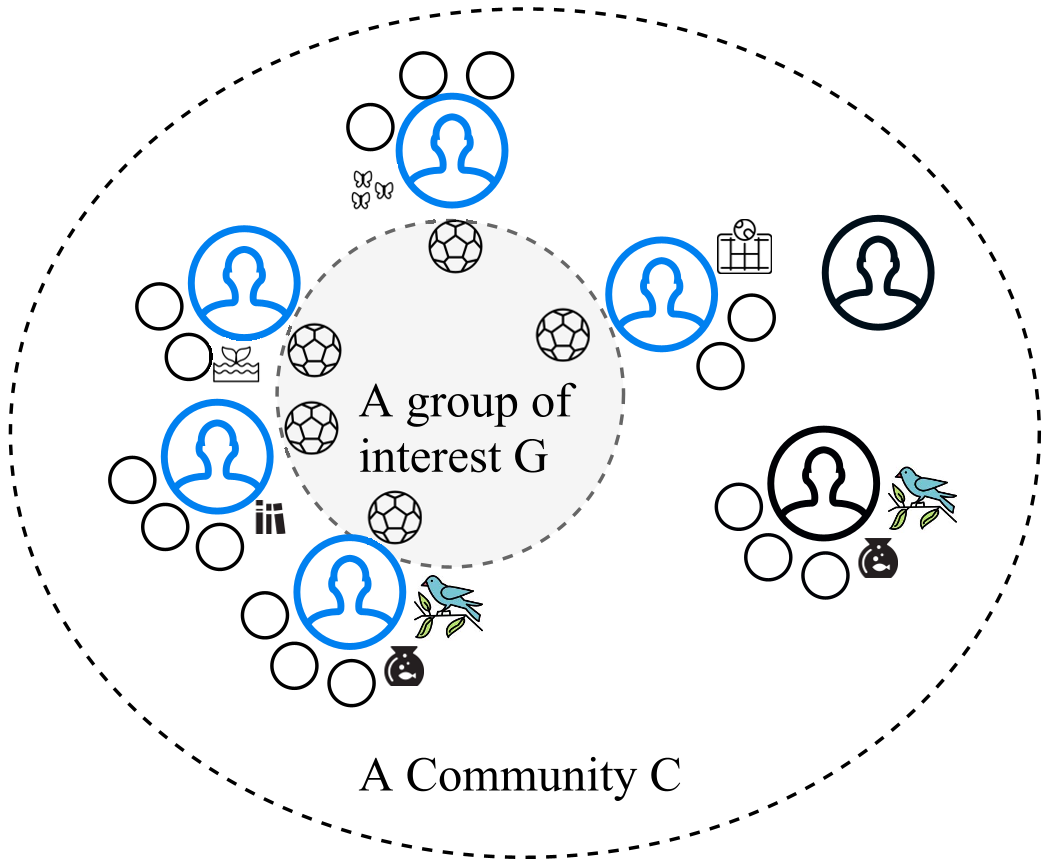 Figure 2: The process of subdividing device communities into specific interest-based clusters for tailored service delivery.
Experiments & Results: The Power of Social Context
The authors validated their approach using real-world data from the Santander Smart City project (16,216 devices) and a massive Twitter dataset (444,744 users).
- Precision & Recall: The proposed system consistently outperformed baselines like MCTSE and TRM-SIoT. Even as node density increased to 10,000 devices, the precision remained robust at over 80%.
- Trade-offs: The only downside identified was a higher computational cost. However, the authors argue that in a modern edge-computing environment, this processing can be distributed across devices.
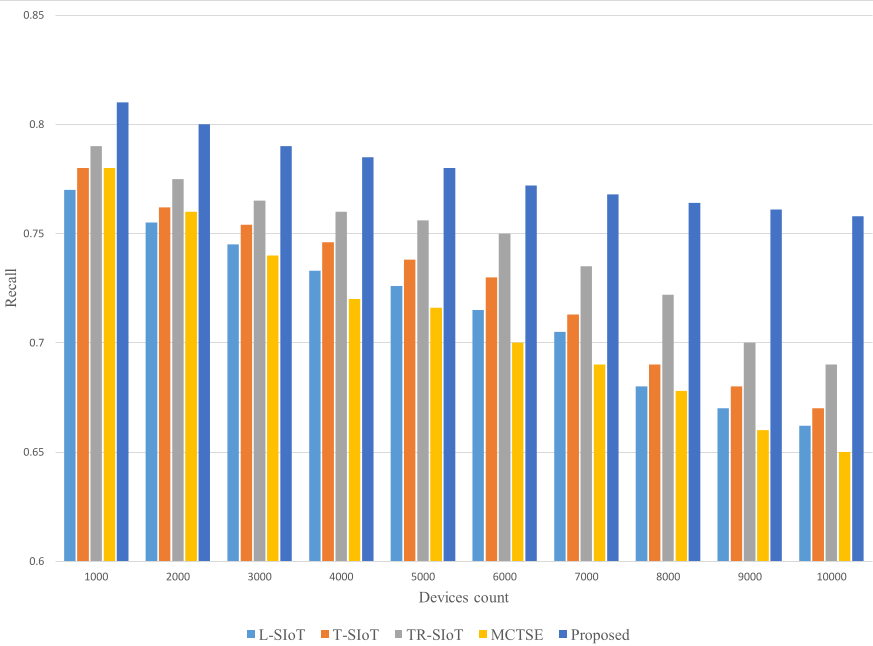 Figure 3: Precision comparison against baselines, showing the stability of the proposed method in dense networks.
Critical Insight & Conclusion
The true value of this work lies in its Relational Insight. By acknowledging that IoT devices are extensions of human social circles, the system creates an "Inductive Bias" that aligns with how humans actually share information and trust.
Takeaway: Future IoT architectures should move away from pure peer-to-peer discovery toward a "Human-in-the-Loop" social hierarchy. While computational efficiency remains a hurdle, the leap in recommendation quality makes a compelling case for the Social Internet of Things.
Limitations: The system faces challenges with high-mobility devices (where location relationships change rapidly) and requires careful consideration of data privacy when syncing device behaviors with social media interests.