
The Social Cost of Fleeing: Quantifying Reputation Loss in P2P Lending
Social reputation loss model and application to lost-linking borrowers in a internet financial platform
This paper introduces a Social Reputation Loss Model designed for lost-link (disconnected) borrowers on internet financial platforms. By integrating online and offline social network characteristics, it quantifies the cost of defaulting and fleeing through a multi-factor mathematical framework to predict reputation decay.
TL;DR
In the world of peer-to-peer (P2P) lending, where physical collateral is often absent, social reputation becomes the primary currency. This paper develops a mathematical model to calculate exactly how much "face" a borrower loses when they go "lost-link" (cut off communication). The core finding: the earlier you run, the harder you fall, with reputation loss following a strict downward convex decay curve.
The "Lost-Link" Problem: Why Credit Scores Aren't Enough
Traditional credit risk management focuses on repayment ability. However, in internet finance, the bigger risk is often moral hazard—the borrower simply shutting off their phone and disappearing.
The authors argue that a borrower exists within a complex web of social capital. When they default and vanish, they don't just lose their credit score; they lose a quantifiable portion of their social standing across both virtual (QQ, WeChat, P2P forums) and physical (family, colleagues, alumni) networks.
Methodology: The Anatomy of Reputation Loss
The paper defines reputation loss () through a product of six critical weights. The intuition is that reputation damage is multiplicative; if any of these factors are zero (e.g., no one knows you defaulted), the reputation loss is effectively zero.
The Six Pillars of Loss:
- Default Ratio (): The percentage of the total debt unpaid.
- Disconnection Time (): A normalized factor indicating how soon after the loan the borrower vanished.
- Guarantee Performance (): Whether the "joint guarantors" (friends/partners) are left holding the bag.
- Project Failure Rate (): The lower the chance of project success, the higher the perceived intent to defraud.
- Network Punishment Range (): How many of the borrower's social circles are informed of the default.
- Punishment Severity (): The average intensity of disciplinary action across these circles.
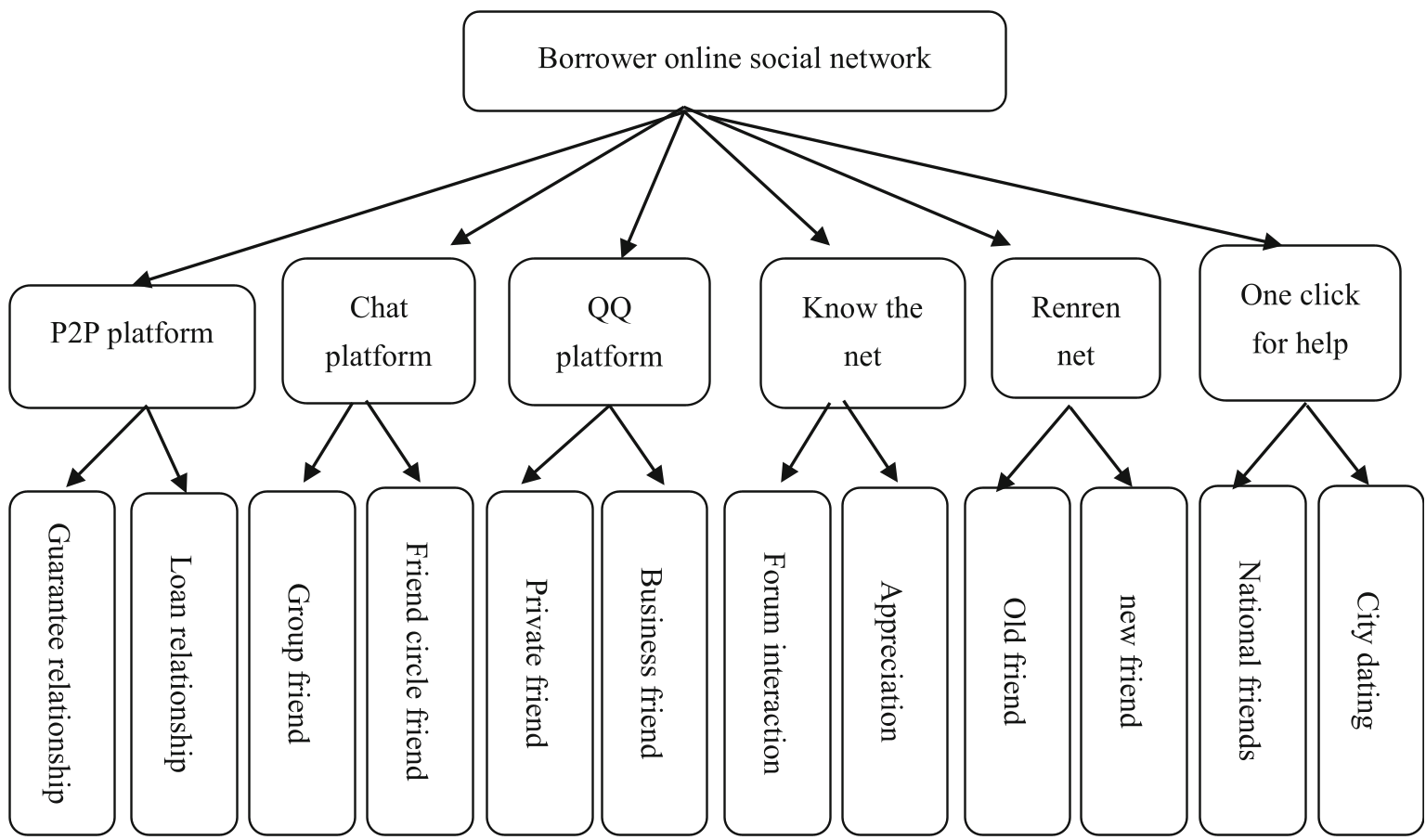 Figure 1: The dual-layer social network (Online vs. Offline) that acts as the "enforcement mechanism" for reputation loss.
Key Propositions and Mathematical Insights
The authors provide four mathematical propositions to describe the trajectory of reputation loss:
- The Decay Effect: In any borrowing period , is a strictly decreasing function.
- The "Sympathy" Minimum: If a borrower loses contact at the very end of the loan term (), the loss value reaches . The logic is that late-stage disconnection is often viewed as "investment failure" rather than "fraudulent fleeing," leading to social sympathy rather than social punishment.
- The Convex Nature: The loss isn't linear; it's a downward convex function, meaning the reputation damage drops most sharply in the initial phase of the loan.
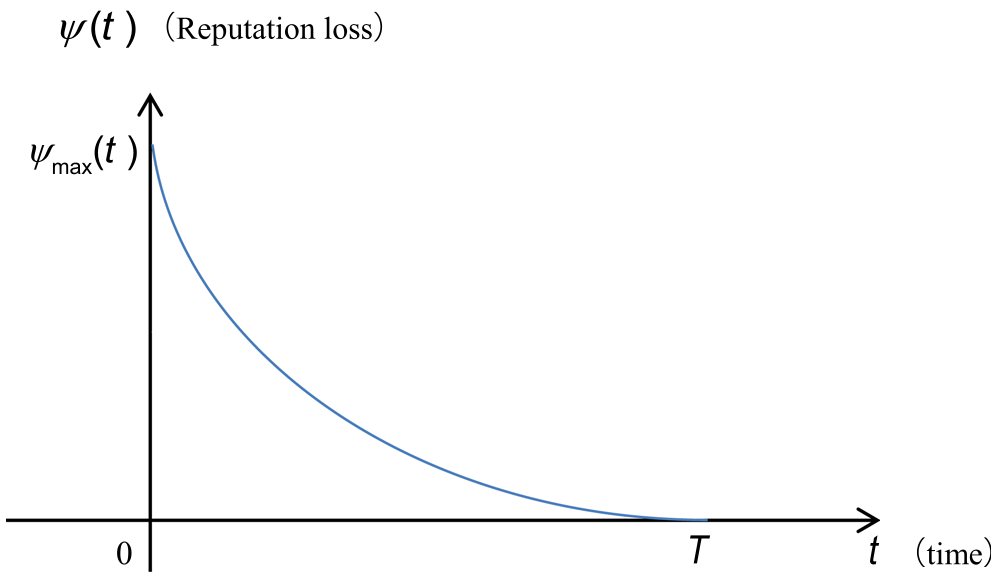 Figure 2: The predicted decay of social reputation over time, showing the sharp drop in the "high danger" early phase.
Experimental Analysis: Case Study Results
The researchers applied the model to a hypothetical scenario ( months, 6 guarantors, 6 social networks).
| Probability of Success () | Disconnection Time () | Reputation Loss () |
|---|---|---|
| 0.1 (Low) | 0 (Immediate) | 40.5% |
| 0.5 (Mid) | 4 | 6.32% |
| 0.9 (High) | 10 | 0.003% |
These results highlight that Network Punishment () is a potent lever. As shown in the study, increasing the number of social networks notified of the default leads to a perfectly proportional increase in reputation loss, confirming the role of "shaming" as a financial regulator.
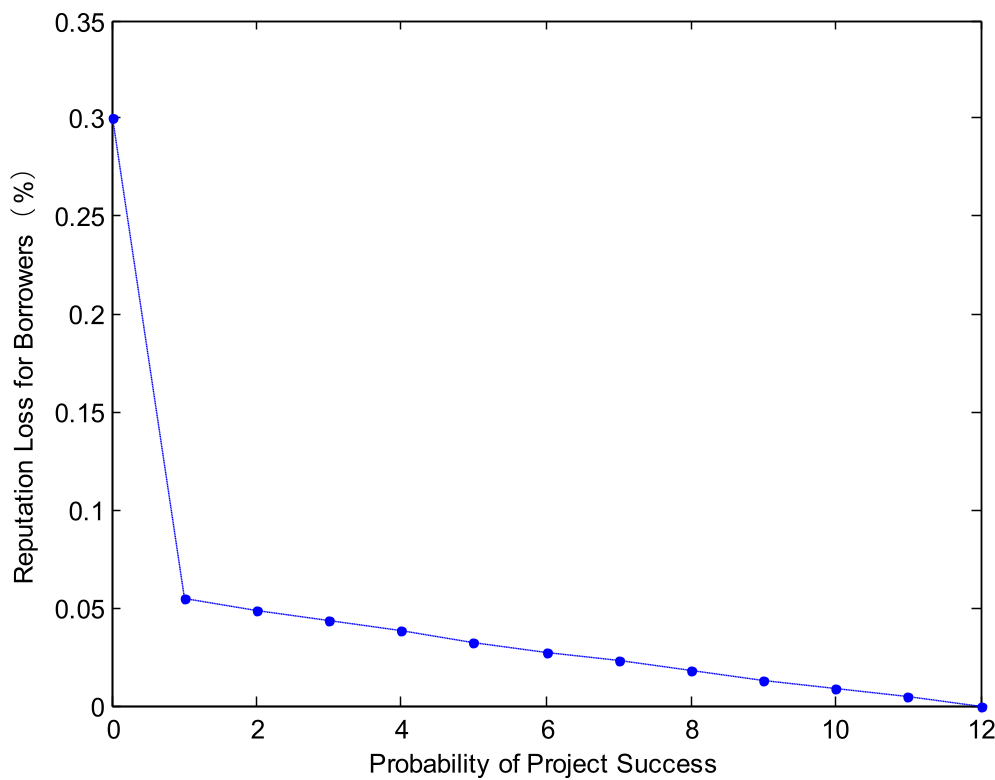 Figure 3: Linear relationship between the number of social networks involved and the total reputation damage.
Final Thoughts: The Future of Virtual Collateral
The value of this research lies in its attempt to formalize the "hidden costs" of P2P lending. By treating social capital as a dynamic asset, platforms can better price their loans.
Limitations: The model assumes that "network punishment" is always effective. In reality, some borrowers may have low-quality social networks where defaulting is socially acceptable (the "low-cost" credit niche). Future work should integrate Social Network Centrality—measuring how influential the borrower is within their network—to refine the severity factor .