
Proximity as a Proxy: Decoding Human Social Networks via Wireless Sensors
Social signal processing: detecting human interactions using wireless sensor networks
The paper explores the application of Wireless Sensor Networks (WSN) for Social Signal Processing (SSP) to capture spatiotemporal human interaction data. By using TelosB motes to monitor binary proximity within a group, the study provides a quantitative, automated tool for mapping social networks based on the Who, Where, and When (WWW) of physical encounters.
TL;DR
Researchers from the University of Patras have demonstrated a novel way to quantify human social behavior using Wireless Sensor Networks (WSN). By equipping participants with TelosB motes—small, wearable sensors—the team automated the capture of social signals through physical proximity. The study moves beyond traditional surveys, providing a data-driven "WWW" (Who, Where, When) framework to map social dynamics, collaboration intensity, and room utilization in real-time.
Problem & Motivation: The Subjectivity of Social Science
Understanding how humans interact is a fundamental challenge in cognitive and organizational science. Historically, this relied on Direct Observation (labor-intensive and non-scalable), Video Surveillance (invasive and limited by field-of-view), or Self-Reporting/Surveys (notoriously subjective).
The authors' core Insight is that physical proximity—defined as being within 3-4 meters of another person—serves as a primary signal for "communication interaction." If we can treat humans as "mobile nodes" in a network, we can leverage WSN technology to record these interactions objectively and continuously.
Methodology: Building the "WWW" Matrix
The system architecture relies on two types of sensor nodes running TinyOS:
- Portable Motes: Worn by participants. They broadcast a unique ID and listen for nearby peers.
- Anchor Motes: Fixed in specific rooms. They broadcast the "Location ID" and a local "Time Stamp."
When two people meet, their motes log a triplet of data: Who they met, Where (which room), and When (time).
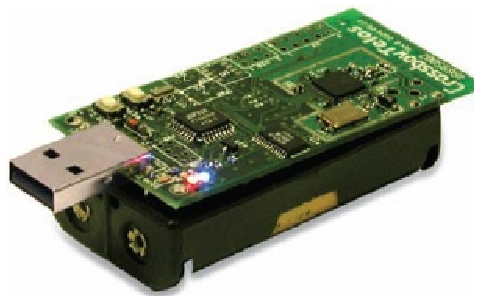 Figure 1: The TelosB platform used for social data collection.
To handle limited payload capacity, the authors implemented an iterative block-transfer protocol to sync this "WWW" matrix to a central Sink (Gateway) at the end of the day, which then feeds into a MySQL database via a custom Java application called MoteProgrammer.
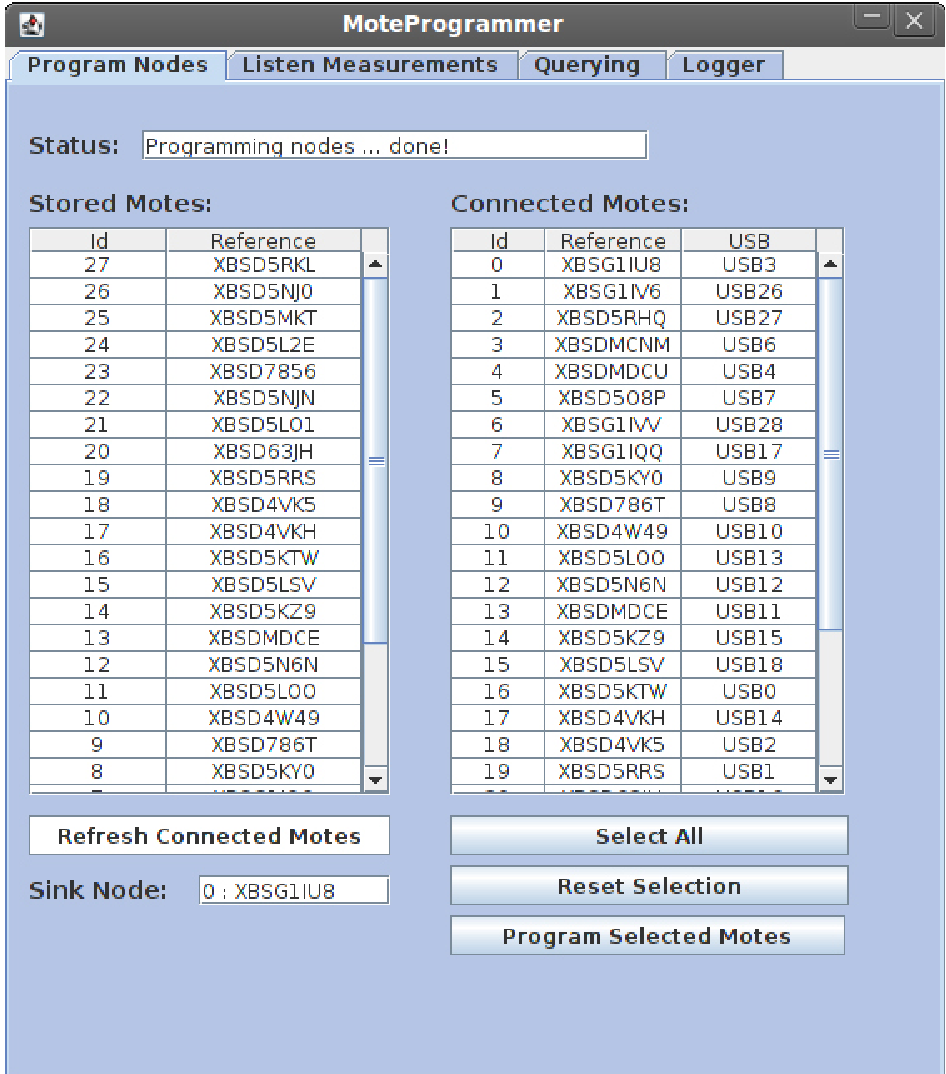 Figure 2: MoteProgrammer application used for data offloading and sensor management.
Experimental Insights: Who Rules the Room?
The experiment tracked 6 graduate students across 3 rooms. The data revealed striking social imbalances that might be missed by casual observation:
- Intensity of Collaboration: One specific pair (4, 5) spent significantly more time together (200 minutes) than others, indicating a tight working sub-group.
- Spatial Dynamics: Room 1 was the "socio-centric" hub of the department, facilitating nearly 4x more interaction than Room 3.
- Individual Centrality: By measuring total packet exchanges, the researchers could identify "influencers" or coordinators within the group—those with the highest frequency and duration of contact.
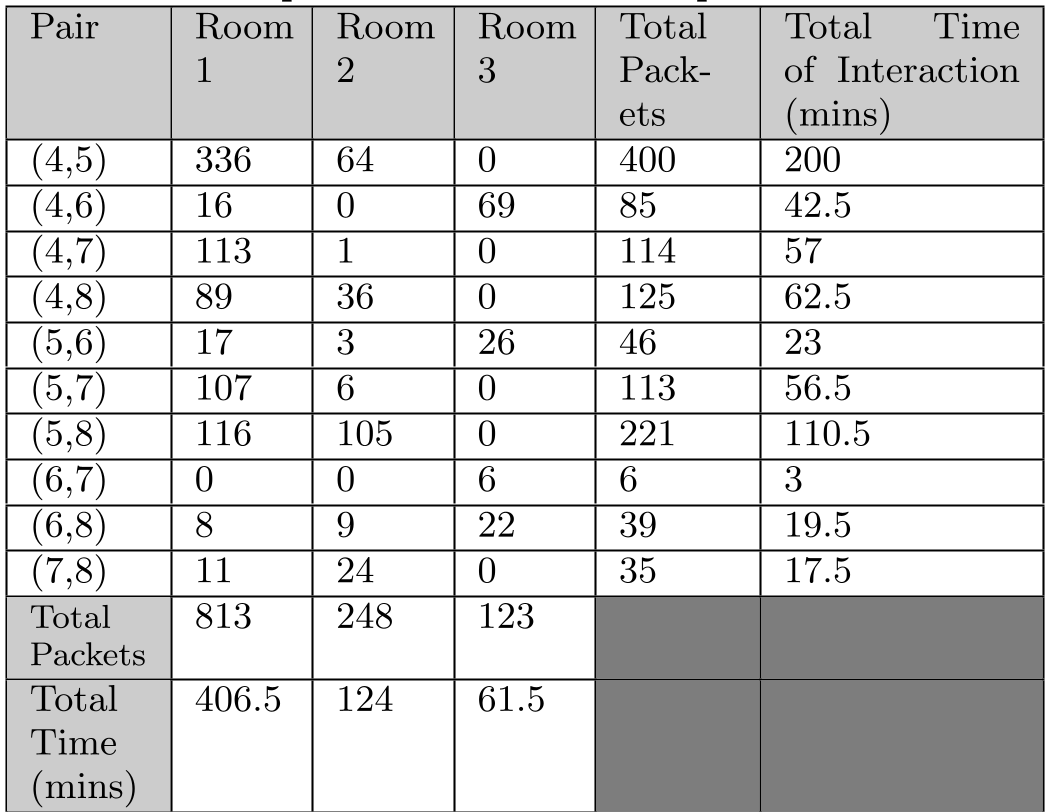 Figure 3: Breakdown of social interactions across different rooms and participants.
Critical Analysis & Future Outlook
Takeaway: This study proves that WSNs can transition from simple environmental monitoring (like temperature or humidity) to complex Social Signal Processing. It offers a low-cost, scalable alternative for managers to understand team cohesion and office utilization.
Limitations: The study currently relies solely on proximity (binary 0/1 interaction). It cannot distinguish between a "productive meeting" and two people sitting in silence in the same room.
Future Work: The authors propose integrating Microphones to analyze speech rates and volumes. This would add a layer of Social Intelligence—determining not just who is together, but who is leading the conversation and the "energy" of the interaction. In the age of hybrid work, applying such sensor-based organizational design could be critical for optimizing physical office spaces.