
Social Topology as a Cognitive Architect: How Networks Shape What We Know
On the relationships between social structures and acquired knowledge in societies
This study investigates how different social network structures—Regular, Random, Small-World, and Scale-Free—influence collective knowledge acquisition. Using multi-agent simulations and evolutionary algorithms, the authors demonstrate that the interaction between social topology and individual beliefs dictates whether a society achieves Pareto-optimal knowledge or gravitates toward the standards set by influential "hubs."
TL;DR
Knowledge is not just an individual achievement; it is a collective emergence. This paper uses computer simulations to reveal that the "shape" of our social networks—whether we live in echo chambers (Small-World) or follow influencers (Scale-Free)—critically determines how a society balances accuracy and simplicity. The key finding? Diversity and local connections lead to a "Pareto-optimal" society, while central hubs dictate the generalization standards for everyone else.
Background: Beyond the Micro-Level
For decades, cognitive science has treated learning as a solo sport—one brain vs. one data set. However, humans are inherently social. As the authors argue, citing Pentland and Goldstone, social interactions produce unique dynamics, much like how individual ants create a complex colony architecture that no single ant intended. This paper shifts the focus from "How do you learn?" to "How does we learn?"
The Mechanics of Social Learning
The authors model knowledge using Linear Regression. Each agent in the simulation tries to learn the relationship between variables. Learning happens through two primary mechanisms:
- Knowledge Combination: Agents exchange "knowledge segments" (coefficients) via a process similar to biological crossover.
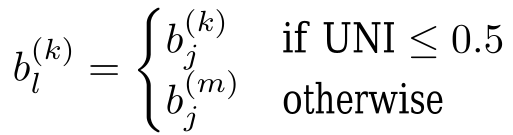
- Knowledge Selection: Agents keep knowledge that fits their "beliefs"—a weighted balance between Accuracy (low error) and Simplicity (lower absolute values of coefficients, avoiding overfitting).
The Principle of Homophily
A crucial element of the model is Homophily: the tendency of like-minded individuals to connect. In Regular and Small-World networks, the authors assumed people with similar weights for accuracy/simplicity clustered together.
Simulation 1: The Beauty of the Small World
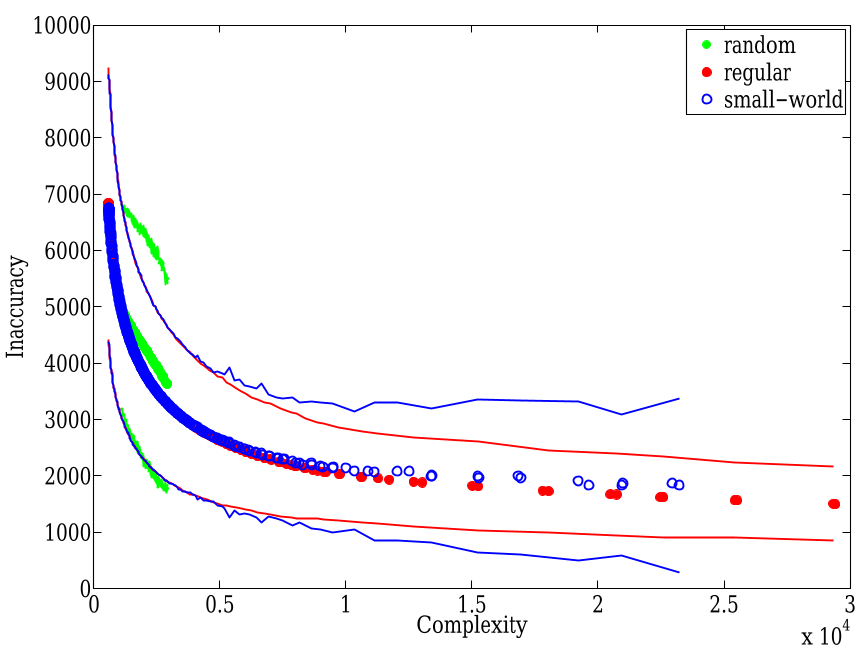
When comparing Random, Regular, and Small-World networks, a striking pattern emerged.
- Regular & Small-World Networks: These structures, paired with homophily, allowed the society to hold "Pareto-optimal" knowledge. Some clusters held very complex but accurate views, while others held simple but broad views. The society as a whole didn't converge on one "average" truth but maintained a diverse portfolio of insights.
- Random Networks: These tended to "cancel out" individual differences. While they were better at average generalization, they lost the specialized diversity found in structured networks.
Simulation 2: The Power of Hubs
In Scale-Free networks—which mirror the modern internet with its handful of "super-hubs" like celebrities or major media outlets—the dynamics changed.
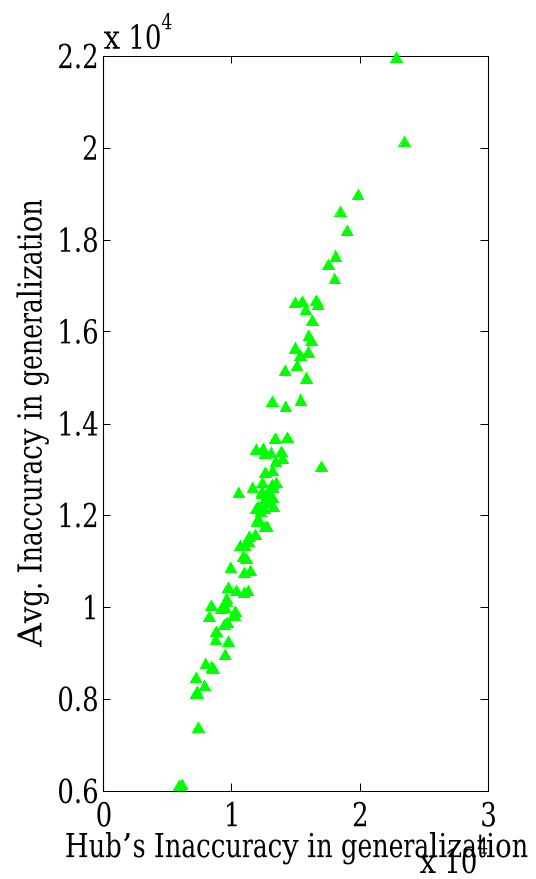
The study found that the "Hub" (the most connected node) effectively sets the bar for the entire society. There was a staggering 0.970 correlation between the Hub’s generalization error and the society's average error. If the Hub's knowledge generalizes well, the society follows; if the Hub is biased, the entire network suffers.
Critical Insights & Takeaways
- The Echo Chamber Paradox: While "echo chambers" (clusters in Small-World networks) are often criticized, this research suggests they allow a society to preserve diverse "Pareto-optimal" perspectives that a purely random, "melting pot" network might dilute.
- Hub Responsibility: In our current Scale-Free digital reality, the "hubs" (influencers and algorithms) have a disproportionate impact on the standard of knowledge accuracy and simplicity across the population.
- Future Directions: The authors suggest moving toward unsupervised learning models to see how knowledge self-organizes without pre-defined weights, a step that would bring us closer to understanding the evolution of cultural taboos and scientific paradigms.
Conclusion
This paper serves as a bridge between graph theory and cognitive science. It teaches us that to improve collective intelligence, we shouldn't just focus on making individuals smarter; we must also look at the plumbing—the social structures through which our thoughts flow.