
Social Surroundings: Breaking the Digital Bubble in Urban "Third Places"
Social Surroundings: Bridging the Virtual and Physical Divide
The paper introduces Social Surroundings (SocS), a pervasive computing system that bridges online social networks with physical "third places" like cafes and pubs. By projecting user-generated content from APIs (Facebook, Flickr) onto large public displays, it transforms private mobile browsing into a shared social catalyst.
TL;DR
In an era where we are "alone together" in public spaces, the Social Surroundings (SocS) system attempts to burst the invisible bubble of headphones and laptops. By projecting your online social identity—specifically photos and status updates from platforms like Flickr or Facebook—onto large public screens in cafes and bars, SocS turns digital footprints into real-world icebreakers.
The Problem: The "Starbucks Urbanism" and Display Blindness
Walk into any modern café, and you see it: a "public campsite" where people set up digital tents. We use technology to interact with dislocated friends while effectively blocking those physically next to us.
Urban researchers call this the "Third Place" challenge. While high-quality public displays are everywhere, we suffer from "Display Blindness." We ignore them because they show generic advertisements (the physical equivalent of web banner blindness). The authors argue that the missing ingredient is personal relevance.
The Insight: Data Portability as a Social Bridge
The core philosophy of SocS is Data Portability. Instead of forcing users to create a new profile for a specific venue, SocS asks: Why not use the content people already curate?
By utilizing APIs from established social networks, SocS allows your "representation of self" to follow you into the physical world. It isn't just about showing photos; it’s about creating a shared context. If you see on a screen that the person sitting two tables away has visited the same remote city as you, the barrier to "Hi" is significantly lowered.
Methodology: A Hybrid Architecture for Social Interaction
The SocS system operates on a hybrid client-server and peer-to-peer architecture.
- Mobile Client: A Java-based (MPID 2.0) application where users log in and select which social accounts to link.
- Server: Fetches media via APIs and manages the data flow.
- Public Display: An Ajax-driven GUI that rotates through the content of users currently present in the space.
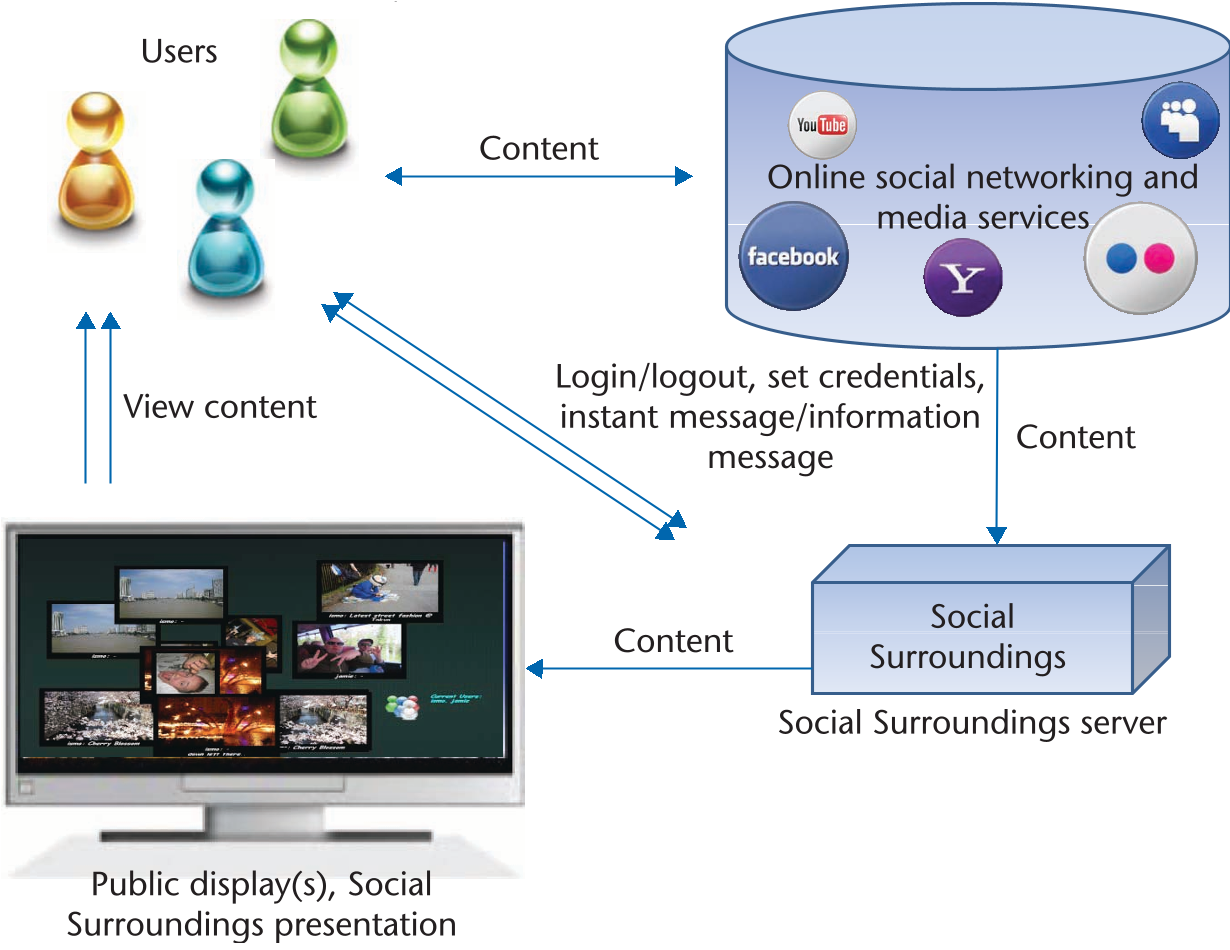 Figure 1: The SocS system architecture linking mobile devices, servers, and public screens.
The system deliberately avoids complex messaging features within the app. The goal isn't to make you chat on your phone, but to use the phone to trigger face-to-face contact.
Experimental Results: Entertainment vs. Privacy
The authors tested SocS in two distinct environments: a student bar and a university lecture hall.
The Successes:
- Entertainment Value: 25 out of 31 participants found the system genuinely fun and entertaining.
- Conversation Catalyst: 23 participants agreed that seeing friends' photos on the big screen was a powerful stimulant for "small talk."
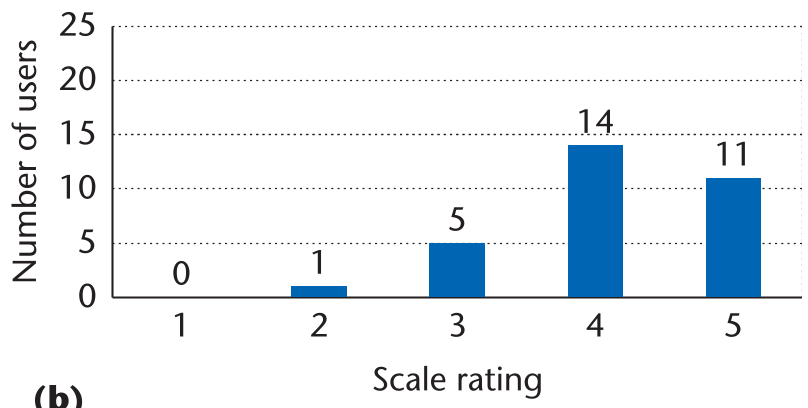 Figure 2: User feedback indicates high agreement on the system's entertainment value and potential for stimulating interaction.
The Challenges:
- The Stranger Danger: While users were comfortable interacting with friends via the screen, they were more hesitant to approach strangers, highlighting the persistent "social awkwardness" that technology alone cannot solve.
- Privacy Nuance: Users expressed a fascinating conflict. While they were fine with their own photos being public, they felt uncomfortable if those photos included friends who hadn't consented to be displayed in that specific physical location.
Critical Analysis & Conclusion
Social Surroundings was an early pioneer in what we now call "Phygital" (Physical + Digital) experiences.
The Takeaway: The success of SocS confirms that user-generated content is the only way to make public displays feel essential rather than intrusive. By leveraging existing social graphs, the "cost" of participation is low, but the social reward is high.
Limitations: The research was conducted in 2010. Today, our privacy concerns have magnified. The "creepy factor" of being tracked and displayed publicly is much higher now than it was during the early "check-in" era of Foursquare and early Facebook.
Future Outlook: As we move toward AR (Augmented Reality), the "Public Display" might move from a wall-mounted screen to our glasses. The logic of SocS—using digital presence to foster physical community—remains the blueprint for building social technology that doesn't just isolate us further.