
SWTBPR: Leveraging Social Weak-Ties to Solve Short Video Cold-Start
Social Weak-tie Assisted Cross-domain Short Video Recommendation
This paper introduces SWTBPR, a cross-domain short video recommendation framework that leverages "Social Weak-ties" (following relations on Weibo) as side information. By extending the Bayesian Personalized Ranking (BPR) to a multi-level feedback structure, it successfully incorporates social influence and heterogeneous user behaviors to achieve SOTA performance.
TL;DR
The short video explosion has created a massive discovery problem: how do we recommend videos to users with zero or a handful of views? This paper presents SWTBPR (Social Weak-tie Bayesian Personalized Ranking), which utilizes social following relationships on Sina Weibo as a bridge. By treating the interests of "similar followers" as a distinct level of implicit feedback, the model achieves a massive performance leap in Top-N recommendation tasks.
Background: The Limits of Social Recommendation
Traditional social-aware recommendation systems often operate on the Homophily Principle: the idea that "friends like what friends like." However, in the context of modern platforms like Weibo or Twitter, your "following" list consists of "Weak Ties"—celebrities, bloggers, and opinion leaders—rather than real-life friends.
The authors identify four critical gaps in previous research:
- Platform Fragmentation: Difficulty in matching users across different websites (e.g., matching a Netflix user to their Facebook profile).
- Limited Bridge Users: Relying on a small set of "influencers" who exist on both platforms.
- Domain Heterogeneity: Social latent vectors and interest latent vectors are often mathematically incompatible.
- Weak-Tie Misalignment: Assuming followers are identical to friends, when in reality, they represent specific topical interests.
Methodology: Bridging the Gap with SWTBPR
1. The Power of Weak Ties
The authors demonstrate a positive correlation (Pearson = 0.632) between users who follow the same "Opinion Leaders" and users who watch the same videos. They use Jaccard similarity for video preference and Cosine distance (based on opinion leader categories) for social similarity.
2. Multi-Level Feedback Architecture
Instead of the binary "viewed vs. not viewed" approach of standard BPR, SWTBPR introduces a 4-level hierarchy:
- Level 1 (Retweet): The strongest explicit signal.
- Level 2 (View): Standard interaction signal.
- Level 3 (Social Weak-tie): Videos watched by "socially similar" users (the core innovation).
- Level 4 (Unobserved): Items the user has not interacted with.
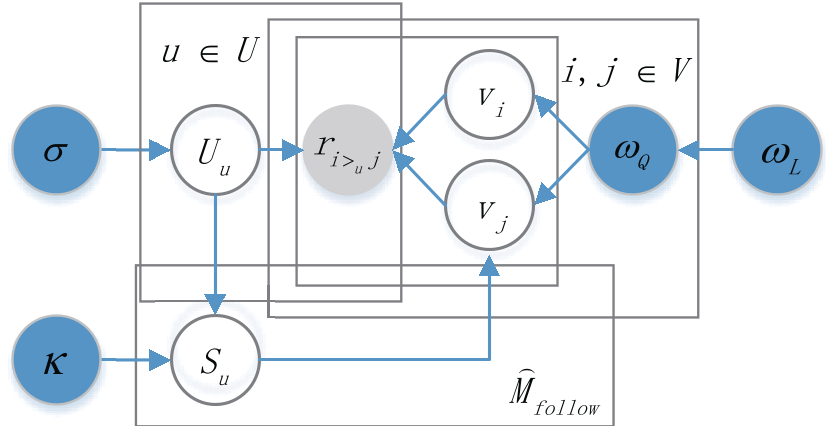 Fig 1: The sampling scheme compares standard BPR (two levels) with SWTBPR (four levels), allowing the model to learn from a much richer gradient of preferences.
3. Pairwise Learning Optimization
The model optimizes the probability that a user prefers an item from a higher level over a lower level. Even if a user has never watched a video (cold start), Level 3 (Social Weak-tie) provides enough "prior knowledge" to generate accurate recommendations.
Experimental Insights
The researchers tested the model on a large-scale real-world dataset from Sina Weibo (Shanghai area).
 Table 1: Comparison of Hit Rate (HR) and NDCG across various models.
Key Findings:
- Massive Gains: SWTBPR achieved an HR@5 of 0.333, compared to BPR's 0.049. This 6x improvement highlights how much signal is lost when ignoring social weak-ties.
- Cold-Start Mastery: The model remains effective even when explicit interaction data (Retweets/Views) is missing, as long as the user follows at least a few opinion leaders.
- Hyperparameter Sensitivity: The study found that selecting a small group of highly similar followers ( control) is more effective than including a large group of broadly similar followers.
Critical Analysis & Future Outlook
Takeaway: SWTBPR proves that in the age of "Interest Graphs," who you follow is often a more accurate predictor of content consumption than who you are friends with.
Limitations: The current model relies on the manual categorization of opinion leaders. Future iterations could benefit from using Natural Language Processing (NLP) to analyze the actual content of an opinion leader's posts to further refine the similarity matrix.
Future Work: The authors suggest expanding "Weak Ties" to include geographical relations and group memberships, potentially moving toward a multi-graph representation of the social domain.
Disclaimer: This blog is based on the paper "Social Weak-tie Assisted Cross-domain Short Video Recommendation" by Wang et al. (Tsinghua University).