
Socialite: Transforming the IoT into a Collaborative Social Ecosystem
Socialite: A Flexible Framework for Social Internet of Things
This paper introduces Socialite, a novel framework for the Social Internet of Things (SIoT) that merges IoT devices with social networking paradigms. It proposes a semantic-based architecture using RDF/OWL and a custom rule engine to enable cross-vendor interoperability and collaborative device interactions through unique social relationships.
TL;DR
The Socialite framework addresses the fragmentation of the Internet of Things by treating devices as social actors. By introducing a semantic layer and new relationship types like "Thriendship" (friendships among things), it enables heterogeneous devices from brands like Nest and Philips to collaborate on common goals—such as energy saving—through a unified, rule-based architecture.
Problem & Motivation: The Silo Effect in IoT
Despite having billions of connected devices, the current IoT landscape is a collection of "isolated islands." Every manufacturer provides a unique API, making it nearly impossible for a Philips light bulb to natively "talk" to a Nest thermostat without complex third-party integrations.
The authors identify three critical gaps:
- Lack of Interoperability: Heterogeneous APIs prevent a unified abstraction.
- Information Sharing Deficit: Devices cannot share "best practices" (e.g., a boiler learning the most efficient settings from its "kin" in the same climate).
- No Collaborative Framework: There is no easy way to orchestrate multiple devices/users toward a "common goal," such as securing a home or gamifying energy reduction across a neighborhood.
Methodology: Giving Things a Social Life
Socialite's core innovation is the application of social network principles to device management. It uses Semantic Web technologies (RDF/OWL) to build a world where devices have identities and relationships.
The Relationship Model
The paper defines several vital relationship types that drive the system's logic:
- Kinship: Devices of the same model and manufacturer.
- Thriendship: A "friendship" between objects owned by people who are friends.
- Collocation: A dynamic relationship formed when devices/users occupy the same physical space.
Architecture: Bridging Physical and Logical
To solve the API mess, Socialite introduces the concept of Logical Devices. If a physical thermostat also contains a motion sensor, Socialite splits it into two logical entities. This allows for a consistent capability-based model regardless of the brand.
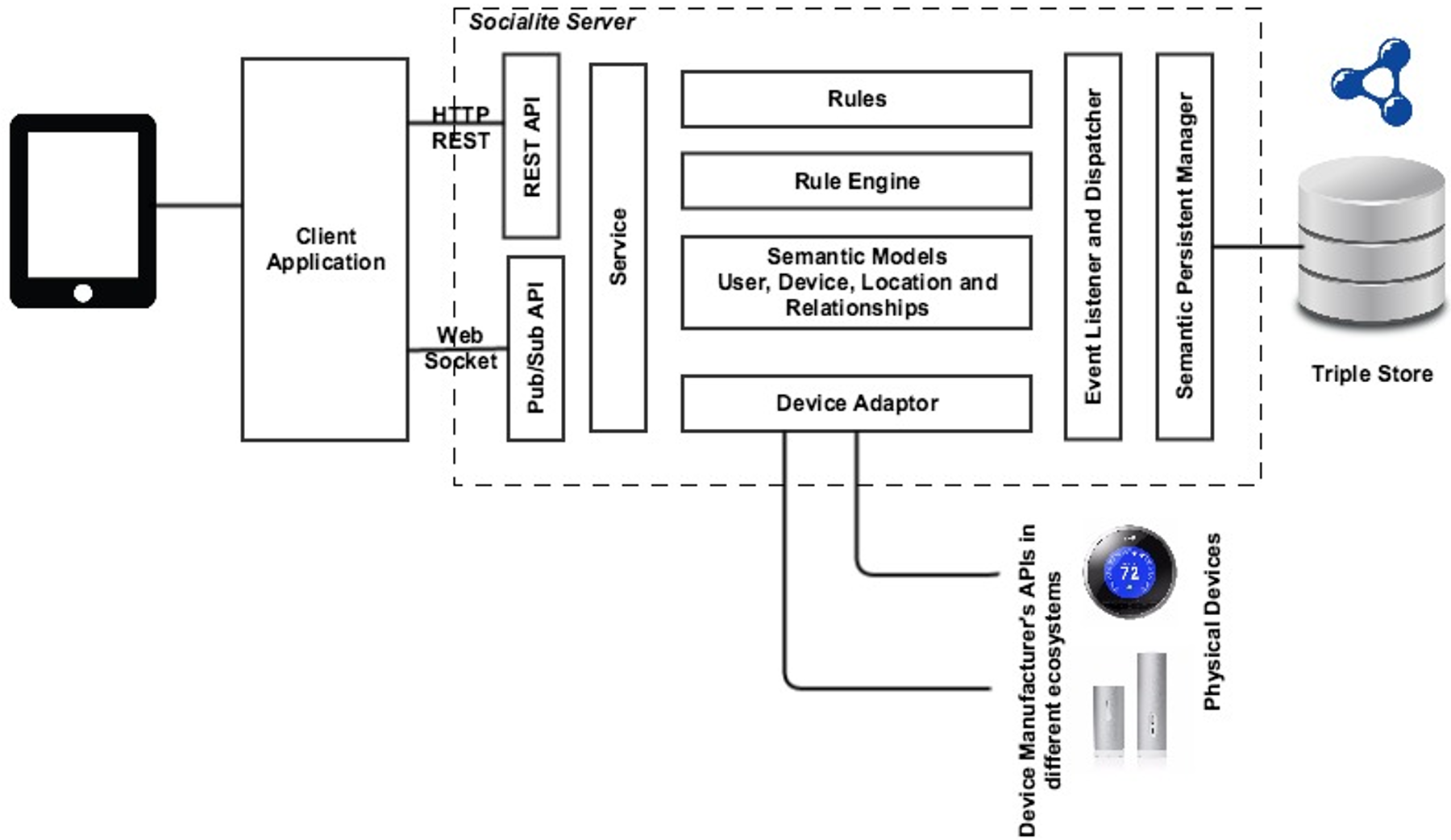 Figure 1: The Socialite High-Level Architecture featuring the Semantic Persistent Manager and Rule Engine.
The Rule Engine: Intelligence in Action
The framework utilizes an inference engine to automate the ecosystem. For example, a Thriendship Rule (seen below in RDF syntax) automatically establishes trust between devices when their owners become friends on a social network.
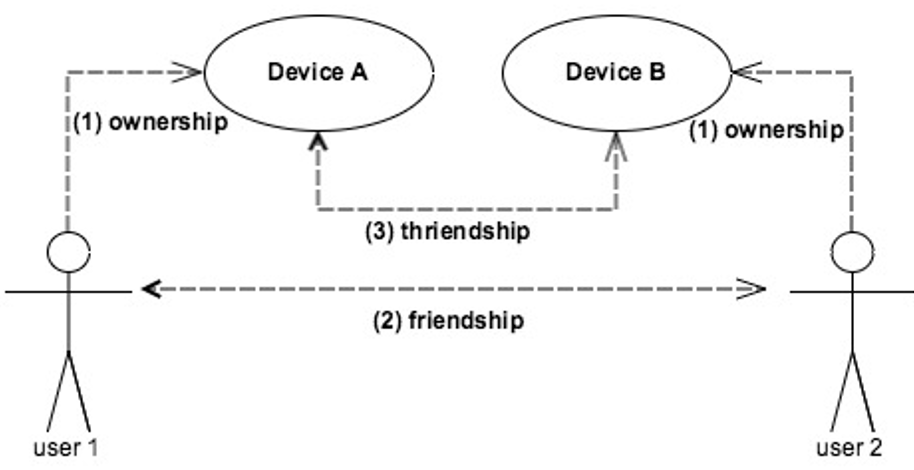 Figure 2: The logic flow for inferring relationships between "things" based on human social bonds.
Beyond relationship management, these rules facilitate Social Gamification. Imagine receiving a notification because your energy usage is 50% higher than your "Thriends" (your friends' devices). This leverages social pressure to drive positive behavioral changes.
Experiments & Real-World Implementation
The researchers deployed Socialite on Amazon EC2, integrating real-world hardware:
- Sensors: Nest Smoke Detectors, NetAtMo Weather Stations.
- Actuators: Philips Hue lighting.
- Wearables: Jawbone UP.
The use of a Triple Store (Virtuoso) allows for complex SPARQL queries, such as "find all devices in the kitchen belonging to User A." This semantic approach ensures that adding a new manufacturer only requires writing a small "Adaptor" class, while the rest of the application remains unchanged.
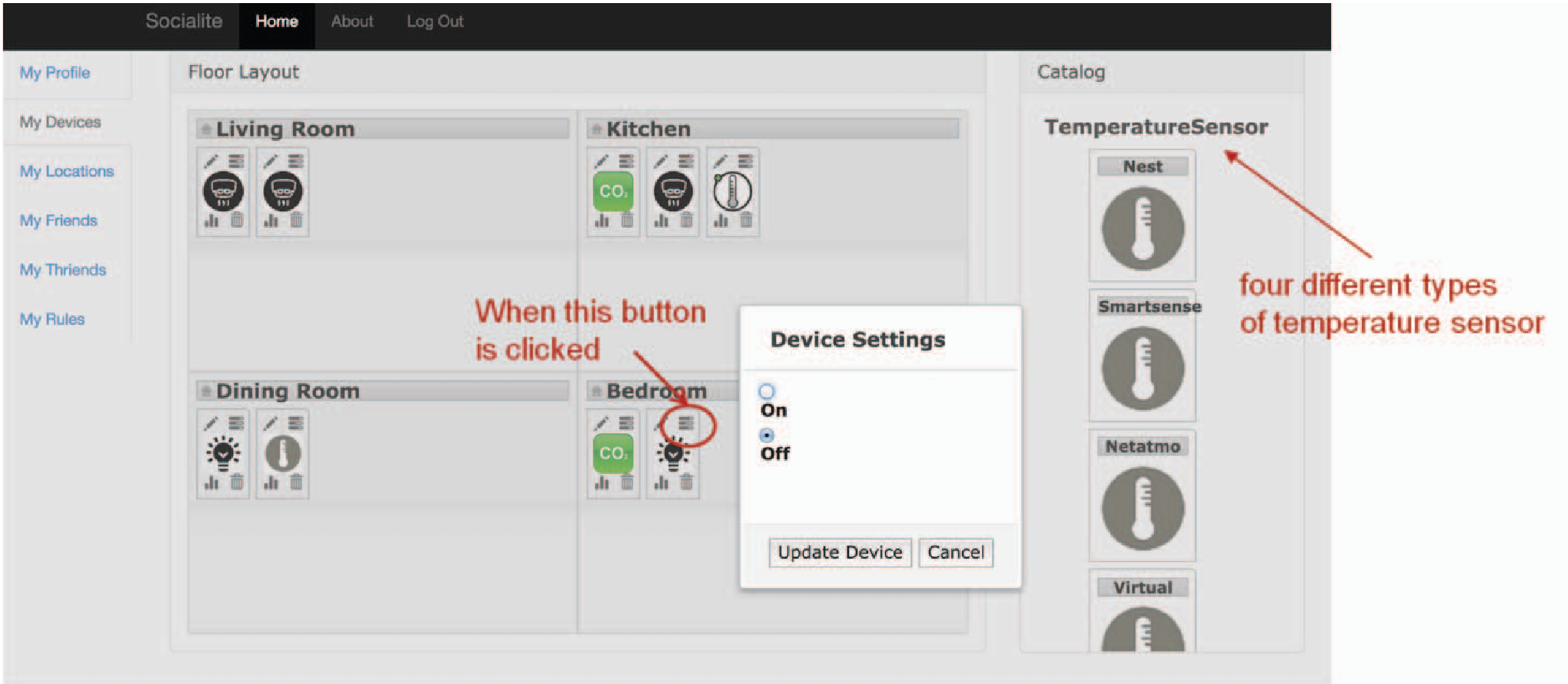 Figure 3: Proof-of-concept client application for managing devices and social rules.
Critical Analysis & Conclusion
Takeaway: Socialite successfully demonstrates that the SIoT paradigm is a viable solution for the interoperability crisis. By focusing on relationships rather than just packets, it creates a more intuitive and extensible ecosystem.
Limitations:
- Scalability: The centralized RDF Triple Store and Rule Engine might face bottlenecks as billions of devices connect.
- Privacy: While the paper mentions privacy as "out of scope," the social nature of the framework significantly increases the risk if a central server is compromised.
Future Work: The authors suggest moving toward Complex Event Processing (CEP) to handle real-time data streams more efficiently. For future practitioners, integrating decentralized protocols (like DIDs) into this social framework could solve the privacy concerns while maintaining the collaborative benefits of the Socialite model.