
Socializing on MOOCs: Why University Students are "Ghosting" the Forums
Socializing on MOOCs: Comparing University and Self-enrolled Students
This study investigates the socializing behaviors of University-Enrolled Students (UES) compared to self-enrolled participants in MOOCs. By analyzing data from two editions of a French Project Management MOOC, it identifies that UES find online forums less useful and decrease their platform-based interactions as workloads increase.
TL;DR
Not all MOOC learners are created equal. This research reveals that students enrolled in MOOCs as part of a formal university curriculum (UES) engage with online social tools very differently than self-enrolled hobbyists. As the course gets harder, university students retreat from the platform's forums—not because they are quitting, but because they are talking to their real-life classmates instead.
The Hidden Bias in MOOC Data
For years, MOOC researchers have used forum activity as a proxy for engagement and a predictor of success. If a student stops posting, we often assume they are at risk of dropping out. However, this paper argues that the recent trend of universities "outsourcing" part of their curriculum to MOOCs creates a major blind spot.
University-enrolled students (UES) have a unique Inductive Bias: they have a built-in community. They don't need the forum to clarify a confusing lecture when they can just ask the person sitting next to them in the university library.
Methodology: Comparing the "Compelled" vs. the "Curious"
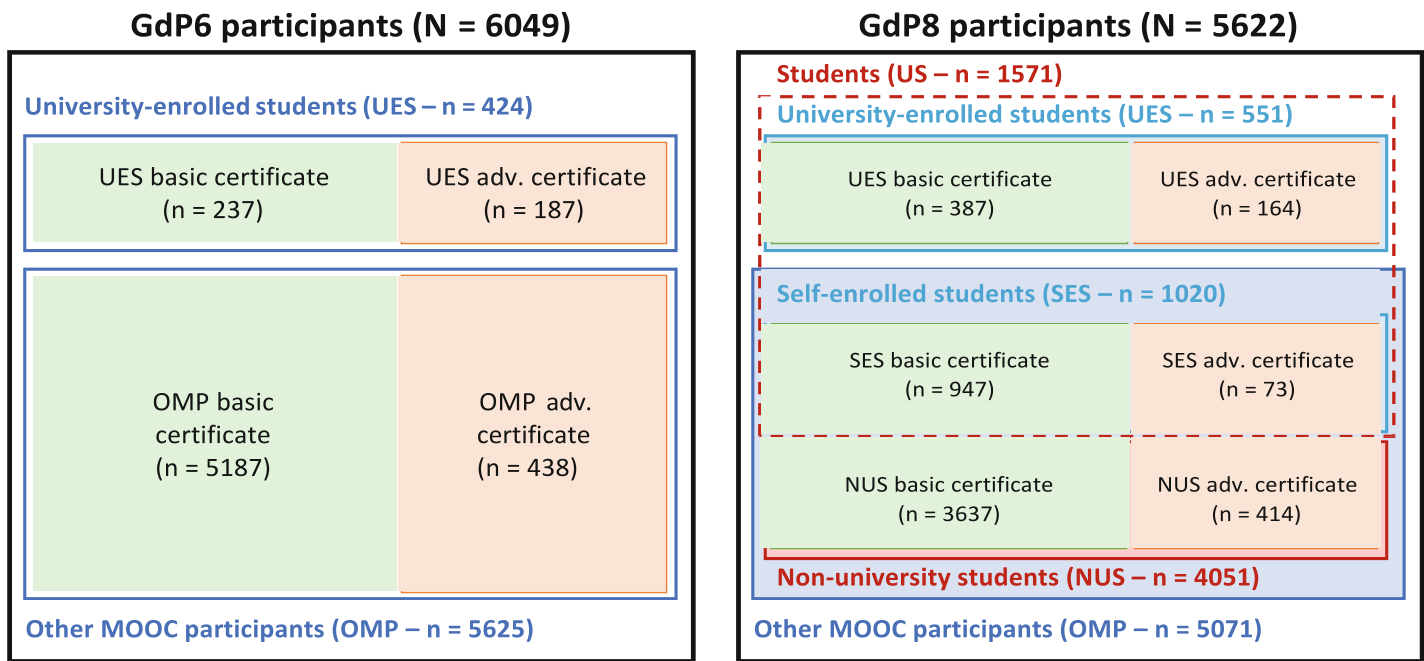
The researchers analyzed two sessions of a popular French MOOC on project management (GdP6 and GdP8). They split the audience into:
- UES: Enrolled by their university.
- SES: Self-enrolled students (individuals identifying as students but taking the course independently).
- NS: Non-students (professionals, retirees, etc.).
They looked at both "Basic" (low workload) and "Advanced" (high workload) tracks to see how pressure changes behavior.
Core Insight: The Workload Paradox
One of the most striking findings is how behavior diverges as the workload increases.
- Low Workload (Basic Track): Most students, including those from universities, use the forums somewhat similarly, though university students already find them less "useful."
- High Workload (Advanced Track): When the course becomes demanding (peer grading, complex projects), the gap widens. Self-enrolled students lean harder into the online community to survive. University students, however, go silent on the platform.
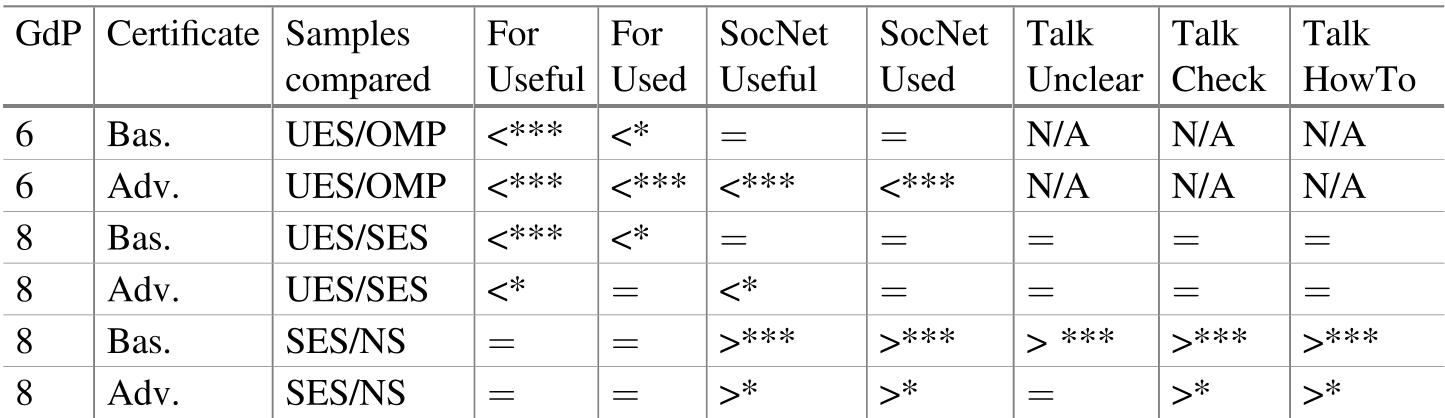
As shown in Table 1, the "ForUseful" and "ForUsed" metrics consistently show a < symbol for UES/OMP comparisons, meaning university students significantly undervalue the platform’s social infrastructure compared to others.
Why This Matters: The Future of Analytics
This study offers a critical warning for the field of Learning Analytics:
- Misleading SNA: Social Network Analysis (SNA) that only tracks on-platform clicks will systematically underestimate the "socialization" of university students.
- The "Dropout" False Positive: If an algorithm flags a UES student for "low social interaction," it might be falsely labeling a successful student as a dropout risk.
- Forum Health: As more universities adopt MOOCs, the "vibrancy" of forums may suffer. If the most capable students (those in university programs) only talk offline, the remaining self-enrolled learners lose out on valuable peer-to-peer support.
Conclusion & Limitations
The takeaway is clear: MOOC platforms must start asking students how they are enrolled. Without this metadata, our behavioral models are essentially flying blind.
While this study focused on a single French MOOC, the logic is universal. As the boundaries between "offline" and "online" education continue to blur, our technical metrics for "social learning" must evolve to account for the conversations happening in the hallways, not just the chat logs.