
SocialSearchBrowser: Reimagining Mobile Search as a Social Conversation
SocialSearchBrowser: a novel mobile search and information discovery tool
The paper introduces SocialSearchBrowser (SSB), a novel mobile search tool that integrates social networking with location-based services. By allowing users to proactively view and answer queries from their social circle on a map-based interface, SSB transitions mobile search from a solitary "lookup" task to a collaborative, social discovery experience.
Executive Summary
TL;DR: Long before the age of AI-driven conversational agents, researchers at Telefonica explored a radical idea: what if mobile search wasn't about typing into a box, but about seeing what your friends are asking around you? SocialSearchBrowser (SSB) is a map-based tool that blends Facebook social graphs with real-time location data to turn "search" into a collaborative social experience.
Academic Context: This work sits at the intersection of Mobile HCI and Social Computing. It challenges the "Desktop-First" mentality of early mobile search and establishes the importance of the Human-in-the-loop for hyper-local information discovery.
Problem: The Limits of the Search Box
In 2010, mobile search was a frustrating imitation of the desktop experience. While Google could tell you the "what" (e.g., location of a Starbucks), it failed miserably at the "how" or the "vibe" (e.g., "Where is a nice place for breakfast?").
The authors identified two critical gaps:
- Contextual Blindness: Standard search engines ignore the time and location flux inherent to mobile users.
- Social Isolation: Humans are social creatures who value "word-of-mouth" from trusted peers over sanitized algorithmic hits.
Methodology: Mapping the Social Query
SSB transforms the mobile interface into a live map of curiosity. Instead of a blank search bar, users see icons representing queries issued by their friends or the public at their current location.
The Architecture of Trust
The system utilizes a three-tier architecture:
- iPhone Client: A map-based GUI for browsing and posting queries.
- Facebook Integration: Allows desktop users to answer their friends' mobile queries.
- SMS Layer: A surprisingly effective "push" mechanism that notifies friends of active queries, shortening the feedback loop.
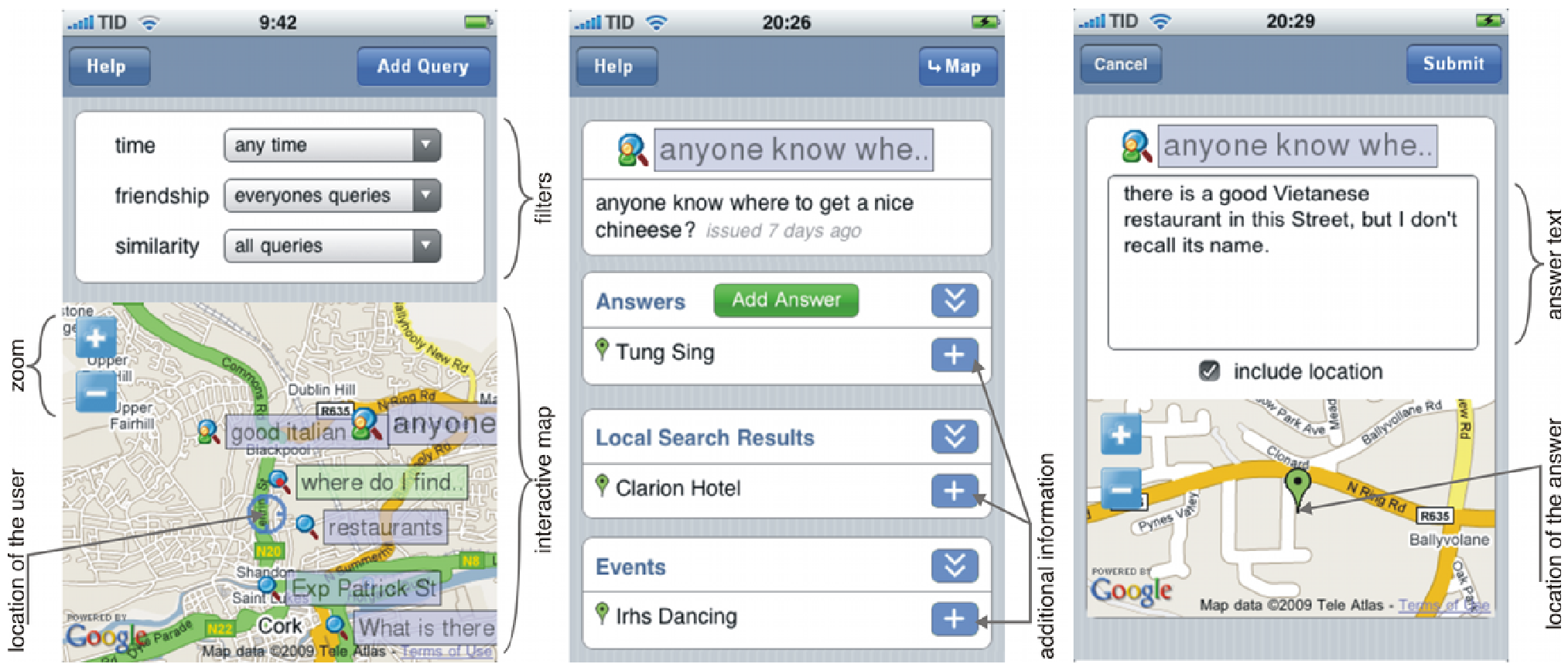 Figure 1: The SSB Interface (Map View, Query Details, and Answer Submission)
The authors also implemented Social Filters. Using Facebook API data (wall posts, tags), the system calculates a "friendship level" to filter queries, ensuring the user sees information from people they actually trust.
Experiments & Real-World Usage
The researchers conducted a "breaching experiment" in Ireland—a live field study to see how people actually used the tool when left to their own devices.
Key Behavioral Insights:
- Social Participation: Users were vastly more interested in human answers than Google results. Over 70% of queries were answered by people, often evolving into short chats.
- The "Twitter" Effect: Users began using the search tool for Status Updates (e.g., "waiting in the car"), indicating that mobile search is often a proxy for social connection.
- The Value of "Push": The SMS notification was rated one of the most popular features, as it transformed search from a proactive "pull" to a passive "push" service.
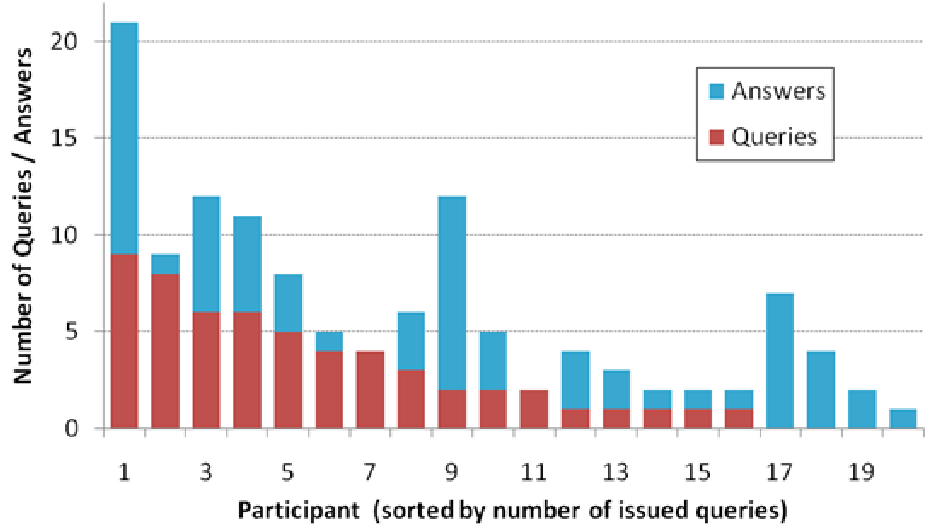 Figure 2: Distribution of Queries and Answers over the 7-day study.
Critical Insight: The Privacy-Curiosity Paradox
One of the most profound takeaways from the study is the Privacy Paradox. While users loved "keeping tabs" on their friends (Curiosity), they were simultaneously "unnerved" by their own location being visible (Privacy).
The study suggests that for social search to succeed, we must design for:
- Selective Disclosure: Choosing who sees your location on a per-query basis.
- Location Obfuscation: The ability to "blur" one's precise location while still benefiting from the social context.
Conclusion & Future Outlook
SocialSearchBrowser reminds us that the best search engine might not be a better algorithm, but a better way to talk to the people we trust. While modern LLMs now handle "conversational" search, the local, real-time trust explored in this paper remains a "Holy Grail" for mobile product design.
As we move toward a world of "Ambient Computing," the lessons of SSB—integrating social trust, push notifications, and map-based discovery—are more relevant than ever.