
SocialWiki: Reimagining Content Governance through Social Context
SocialWiki: Bring Order to Wiki Systems with Social Context
This paper introduces SocialWiki, a prototype wiki system that integrates social context—specifically user interests and trust management—to automate access control. By utilizing a "Message in a Bottle" (MinB) metaphor, it implements a probabilistic Editing Certificate (EC) circulation mechanism to maintain high-quality content and mitigate vandalism and spam.
TL;DR
SocialWiki transforms the passive, open-edit model of traditional wikis into an active, trust-aware ecosystem. By leveraging existing social networks, it uses a probabilistic "Editing Certificate" (EC) system to route edit privileges to users who are both interested in the topic and trusted by the community, effectively automating the fight against vandalism and editor churn.
Background & Motivation: The Wikipedia Paradox
While Wikipedia's "anyone can edit" philosophy led to its massive success, it has created a sustainability crisis. As of 2010, the English Wikipedia saw a net loss of 49,000 editors in a single quarter. The administrative burden of manually reverting vandalism and filtering spam is no longer scaling.
The authors identify a core "Insight": Social Context. In the real world, we trust experts and friends; why shouldn't a wiki system do the same? Instead of a static "Top-Down" administrative model, they propose a "Bottom-Up" social routing model.
Methodology: The Three Pillars of Trust
The core of SocialWiki is the Editing Certificate (EC) Circulation. An article is guarded by an EC; if you don't have it, you can't edit. But how does the system decide who gets the EC next? It uses a weighted priority score () based on three pillars:
- User Interest (): Uses Pearson Correlation Coefficient (PCC) and WordNet synsets to match users with articles that fit their expertise.
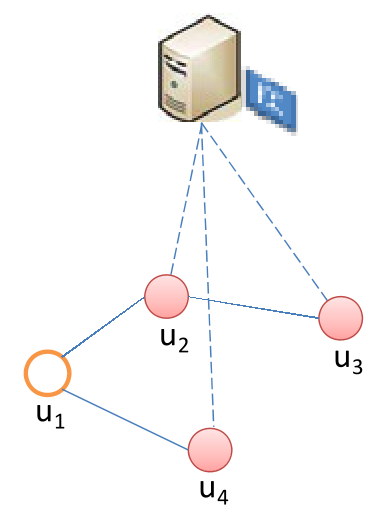
- Social Trust (): Built on the Davis Social Link (DSL) protocol, it calculates trust values along a social path (e.g., Alice trusts Carol, Carol trusts Bob).
- Collaboration History (): Uses Bayesian inference to predict the likelihood of a successful collaboration based on past interactions.
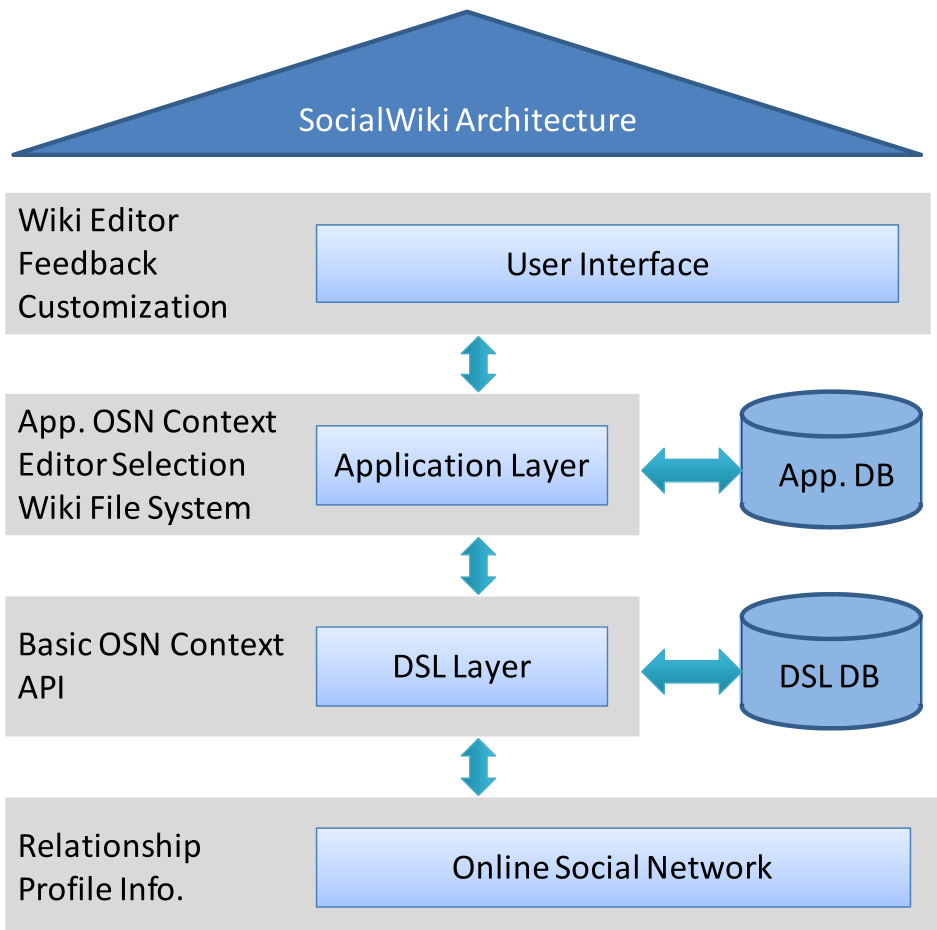
System Architecture
The system sits on top of an Online Social Network (OSN) like Facebook, utilizing its social graph to initialize trust and interest profiles.
Fighting Vandalism and Spam
SocialWiki handles malicious actors through two clever mechanisms:
- Probabilistic Circulation: Even if a vandal is in the network, the probability of them receiving an EC drops sharply as soon as they receive negative feedback ("Dislike") from subsequent editors.
- Reputation Systems: The system tracks both user reputation and article reputation. If an article is flagged as spam, its EC is recalled, and the creator’s reputation is slashed across that specific topic synset.
Collaborative Workflow
The prototype, "Message in a Bottle" (MinB), gamifies this process. Users "toss" an edited article back into the digital ocean, and the system "floats" it to the beach of the next most qualified user.
Experimental Insights
The early deployment showed that:
- Diversity is Maintained: Because the circulation is probabilistic, even minority opinions (opposite "communities") have a chance to receive the EC, preventing a complete echo-chamber monopoly.
- Sybil Resistance: Unlike simple voting systems, SocialWiki's reliance on social paths makes Sybil attacks (creating fake accounts) ineffective, as those accounts won't have established trust paths from reputable users.
Critical Analysis & Future Outlook
Takeaway: SocialWiki successfully proves that social attributes (who you know and what you like) can replace central authority in collaborative systems.
Limitations:
- Cold Start: New users with no social connections or history may struggle to receive ECs initially.
- Privacy: Relying on Facebook profiles for "interest" data raises modern privacy concerns that were less prominent in 2010.
- Latency: The "one EC per article" rule simplifies things but might slow down massive collaborative efforts compared to the concurrent editing allowed in Google Docs or standard MediaWiki.
Future Work: The authors suggest moving toward more complex synset matching and integrating professional networks like LinkedIn to bring in high-veracity domain experts.