
The Shyness Paradox: How Socio-Emotional Factors Shape Knowledge Management in Thailand
3 EXPLORING THE INFLUENCE OF SOCIO-EMOTIONAL FACTORS ON KNOWLEDGE MANAGEMENT PRACTICES: A Case Study
This empirical study explores how shyness, a prominent socio-emotional factor in Thai culture, influences Knowledge Management (KM) practices within a research organization. Using an interpretive case study and Grounded Theory, the authors identify shyness as a critical barrier to social networking, trust-building, and effective knowledge sharing.
TL;DR
While high-tech repositories and digital workspaces are often seen as the "cure" for organizational silos, cultural traits like shyness can render these tools ineffective. This study investigates a Thai research organization to reveal how national cultural characteristics—specifically shyness and hierarchy—dictate the flow of knowledge more than any software ever could.
Background: The Cultural Blind Spot of KM
In the global landscape of Knowledge Management (KM), there is a significant geographical bias. Most frameworks are built on Western assumptions: that employees are willing to self-promote, challenge superiors, and openly share "proprietary" personal insights. However, in developing countries like Thailand, the socio-emotional climate is drastically different. The researchers argue that ignoring local traits like shyness leads to "culturally biased" technology implementations that ultimately fail.
The Problem: When Silence Isn't Just Golden—It's a Barrier
The study focuses on "BETA," a Thai IT research organization. Despite implementing advanced KM repositories and monetary incentives, the results were lackluster.
The root cause? Shyness (and the associated trait of seniority deference). In Thai culture, silence is often a sign of respect. However, in a KM context, this translates to:
- The Receiver Role: Junior staff feel they should only receive information, not argue with or contribute ideas to senior members.
- Gaze Aversion & Inhibition: The physical discomfort of social interaction leads many to avoid networking with "outsiders" or visitors who could provide valuable external knowledge.
Methodology: High-Touch Analysis
The researchers utilized Grounded Theory, involving 12 key management interviews and over a decade of direct observation. This allowed them to see past the formal corporate structure into the "Multiple Realities" of the employees' daily experiences.
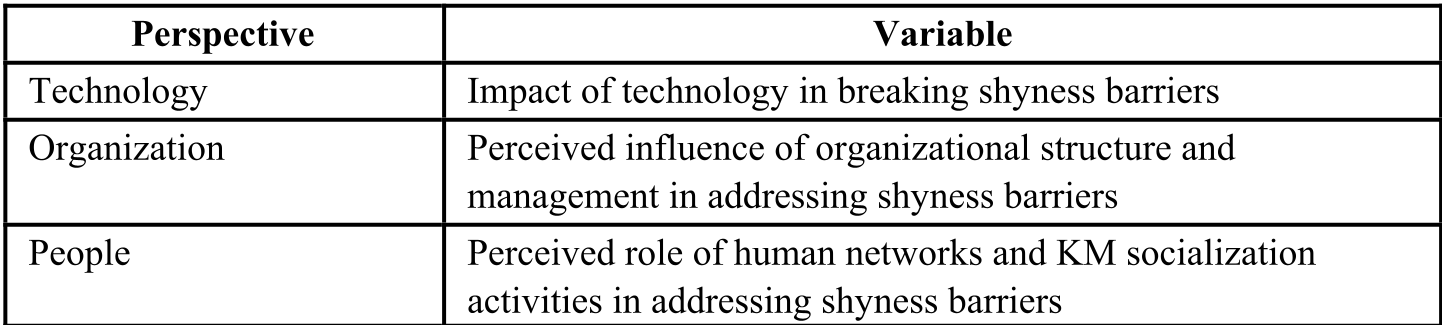 Note: The study categorizes these influences into three perspectives: Technology, Organization, and People.
Key Insights: Why ICT Isn't a Silver Bullet
The paper reveals a nuanced relationship between technology and cultural traits:
- ICT as a Shield: Employees actually preferred email and intranets because they could communicate without the "nervousness" of face-to-face interactions. However, this minimalist interaction prevented the development of deep social bonds and trust.
- Hierarchy Amplifies Shyness: The bureaucratic structure of BETA meant that "ideas are always finalized by senior members." If a junior member disagrees, their shyness/fear of social friction keeps them quiet, even if they have a superior technical solution.
- Communication as a Prerequisite: The study found that "sharing knowledge" shouldn't be the first goal. Instead, organizations should first focus on presentation skills and confidence building.
Results & Discussion: The Three Dimensions of Social Capital
Using Nahapiet and Ghoshal’s Social Capital framework, the authors analyzed how shyness erodes the organization from within:
- Structural: Shyness limits the number and strength of "network ties."
- Relational: It complicates the development of Trust. Shy employees feel "paranoid" or embarrassed when they don't achieve the same objectives as others, leading them to withhold information.
- Cognitive: Shyness creates a cognitive "disconnect," where employees are unwilling to even receive assistance because of the social anxiety of the interaction.
Critical Analysis & Conclusion
Takeaway
The core contribution of this work is the realization that Psychological Safety and Socio-Cultural Alignment are more important for KM than the technical sophistication of the platform. In shyness-prone cultures, the "human network" must be nurtured through informal, low-pressure environments (like the physical "tea break" forums mentioned in the study).
Limitations
The study is focused on a single Thai organization with a high percentage of highly educated R&D staff. Whether these findings translate to the Thai manufacturing sector or other "shy" cultures (like Japan or Malaysia) requires further validation.
Future Outlook
Future research should look into "Anonymity Protocols" in KM systems. If employees are too shy to voice concerns to their hierarchy, can AI-driven anonymous mediation bridge the gap?
Ultimately, this study serves as a warning to global tech leads: If you don't account for the "shyness" of your users, your knowledge management system will remain an empty shell.