
SDIDG: Reclaiming Data Sovereignty Through Software-Defined Decentralization
Software-Defined Infrastructure for Decentralized Data Lifecycle Governance: Principled Design and Open Challenges
This paper introduces Software-Defined Infrastructure for Decentralized Data Lifecycle Governance (SDIDG), a novel architectural framework designed to decouple data from application providers. By leveraging "software-defined" principles across five conceptual planes, it aims to restore data ownership to users and enable secure, privacy-preserving decentralized data analytics.
TL;DR
The "Big Data" era has reached a paradox: while centralized platforms like Google and Meta have pioneered data-driven innovation, they have also created impenetrable "data silos" that strip users of ownership and clash with privacy laws like GDPR. This paper proposes SDIDG (Software-Defined Infrastructure for Decentralized Data Lifecycle Governance). By applying the "Software-Defined Everything" (SDX) philosophy to the data lifecycle, the authors provide a blueprint for a world where data is decoupled from applications and governed by user-defined policies.
The Motivation: Breaking the "Matthew Effect"
The current data landscape suffers from three critical failures:
- Data Silos: Valuable "long-tail" data from smaller enterprises or government legacy systems are isolated because they cannot cross the entry barriers set by major tech ecosystems.
- Loss of Ownership: Users—the actual creators of data—act as "digital sharecroppers," with no right to control where their data is stored or how it is monetized.
- Privacy Risks: Centralized "honey pots" of sensitive data are prime targets for leaks and regulatory crackdowns.
The authors argue that we need a "moment of truth" transition from centralization to a responsive, decentralized topology.
Methodology: The Five-Plane Architecture
The core of the paper is a principled design consisting of five abstraction layers that separate the "what" of data from the "how" of governance.
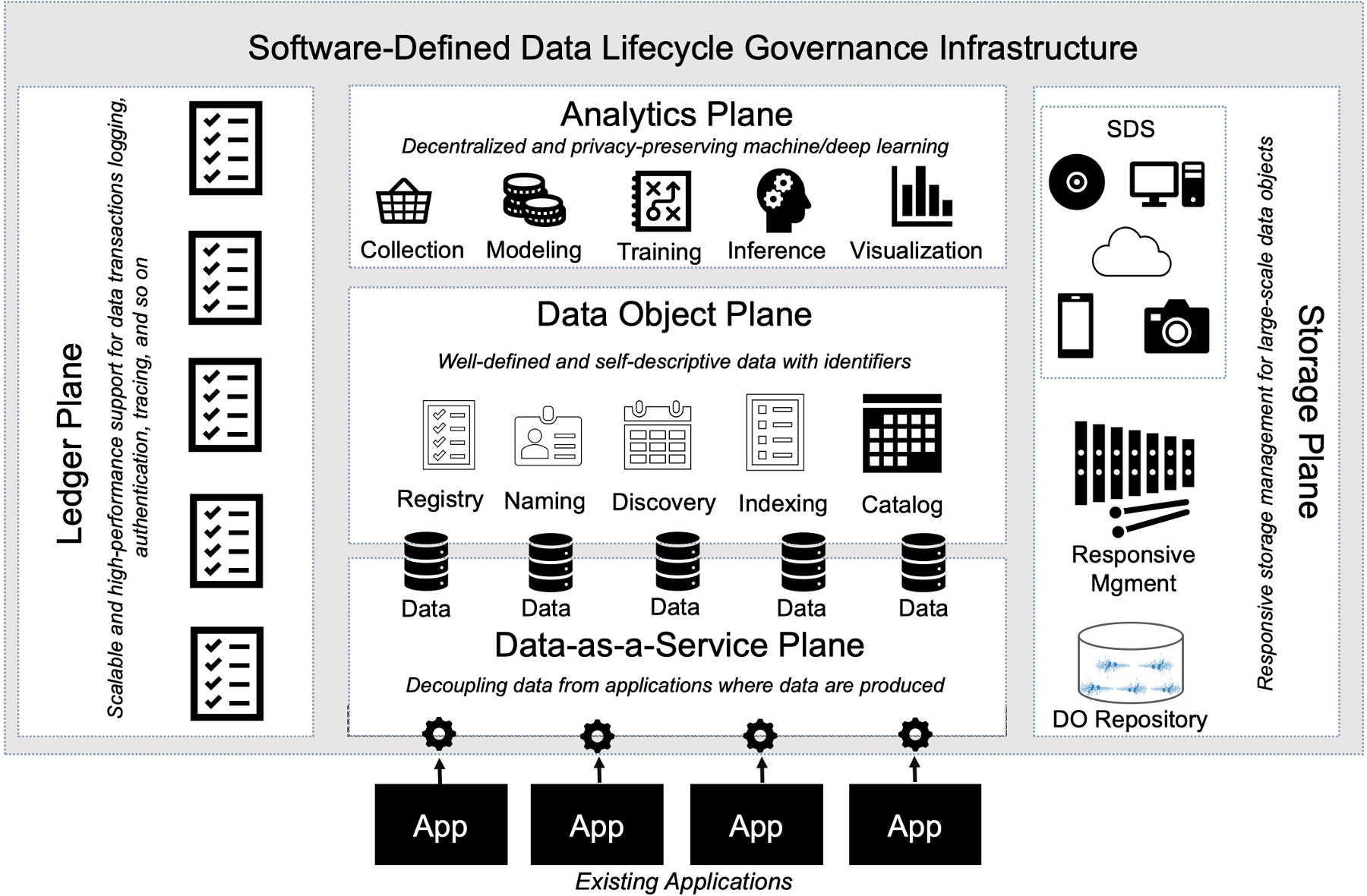
1. DaaS Plane (Data-as-a-Service)
This is the foundational layer. It turns "locked-in" data into independent resources. It suggests a move away from the traditional MVC (Model-View-Controller) pattern to one where Access Policy is a first-class citizen, allowing users to programmatically define who sees what.
2. Data Object (DO) Plane
Inspired by Robert Kahn’s Digital Object Architecture, this plane encapsulates raw data into self-descriptive, language-agnostic "Data Objects." Each object has a unique ID (DOI) and metadata, facilitating discovery across the entire Internet without needing a central repository.
3. Storage Plane
Unlike current systems where your data must live on the app provider's server, the Storage Plane allows the user to choose the physical location (e.g., local device, edge node, or personal cloud) via a set of "Software-Defined Storage" APIs.
4. Analytics Plane: Privacy-First AI
This plane addresses the "secondary value" of data. It advocates for Federated Learning and Differential Privacy, where models are trained locally on user devices.
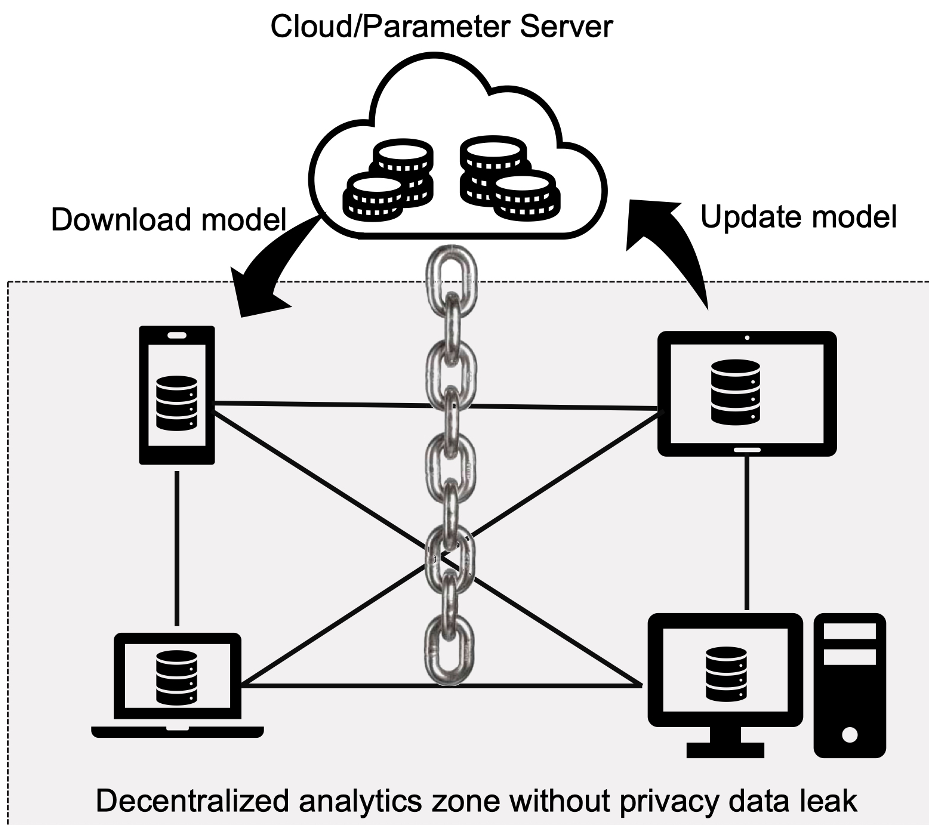 Figure: The Analytics Plane ensures that only model parameters, not raw data, are synchronized across the network.
5. Ledger Plane
To ensure trust and accountability, a blockchain-based ledger records the entire lifecycle of a Data Object. The authors propose using Consensus Zones (Sharding) and Sidechains to overcome the performance bottlenecks typically associated with Bitcoin or Ethereum.
Critical Analysis & Insights
The brilliance of this work lies in its Inductive Bias toward the user. By treating data as "private property" rather than a byproduct of an application, it solves the technical tension between Data Utility and Data Privacy.
However, significant challenges remain:
- Legacy Systems: Extracting data from government systems written in COBOL using ETL (Extract-Transform-Load) is a massive engineering hurdle.
- Economic Incentives: Why would a company like Facebook adopt a DaaS Plane that actively destroys its competitive moat? The authors suggest that GDPR compliance costs will eventually force this adoption.
- The Multi-Ownership Problem: If an IoT sensor in a smart city generates data, who owns it? The citizen? The sensor manufacturer? The city government? The paper suggests a "multi-ownership" extension to resolve these policy conflicts.
Conclusion: A Long-Run Vision
SDIDG is not an "off-the-shelf" software package; it is a principled design space. It aligns the future of software architecture with the sociological and legal shifts toward decentralization. For developers and researchers, the takeaway is clear: the next generation of SOTA systems will not be defined by how much data they collect, but by how effectively they govern data they do not own.