
SORASCS: Bridging the Gap Between Legacy Tools and Modern SOA for Social Analysis
SORASCS: A Case Study in SOA-based Platform Design for Socio-Cultural Analysis
This paper introduces SORASCS, a specialized Service-Oriented Architecture (SOA) platform designed to integrate heterogeneous third-party tools for Socio-Cultural Analysis (SCA). The authors successfully bridged legacy standalone tools (e.g., AutoMap, ORA) into a unified, web-based ecosystem, achieving a system where complex analytical workflows can be composed and executed by non-technical users.
TL;DR
Socio-cultural analysis (SCA) often involves a "manual glue" problem: analysts waste time shifting data between isolated, heavy-duty legacy tools. SORASCS (Service Oriented Architecture for Socio-Cultural Systems) is a platform developed at Carnegie Mellon University that transforms these fragmented tools into a cohesive, web-enabled ecosystem. By introducing a domain-specific abstraction layer, it allows non-technical experts to compose complex "what-if" social simulations without writing a single line of code.
Background: The Fragmented World of Social Simulation
Socio-cultural analysis is critical for everything from disaster relief planning (like the Haiti or Chile earthquakes) to national security. It involves extracting relationships from text, building dynamic network models, and running simulations. However, the existing tools (like UCINET or ORA) are often standalone programs with different data formats (DyNetML) and no easy way to talk to one another.
The researchers identified a core tension: analysts need the flexibility of a distributed system but are often technically naïve—they shouldn't have to learn BPEL (Business Process Execution Language) or manage SOAP protocols to do their jobs.
The Problem & Motivation: Why Standard SOA Isn't Enough
Initially, the team attempted a "pure" SOA approach. They wrapped legacy functions into web services and used standard industrial tools. This failed for three reasons:
- Complexity: Writing BPEL orchestrations is a programming task, not an analytical one.
- Interactive vs. Stateless: Many SCA tools are highly graphical and interactive (like visualizing a network), which doesn't fit the "stateless" nature of standard web services.
- Human Factors: Analysts didn't want to abandon the interfaces they spent years learning just to use a web portal.
Methodology: The Evolution of SORASCS
The breakthrough came in Version 2, where the team moved from a generic SOA to a Domain-Specific Architecture.
1. The Socio-Cultural Analysis Layer
Instead of forcing users to deal with "Services," they introduced a Data-flow Style Workflow. Using a tool called SWiFT, analysts can drag-and-drop functional blocks.
- Abstraction: The analyst sees a "Clean Text" or "Generate Network" block.
- Compilation: Behind the scenes, the platform compiles these visual flows into complex BPEL orchestrations.
- Data Management: The system automatically handles data transformation between mismatched steps.
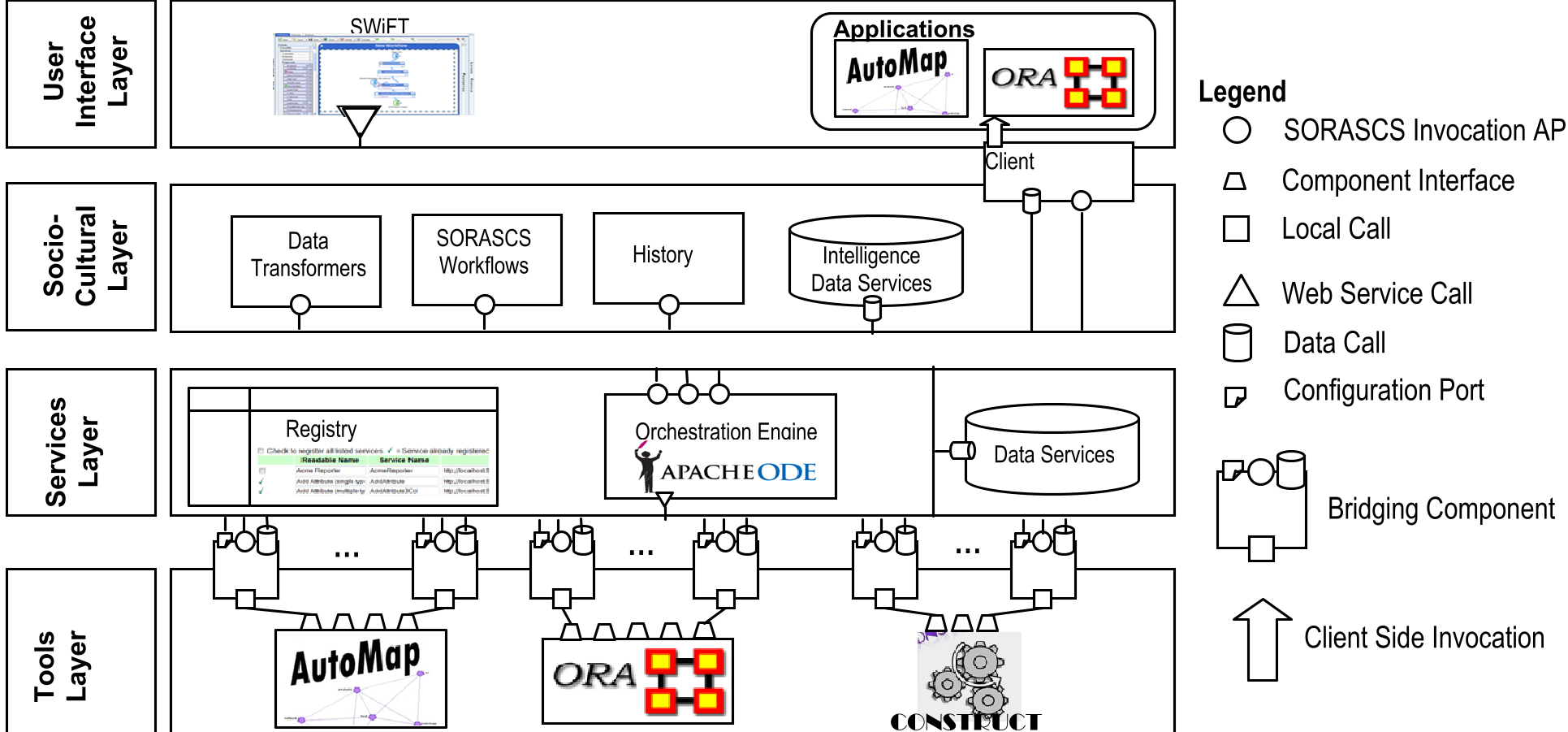 Figure 1: The layered architecture of SORASCS v2, highlighting the Socio-Cultural Analysis layer that bridges high-level user interfaces with low-level web services.
2. The Legacy Wrapper (The ~50 Line Rule)
To encourage tool developers to join the ecosystem, the team removed the "integration tax." They built a service integration layer that handles:
- Thread Safety: Queuing requests so non-thread-safe legacy code doesn't crash.
- Housekeeping: Handling authentication and data transfers automatically.
- Result: Transitioning a tool function to a service now requires only about 50 lines of boilerplate code.
Experiments & Results
The researchers demonstrated the platform's power by integrating disparate tools like AutoMap (text extraction), ORA (network visualization), and even the Microsoft Office Suite.
- Scale: Over 120 services successfully integrated.
- Usability: In community meetings with ~50 participants, they proved that specialized tools (like VIBES for belief systems) could use SORASCS as a backend without forcing the user to leave their familiar graphical interface.
- Efficiency: The mapping from SWiFT workflows to BPEL (shown below) illustrates how a few high-level nodes can replace dozens of low-level technical operations.
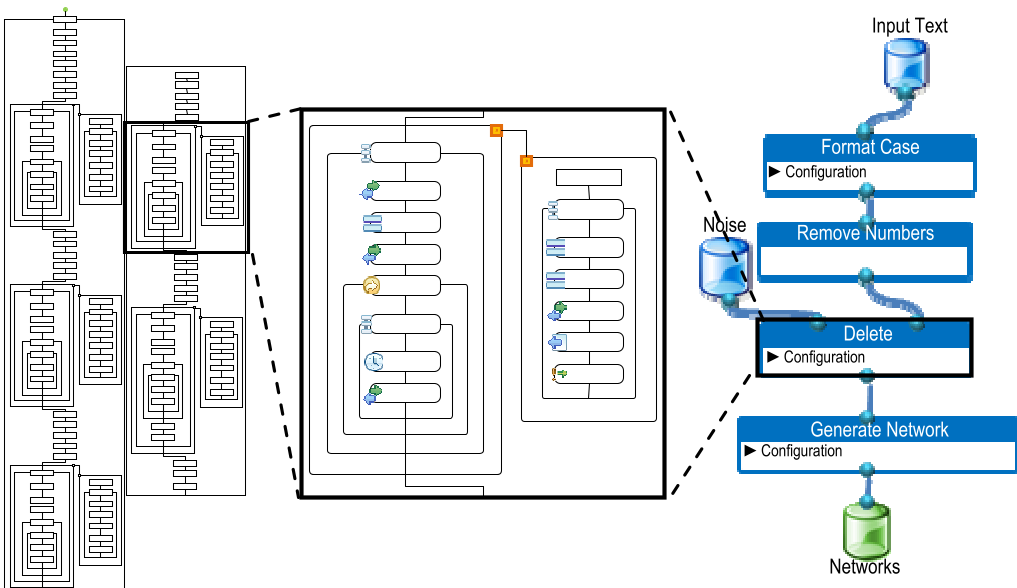 Figure 2: The mapping process between the user-friendly SWiFT data flow and the technical BPEL execution logic.
Critical Insight & Conclusion
The success of SORASCS teaches us that Architecture is not just about technology; it's about ecosystems. For any domain involving non-technical users, a pure SOA will fail unless it is augmented with:
- Hybrid Connectivity: The ability to launch local desktop apps in sync with cloud data.
- Domain Abstractions: Workflows must speak the language of the analyst (e.g., "Socio-Cultural Analysis") rather than the language of the developer (e.g., "REST/SOAP").
Future Outlook: The next frontier for SORASCS is addressing the "Certification Problem"—ensuring this code can be deployed in highly secure environments like national intelligence agencies, where "pushing" commands to a client's machine is often a security red flag.