
Beyond the Black Box: Strengthening Twitter Spam Detection with Human-in-the-Loop Random Forests
Spam detection of Twitter traffic: A framework based on random forests and non-uniform feature sampling
This paper introduces a "Gray Box" Machine Learning framework for Twitter spam detection using an Enriched Random Forest algorithm. By implementing a non-uniform feature sampling technique, the system allows Law Enforcement Agencies to integrate domain expertise into the classification process, achieving superior results on a newly developed dataset of 1,161 borderline accounts.
TL;DR
Researchers from the University of Genoa and the Italian National Police have developed a "Gray Box" framework that injects human expertise into the Random Forest algorithm. By moving from uniform feature sampling to a non-uniform "spike" distribution, the model prioritizes expert-identified features while retaining the robustness of traditional ensemble methods. This approach specifically targets "borderline" Twitter accounts that often bypass automated filters.
The "Black Box" Dilemma in Law Enforcement
For Law Enforcement Agencies (LEAs), the challenge of Twitter traffic isn't just the volume—it's the ambiguity. Traditional spam filters often act as Black Boxes: they provide an output (Spam/Legitimate) without explaining the "Why."
Furthermore, while automated feature selection is computationally expensive, manual selection (creating a "Reduced" feature set) is risky. If an analyst misses a crucial feature, the model's accuracy tanks. The paper addresses this by proposing a middle ground: Non-uniform Feature Sampling.
Methodology: The "Custom" Random Forest
The core innovation lies in Algorithm 2, which replaces the standard uniform distribution of features with a weighted distribution.
1. The Mathematical Intuition
The authors leverage Leo Breiman’s upper bound for Random Forest generalization error (): To minimize error, you need a low average correlation () between trees and high individual tree strength (). By emphasizing relevant features (increasing ) but still occasionally sampling others (keeping low), the "Custom" framework optimizes this bound more effectively than a blind uniform search.
2. Framework Architecture
Analysts identify a set of Relevant Features (RelF). During the training of each tree, these features have a significantly higher probability of being chosen for a split.
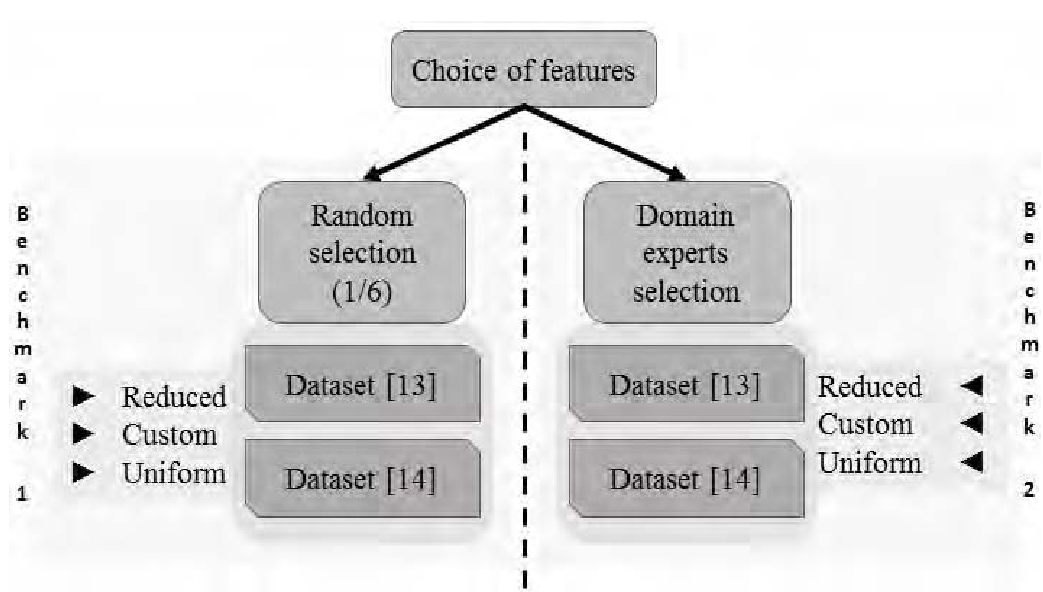 Figure 1: The workflow comparing Uniform, Reduced, and the proposed Custom sampling approach.
A New Benchmark: The "Borderline" Dataset
The authors contributed a new dataset containing 1,161 accounts described by 54 features. Unlike older datasets, this focuses on "borderline" users—accounts that exhibit high activity (e.g., >200 tweets/day) or high URL ratios, making them difficult even for experts to label.
Features are categorized into:
- IStant Features (ISF): Easily retrieved (e.g., follower count).
- In-Depth Features (IDF): Require computation (e.g., number of spam words in description).
Experimental Validation
The team compared three methods:
- Uniform: Standard Random Forest (all features equal).
- Reduced: Only expert-selected features (others discarded).
- Custom: Weighted sampling (weighted toward expert features).
Key Findings:
- Resilience to Human Error: In cases where the expert chose a "non-powerful" set of features (Benchmark 1 & 2), the Custom framework's error rate remained stable—overlapping with the Uniform results. In contrast, the Reduced model's error spiked.
- Superior Accuracy: When experts correctly identified discriminative features, the Custom model outperformed the Uniform baseline, achieving a more efficient error convergence as the number of trees increased.
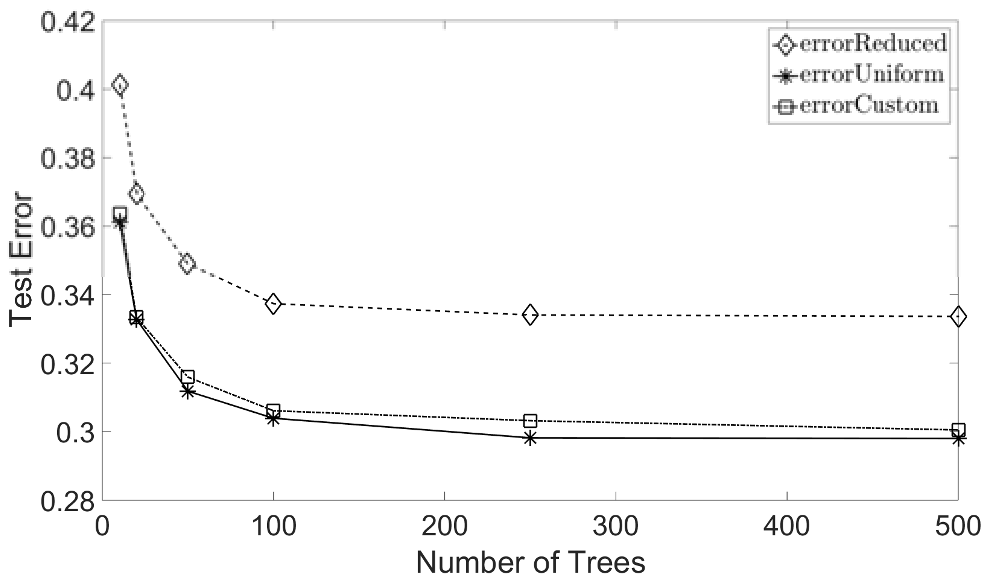 Figure 2: Accuracy comparison. Note how the 'Custom' approach (square markers) consistently stays at the bottom of the error curve.
Critical Insight & Conclusion
This work demonstrates that Expert Intelligence and Machine Learning are not mutually exclusive. The "Gray Box" approach acts as a safety net:
- If the expert is right, the model gets a performance boost.
- If the expert is wrong, the model's stochastic nature (still sampling "non-relevant" features) prevents a catastrophic drop in accuracy.
Limitations: While effective, the framework still relies on the initial quality of the "Expertise." Future iterations could explore dynamic weight adjustment where the model "learns" to trust the human expert less if their suggested features fail to provide information gain.
Final Takeaway: For high-stakes environments like National Security, the goal shouldn't be to replace the analyst, but to build algorithms that can finally "listen" to them.