
SentiPair Sequence: Bridging the Gap Between Dynamic Visuals and Sentiment
A spatial-temporal visual mid-level ontology for GIF sentiment analysis
This paper introduces the GIF Sentiment Ontology (GSO), a novel framework for analyzing sentiment in dynamic GIFs using a mid-level representation called the SentiPair Sequence. By combining Adjective-Noun Pairs (ANP) and Verb-Noun Pairs (VNP) into temporal sequences, the method achieves a sentiment prediction accuracy of 72.6% on the newly released GSO-2015 dataset.
TL;DR
GIFs are more than just moving pictures; they are condensed emotional narratives. This paper introduces a SentiPair Sequence-based visual sentiment ontology, a framework that treats GIFs as a temporal progression of semantic "pairs" (Adjective-Noun and Verb-Noun). By moving beyond static image analysis, the researchers achieved a 72.6% accuracy in sentiment classification and released GSO-2015, a comprehensive dataset of 40,000+ GIFs to fuel future research in dynamic visual affects.
Problem & Motivation: Why Static Analysis Fails GIFs
In the landscape of social media, GIFs have become a primary language for expressing subjective sentiment. However, analyzing them is notoriously difficult due to:
- Dynamic Semantic Sequences: Sentiment often hinges on a sequence of actions (e.g., a smile turning into a frown).
- Visual Noise: GIFs are frequently cluttered with explanatory text, motion blur, and erratic lighting.
- Semantic Abstraction: Moving from "pixels" to "joy" or "frustration" is a huge leap for AI.
The authors argue that prior works—which rely heavily on Adjective-Noun Pairs (ANP) for static images—miss the "action" component. A "smiling dog" is a state, but a "falling cup" is an event. To capture sentiment in GIFs, we need to account for both.
Methodology: The SentiPair Sequence and Synset Forest
The core innovation lies in the SentiPair Sequence, a mid-level representation that captures both what is in the frame (Spatial) and what is happening (Temporal).
1. SentiPairs (ANP + VNP)
A SentiPair is the union of:
- ANP (Adjective-Noun Pair): Describes states (e.g., "Lovely Girl").
- VNP (Verb-Noun Pair): Describes actions (e.g., "Girl Shout").
By sequencing these pairs in order of occurrence, the model builds a narrative of the sentiment's evolution.
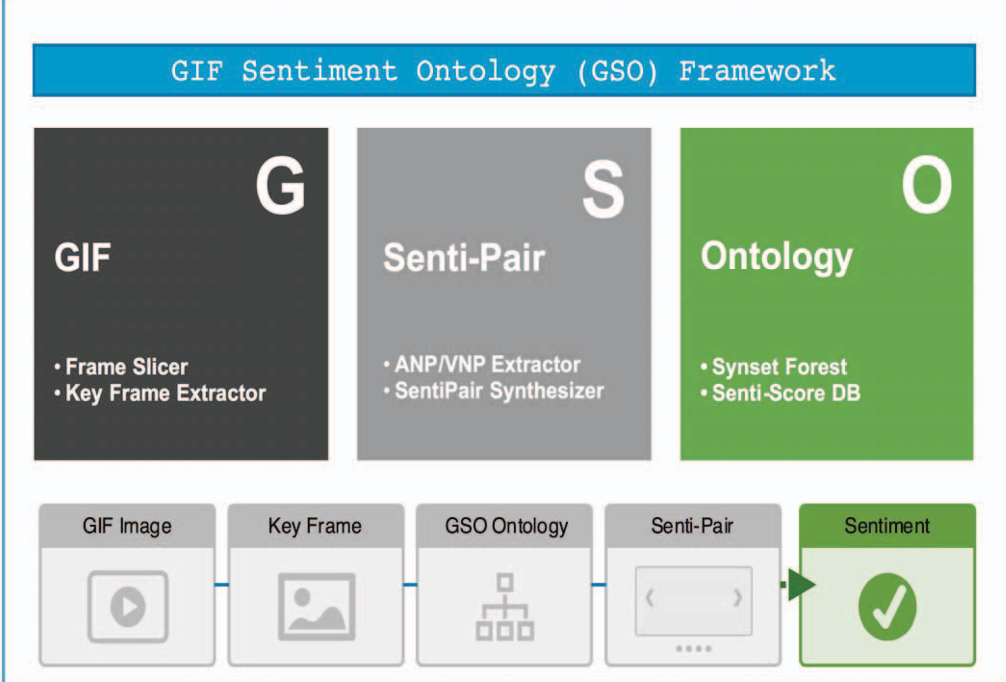 Fig 1: The GSO Framework Architecture, showing the pipeline from GIF input to SentiPair detection and sentiment polarity output.
2. The Synset Forest
To ensure the vocabulary used for these pairs is structured and sentiment-aligned, the authors created the Synset Forest. Leveraging WordNet, they organized nouns, verbs, and adjectives into a hierarchical tree. This prevents ambiguity and ensures that the chosen concepts have a clear relationship to human emotion.
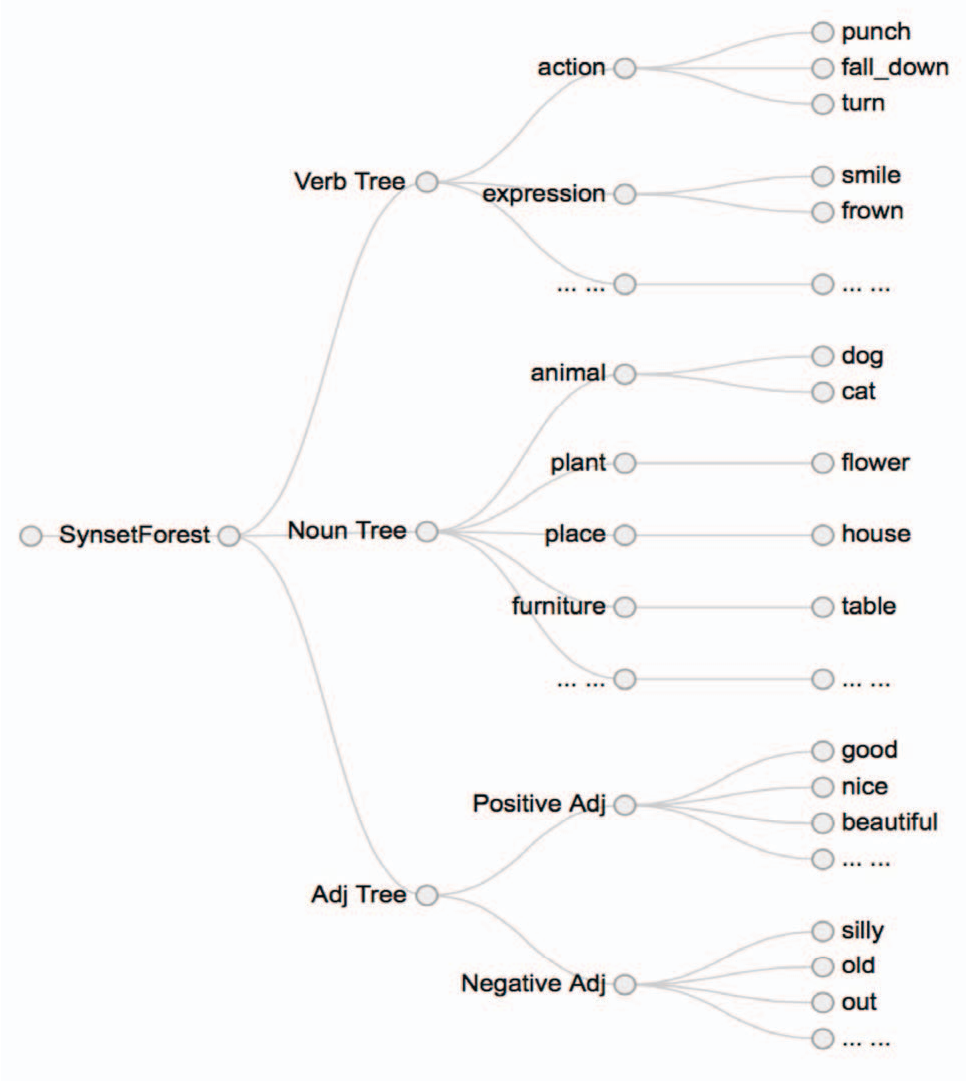 Fig 2: An overlook of the Synset Forest used to define the semantic structures of visual concepts.
Experiments and Results
The authors validated their approach on the GSO-2015 dataset, comparing SentiPairs against the pure-ANP baseline used in image sentiment analysis.
- Superior Accuracy: The SentiPair representation achieved 72.6% accuracy using a Sequential Minimal Optimization (SMO) classifier, outperforming pure ANP (70.2%) and pure VNP (65.8%).
- The Power of Actions: The inclusion of VNPs allowed the model to correctly classify GIFs where the sentiment was driven by movement rather than just static appearance.
- Deep Learning Integration: By modifying a CNN (AlexNet-variant) and using data augmentation, they significantly improved the detection of these mid-level SentiPairs themselves.
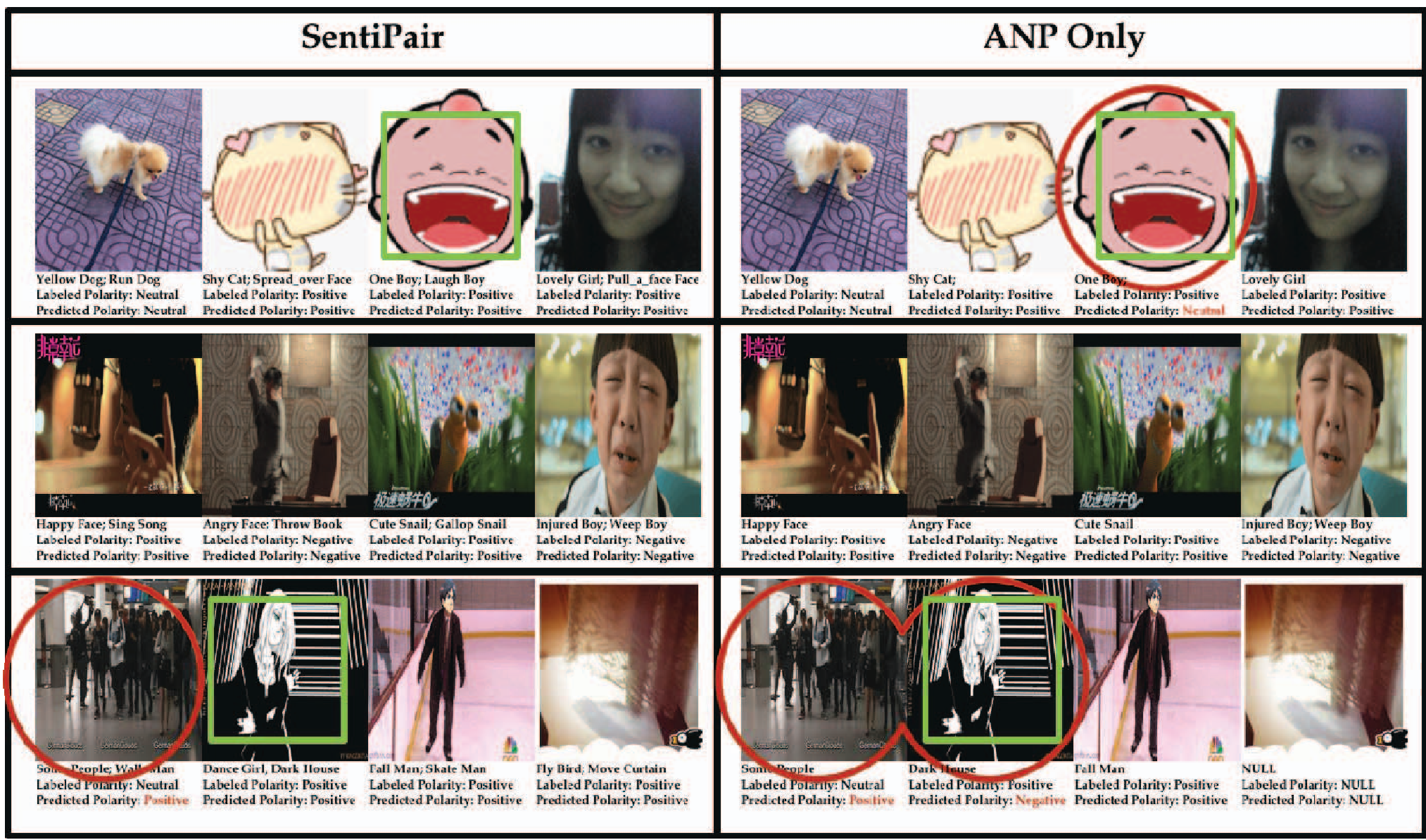 Fig 3: Comparison of SentiPair vs. ANP. Green boxes highlight where SentiPair successfully captures the sentiment that ANP missed.
Critical Insight & Conclusion
This paper proves that temporal context is non-negotiable for video-based sentiment analysis. By decomposing a complex GIF into a sequence of human-understandable SentiPairs, the researchers achieved two things:
- Interpretability: We can "read" why the model thinks a GIF is sad (e.g., Lovely Girl -> Girl Frown -> Girl Shout).
- Robustness: Mid-level features act as a buffer against the high dimensionality and noise of raw video data.
Limitations: While the framework is strong, the detection of the SentiPairs themselves remains the bottleneck. Current accuracies for Top-1 detector outputs are still low, suggesting that while the ontology is effective, the computer vision task of identifying specific verb-noun pairs in noisy GIFs remains a significant frontier for future research.