
SpeakHealth: The Collision of Medical Rigor and Creative Engagement in Healthcare Policy
Supporting a Shared Dialog on Healthcare Policy between Researchers, Practitioners, and the Lay Public: Creating the SpeakHealth Online Community
This paper presents the sociotechnical design of SpeakHealth, an online community platform intended to bridge communication between medical researchers, practitioners, and the public. It highlights the development of a non-linear navigational structure and a narrative-driven engagement strategy to foster dialogue on U.S. healthcare policy.
TL;DR
Building a digital bridge between medical experts and the lay public is more of a cultural challenge than a technical one. The SpeakHealth project attempted to revolutionize healthcare policy dialogue through a non-linear, media-rich online community. However, the project ultimately became a case study in how professional culture clashes—specifically between the "disruptive" instincts of media designers and the "safety-first" mindset of medical professionals—can stall even the most innovative sociotechnical systems.
The Core Friction: Motivation vs. Dissemination
The U.S. healthcare paradox is well-known: we spend the most but rank poorly in outcomes. The authors argue that the missing link is a "shared vision." While 61% of adults look for health info online, few contribute their voices to policy change.
The designers’ insight was that facts alone don't move people; stories do. They wanted to use metaphor, fiction, and non-linear navigation to jar users out of their apathy. Conversely, the healthcare professionals involved were anchored in the "Dissemination Model"—the belief that providing vetted, academic information is the primary goal of any professional platform.
Methodology: Designing for Reflection
The team developed a unique "interconnected node" system. Instead of a standard list of articles, users navigated a holistic map of 25 nodes representing the "integrative" nature of health (e.g., policy, body-mind-spirit, environment).
System Architecture & Navigation
The site utilized Media Prompts—short films designed to create "cognitive conflict." For instance, one video used an animated heart crashing into suburbia to discuss the link between social ties and heart disease.
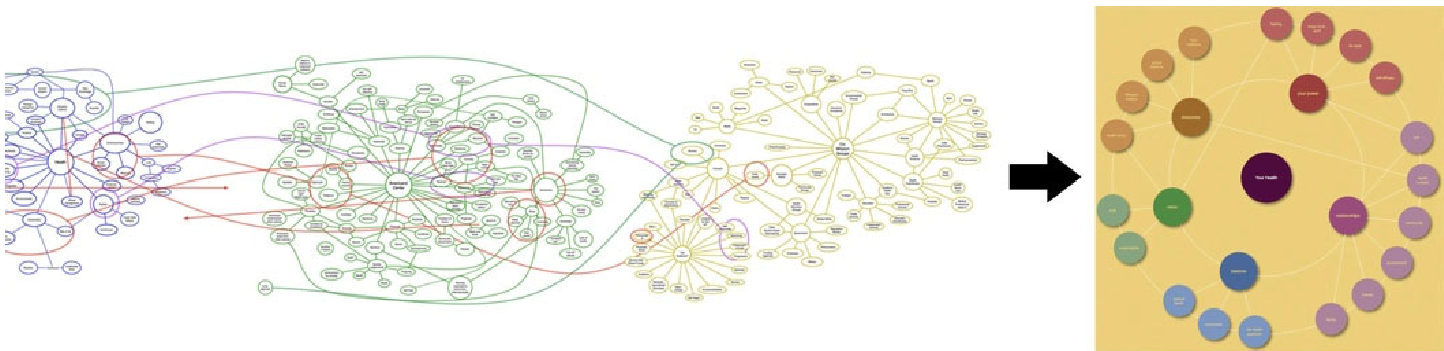 Fig 1: The map of 25 interconnected health topics used as the basis for site navigation.
The Moderation Paradox
One of the most intense design debates centered on identity.
- The Medical View: Demand real names, credentials, and employers to ensure "authorship" and accountability.
- The Design View: This would silence dissent and prevent the public from sharing sensitive personal truths.
The solution was a "Signature Selection" model, allowing users to choose how much they revealed while still requiring backend registration for moderation.
Experiments & Results: The "Controversy" Failure
When SpeakHealth debuted at a major conference, the reaction was polarized. The media designers saw the controversy as a sign of life—engagement was happening. However, the medical professionals viewed the "novelty" as a reputational risk.
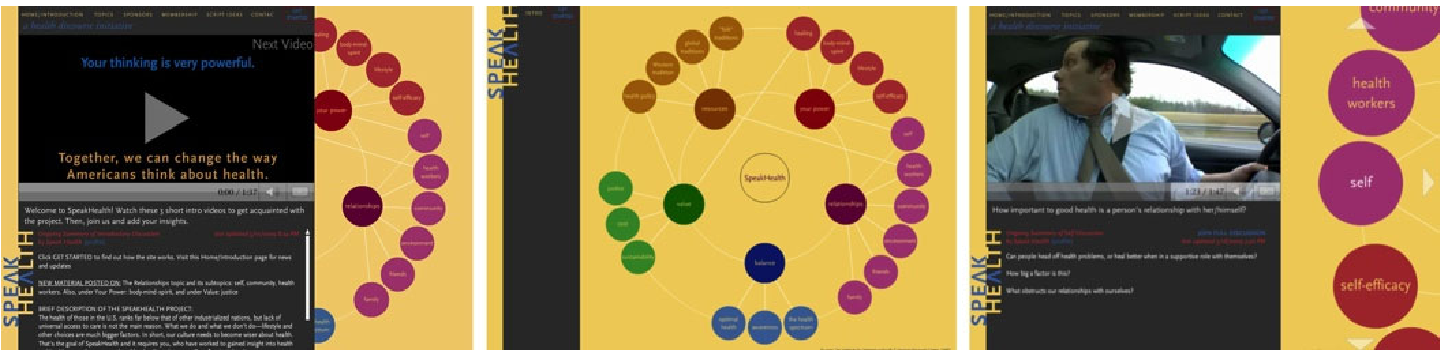 Fig 2: The evolution of the UI from a video-driven introduction to topic-based moderation.
The Resulting Pivot: To appease the medical stakeholders, the site was flattened into a traditional blog-style format.
- Outcome: The community’s energy died. Interaction plummeted as soon as the "engagement" strategy shifted back to a "dissemination" (journalistic) strategy.
Critical Insight: Who Should Lead?
The paper concludes with a bittersweet realization. For multidisciplinary projects to succeed in the "wild" of the internet, the Media Designers—those who understand the mechanics of public attention—might need to be the principal investigators, with medical pros as consultants.
Key Lessons:
- Risk Parity: Don't build a disruptive design if your stakeholders aren't prepared to defend it to their peers.
- Engagement > Dissemination: Twitter-style broadcasting of links is not the same as building a community.
- Define Success Early: Is the goal "scientific accuracy" or "public mobilization"? These goals often require different UI/UX languages.
Ultimately, SpeakHealth serves as a cautionary tale: a perfect technical solution can be defeated by an imperfectly aligned professional culture.