
ICE: Architecting the "Anti-Social" Network for Disaster Survival
On building special-purpose social networks for emergency communication
This paper proposes the In Case of Emergency (ICE) system, a purpose-built social network designed for lightweight status signaling (e.g., "I'm fine") during large-scale disasters. Using a minimalist architecture based on 8-character identifiers (IIDs) and a Distributed Hash Table (DHT), it enables status propagation even over highly constrained or non-traditional communication channels.
TL;DR
When disasters strike, the digital infrastructure we take for granted often collapses. The In Case of Emergency (ICE) system is a radical departure from mainstream social media. It is a purpose-built, minimalist social network designed to do one thing: broadcast a "survival" ping to a pre-defined circle when every byte of bandwidth counts. By using 8-character IDs and a distributed back-end, it ensures that even a Morse code signal or a single UDP packet can notify your family that you are safe.
The "Flash Crowd" Problem in Disasters
The primary hurdle in emergency communication isn't a lack of desire to talk; it's the infrastructure bottleneck. In the immediate aftermath of an earthquake or terrorist attack, thousands of people attempt to call or post updates simultaneously.
Current SOTA platforms (Facebook, X/Twitter) fail here because:
- High Overhead: They require login handshakes, heavy SSL/TLS certificates, and complex UI loads.
- Centralized Risk: If the primary data centers or local gateways are down, the service is dead.
- Spam & Privacy: Publicly broadcasting status without authentication invites impersonation.
The ICE system's Research Intuition is simple: Separate the registration of the social graph (done during peace time) from the triggering of the notification (done during the crisis).
Methodology: The Architecture of Resilience
The system is split into three distinct layers to ensure that even if parts of the world are offline, the notifications still go out.
1. Pre-Emergency: Registration
Users define a small "Notification Target" (email, SMS, voice) and receive a random 8-character In Case of Emergency Identifier (IID). This IID is the "magic key" that unlocks their pre-stored contact list.
2. The Notifier DHT (Distributed Hash Table)
Instead of a central database, encrypted records are spread across a DHT. This provides high redundancy—if a server in the disaster zone goes down, nodes in other countries still hold the data.
3. The Lightweight Trigger
This is the core innovation. During a disaster, a user doesn't need a browser. They just need to get their 8-character IID to a Notification Interface.
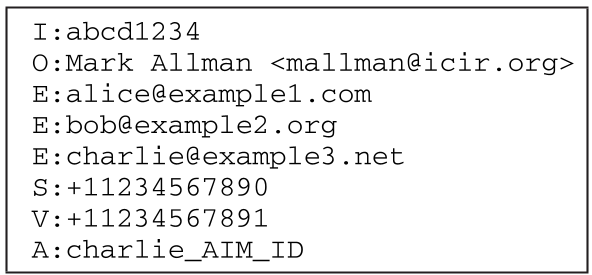 Figure 1: The architecture demonstrates how a simple IID trigger (C) can propagate through a distributed network.
Security Through Sparseness
How do you prevent spammers from "guessing" IIDs and sending fake "I'm safe" messages? The author relies on mathematical sparseness. With an 8-character ID space (2.8 trillion possibilities) and only 7 billion humans, the chance of guessing a valid, active ID is astronomically low—equivalent to a "scan detector" identifying a port probe in traditional networking.
Critical Results: Can It Scale to 7 Billion?
The paper performs a "back-of-the-envelope" calculation for a global deployment:
- Storage: 7 billion records would require ~60 TB of redundant storage. Total cost? Under $10k.
- Throughput: To handle a NYC-scale disaster (21M people), the system needs to send 6,207 emails/sec. Standard server-class hardware can handle ~100 emails/sec, meaning a modest cluster of 63 servers could cover the entire metropolitan area's notification needs within an hour.
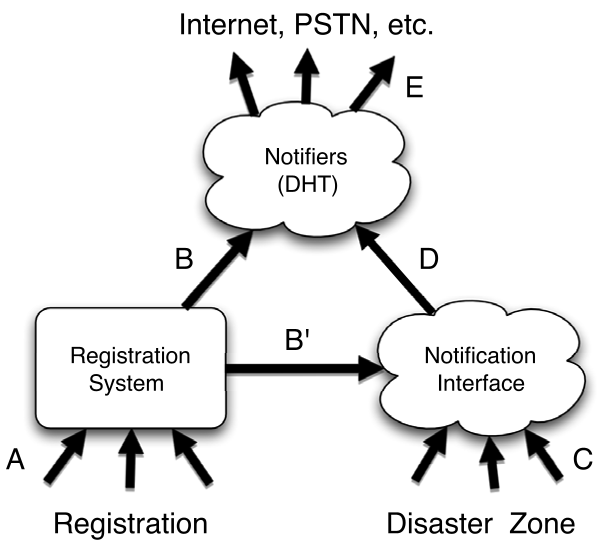 Figure 2: An example record showing how an IID maps to multiple communication protocols (Email, SMS, Voice, IM).
The Verdict: Minimalist Design as a Feature
The ICE system is a Masterclass in functional minimalism. It doesn't try to be a gallery, a newsfeed, or a chat app. It treats a social network as a distributed trigger.
Limitations: The system's greatest strength—its simplicity—is also its weakness. It relies on users pre-planning their networks. In a reality where people move, change phone numbers, and forget IDs, the "periodic fire drill" mentioned by the author would be crucial to keep the data from becoming stale.
Future Outlook: With the rise of Satellite-to-Cell technology (like Starlink/Direct to Cell), the ICE system provides a perfect protocol for ultra-low-bandwidth satellite links where every bit saved increases the chances of a life-saving message getting through.