
Markov-TPM: Enhancing Crowdsourcing Accuracy via Predictable Mobility
SPECIAL SECTION ON ARTIFICIAL INTELLIGENCE AND COGNITIVE COMPUTING FOR COMMUNICATION AND NETWORK
This paper introduces a high-quality task assignment mechanism for vehicle-based crowdsourcing platforms, utilizing a novel Markov-based Trajectory Prediction Model (Markov-TPM). By predicting the participant's future location, the system achieves superior task-delivery accuracy compared to static or neighbor-based selection strategies.
TL;DR
In the world of vehicle-based crowdsourcing, matching the right driver to the right task is usually a game of "where are you now?" This paper argues that the real question should be "where will you be next?" By leveraging a First-Order Markov Model, the authors propose Markov-TPM, a system that predicts vehicle trajectories to double down on task delivery accuracy, outperforming traditional proximity-based methods using real-world Shanghai taxi data.
The "Moving Target" Problem in Crowdsourcing
Current vehicle-based crowdsourcing platforms (like delivery or sensing services) primarily use location-sensitive assignment. The logic is simple: if a task is at point A, assign it to the vehicle currently closest to point A.
However, vehicles are inherently mobile. A taxi currently near a task might be traveling at high speed toward a different district. Static estimation fails because it lacks temporal foresight, leading to high "misallocation" rates where the task is assigned to someone who is actually moving away from the destination.
Methodology: The Markov-TPM Framework
The core innovation lies in treating a vehicle's movement not as a series of random points, but as a State Transition Process.
1. Grid-Based Discretization
The authors first divide the activity area into a coordinate system of small, labeled regions. A vehicle's daily movement is then converted into a sequence of state transitions (e.g., Area 1 → Area 2 → Area 5).
2. Transition Probability Matrix
By analyzing historical GPS data, the system build a Transition Matrix (). For any given vehicle, it calculates the probability of moving from to .
3. Predictive Assignment
When a task appears at a specific location, the platform doesn't just look for the closest car. It queries the Markov-TPM of all available vehicles to find the one with the maximum probability of reaching the task area in the next time window.
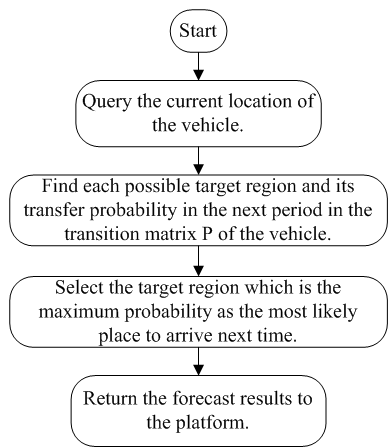 Figure 1: The logical flow from current location query to probability-based results returning.
Experiments: Real-World Latency and Accuracy
The authors tested their model using GPS data from 45 taxis in Shanghai over a 20-day period. They compared Markov-TPM against two baselines:
- Random: Randomly selecting vehicles.
- BON (Based On Neighbor): Predicting the vehicle will move to a neighboring region of its current location.
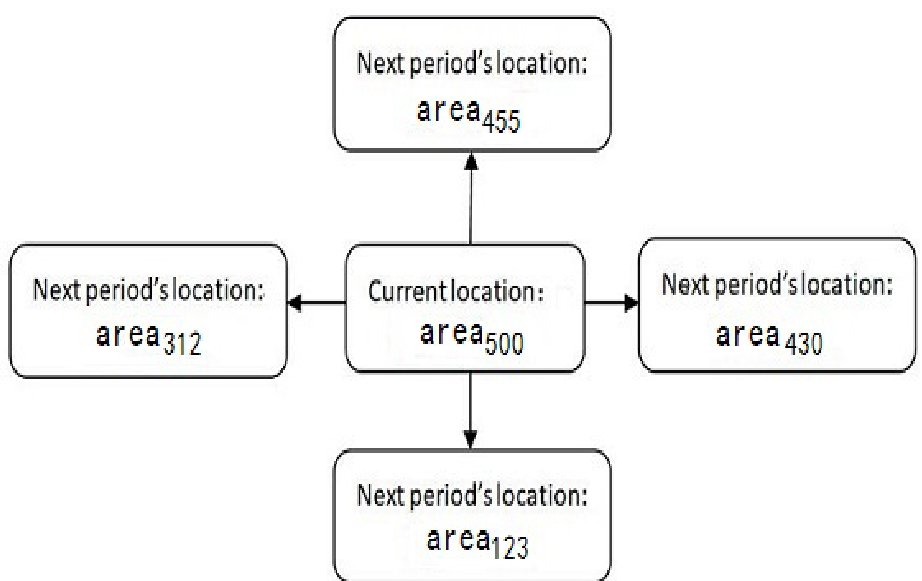 Figure 2: Accuracy comparison across different vehicle IDs.
The results (shown in Figure 6 and 7 of the paper) demonstrate that Markov-TPM significantly improves the "delivered-task accuracy." While BON performs better than Random by acknowledging local movement, it cannot match the historical pattern recognition of the Markov approach.
Critical Insight & Future Directions
The beauty of this paper lies in its simplicity and interpretability. While modern AI often jumps to complex Deep Learning models, the First-Order Markov model provides a computationally efficient way to capture "positional regularity"—the fact that most vehicles (especially professional ones like taxis) follow predictable routines.
Limitations:
- First-Order Constraints: The model only looks at the immediate previous state. Higher-order Markov chains or LSTMs could potentially capture longer-term dependencies.
- Stochastic Nature: As the authors admit, human behavior isn't 100% predictable; social relations and driver preferences are missing pieces of the puzzle.
Conclusion
Markov-TPM proves that a platform's efficiency isn't just about how much data you have, but how you model the intent and trajectory of your participants. By moving from static snapshots to probabilistic trajectories, crowdsourcing platforms can significantly reduce costs and improve service reliability.