
Unified Spectral Landscapes: A Holistic Approach to Emotional Speech Synthesis
Modifying Spectral Envelope to Synthetically Adjust Voice Quality and Articulation Parameters for Emotional Speech Synthesis
The paper introduces a unified method for emotional speech synthesis by modifying the spectral envelope instead of individual articulation parameters. By integrating spectral envelope adjustments with prosody (F0, duration, energy) modifications, the researchers achieved significantly improved emotional expression in synthetic speech across sadness, anger, and happiness.
TL;DR
Researchers from the Harbin Institute of Technology have simplified emotional speech synthesis by proving that spectral envelope modification can replace a complex web of manual articulation rules. By combining this spectral "envelope swapping" with traditional prosody adjustments (pitch/timing), they achieved recognition rates for emotions like Anger and Sadness exceeding 88%.
Academic Context: This work moves away from the fragmented adjustment of parameters (like nasality or breathiness) toward a holistic spectral view, bridging the gap between old-school formant synthesis and modern flexible voice conversion.
The Bottleneck: Why Your GPS Sounds Bored
Modern speech synthesis often sounds "robotic" because it lacks vocal texture. While we can easily change a voice's pitch (F0) or speed (duration), recreating the subtle "harshness" of anger or the "breathiness" of sadness is difficult.
Prior works used hand-crafted filters to simulate these qualities. However, human emotion changes the entire shape of the vocal tract. The authors argue that trying to adjust these parameters one by one is like trying to paint a masterpiece by only changing the RGB values of individual pixels—it lacks the "brushstroke" logic of the spectral envelope.
Methodology: The "Envelope + Residue" Surgery
The core insight is based on the Source-Filter Theory. Speech is the product of a source (glottal residue) and a filter (vocal tract envelope).
- Prosody Transfer: The pitch and duration of a neutral sentence are stretched and shifted to match an emotional target using PSOLA (Pitch Synchronous Overlap and Add).
- Spectral Swapping: Using 16-order LPC (Linear Predictive Coding), the authors extract the "spectral envelope" from an emotional recording and transplant it onto the neutral speech residue.
- Holistic Adjustment: Because the envelope captures formant positions and bandwidths, it naturally simulates changes in the vocal tract muscles and laryngeal state without needing specific "breathiness" sliders.
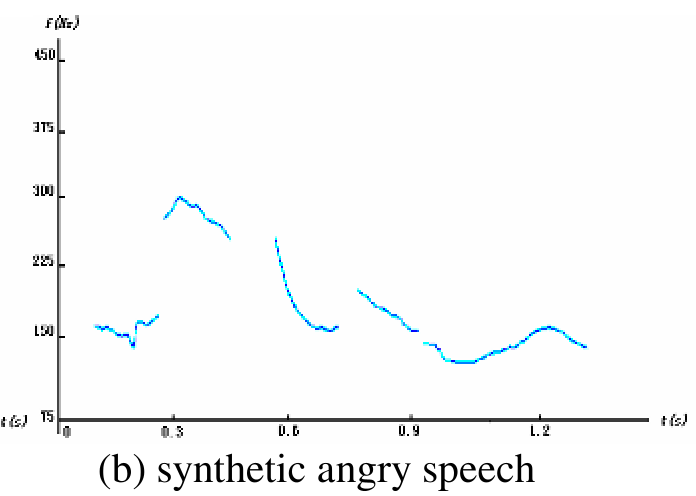 Figure 1: The process of combining emotional envelopes with neutral residue to generate an emotional spectrum.
Experimental Evidence: Recognition Peaks
The authors conducted a rigorous forced-choice perception test with ten listeners. The results were clear: Pitch isn't everything.
| Method | Happy | Angry | Sad |
|---|---|---|---|
| Prosody Only | 63% | 65.5% | 84% |
| Envelope Only | 61% | 44% | 73% |
| Combined (Prosody + Envelope) | 79.5% | 88% | 91% |
While prosody carries much of the "Sadness" information (detected by the low pitch), "Anger" and "Happiness" rely heavily on the spectral texture. When the envelope was added to the prosody, the recognition of Anger jumped from 65.5% to 88%.
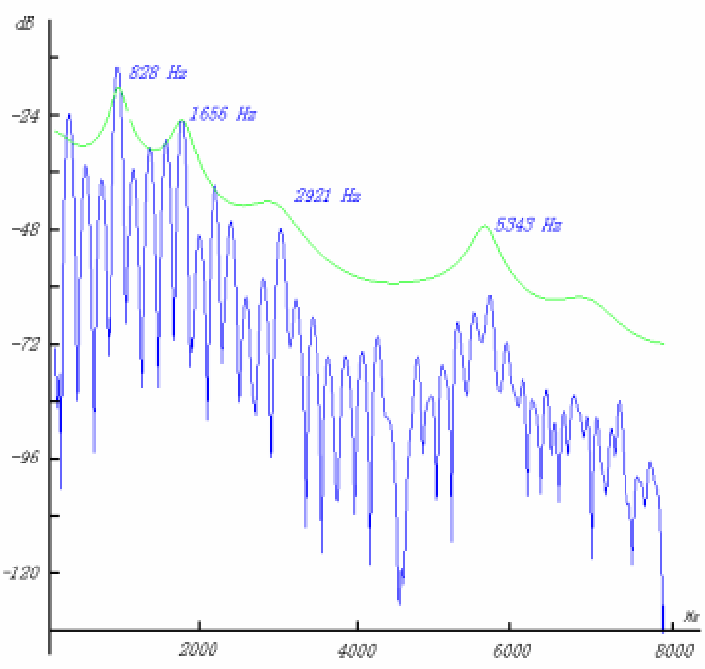 Figure 2: Visualizing the spectral similarities between the original recording and the synthetic speech modified with both prosody and envelope.
Critical Insight: Deepening the Emotional Resonance
Why does this work? The spectral envelope isn't just a mathematical convenience; it represents the physical state of the speaker's body. Anger involves higher muscle tension, which shifts formant positions—a change perfectly captured in the envelope.
Limitations:
- The current method relies on "ideal" parameters extracted from real emotional recordings.
- To make this usable in a real-world TTS (Text-to-Speech) system, we need a way to predict these envelopes from text using machine learning (e.g., neural networks).
Conclusion
This research validates a fundamental shift: instead of designing rules for "how a sad voice sounds," we should focus on "how a sad vocal tract filters sound." By treating the spectral envelope as a single, learnable unit, we pave the way for more flexible, human-like emotional AI.
The next frontier? Using Generative Adversarial Networks (GANs) or Diffusion models to predict these spectral envelopes automatically, eliminating the need for reference recordings entirely.