
SPLDESS: Bridging the Gap Between Linguistic Intent and Multimedia Search Results
Socio-Psycho-Linguistic Determined Expert-Search System (SPLDESS) Development with Multimedia Illustration Elements
The Socio-Psycho-Linguistic Determined Expert-Search System (SPLDESS) is an innovative information-recruiting framework designed to optimize hypertext search results through multimedia illustrations. It integrates a social-psycho-linguistic conceptual model to provide pertinent, politically correct, and non-commercialized information across public access networks and mobile devices.
TL;DR
The Socio-Psycho-Linguistic Determined Expert-Search System (SPLDESS) is a paradigm shift in how we approach search engines for public welfare. By moving beyond keyword matching and into the realm of socio-psycho-linguistics, it provides a multimedia-driven interface that filters information through the lens of a user's social context and psychological state, specifically aimed at critical sectors like employment, education, and social law.
Background Positioning
In the landscape of information retrieval, SPLDESS sits at the intersection of Knowledge Engineering and Multimedia Social Monitoring. It is not merely a "search engine" but a protective superstructure designed to ensure that state-funded, socially significant information remains accessible and non-commercialized for the "new generation."
Problem & Motivation: The Failure of "Flat" Search
Current search technologies often treat users as monolithic entities, ignoring the linguistic and social layers that define human communication. This leads to several pain points:
- Commercial Usurpation: Socially valuable data is often buried under commercialized search results.
- Contextual Misalignment: Information regarding municipal infrastructure or legal rights is frequently non-intuitive and text-heavy.
- Lack of Accountability: When public information is missing or concealed, traditional systems offer no avenue for user recourse.
The author's insight is that search results should be stratified—filtered and illustrated based on a psychological and sociological hierarchy to increase the "prestigiousness" and clarity of information.
Methodology: The Socio-Psycho-Linguistic (SPL) Layer
The heart of SPLDESS is its Script-Frame Production Knowledge Model. Instead of returning a list of links, the system interprets the user's natural language inquiry through a "communicative package."
1. The Multi-Layered Specification
The system operates on two tiers:
- Primary Specification: Deals with the socialization of polythematic information (municipal, business, infrastructure).
- Secondary Specification: Maps "subject chains" to illustrations, using a scale of influence to generate multimedia content that aligns with the user's intent.
2. Architecture & Visualization
The system utilizes a hierarchy of "historical event animations" (from the Big Bang to modern fashion) to create recognizable visual anchors for users.
 Figure 1: Conceptual visual anchors used to navigate thematic categories in the SPLDESS interface.
Experiments & Results: Real-World Public Access
The project moved from theory to the "Experimental Stage," deploying information kiosks (touch-screen terminals) and mobile web mirrors.
Key Breakthroughs
- Multimedia Integration: Successfully converted excessive text information into visual outputs, significantly reducing cognitive load.
- Automated Legal Protection: One of the most radical features is the module that generates electronic statements of claim. If a user cannot find state-funded information, the system automates the process of filing a claim against the responsible agency for "no-purpose use of state resources."
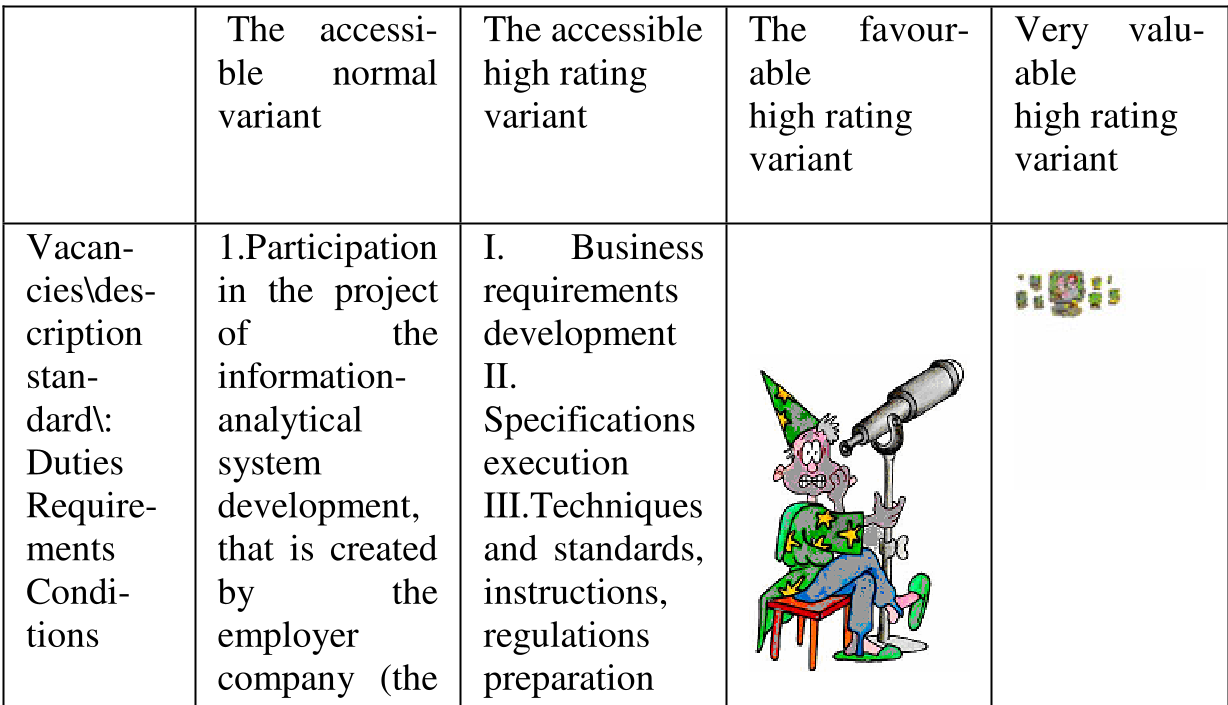 Table 1: The correspondence between information quality ("High Rating Variant") and standard business requirements.
Critical Analysis & Conclusion
Takeaway
SPLDESS represents an ambitious attempt to weaponize "Expert Systems" for the public good. By combining Knowledge Engineering with a strict policy of non-commercialization, it creates a "glocal" (global yet local) infrastructure that monitors content for political correctness while preventing extremist tendencies through transparent information access.
Limitations
While the socio-psycho-linguistic model is theoretically robust, its reliance on a "restricted natural language dialog mode" (colloquial dialect) may face scalability issues without the integration of modern Large Language Models (LLMs), which were not available at the inception of this research.
Future Work
The author envisions a world where this infrastructure monitors information-communication technologies to protect the "democratically recognized rights" of every user, potentially evolving into a global automated monitor for socio-network dynamics.