
Stabilizing Social Structure: A Localized Approach to Structural Balance and Status Theory
Stabilizing social structure via modifying local patterns
The paper introduces three localized algorithms focused on stabilizing social structures by modifying the signs of links based on Structural Balance and Status Theory. By utilizing fundamental cycles and local balance measures in scale-free and complete networks, the methods successfully transition imbalanced graphs to stable states more efficiently than existing global approaches.
TL;DR
Achieving a stable social network—where "the friend of my friend is my friend"—is often modeled as a global optimization problem. This paper challenges that by introducing three algorithms that fix social "tension" using only local information. By targeting specific links within Fundamental Cycles, these methods reach network-wide stability faster than existing SOTA global models.
The "Tension" in Social Networks
In social psychology, Structural Balance Theory (Heider, 1946) posits that certain patterns (triads) are inherently unstable. For instance, having two mutual friends who hate each other creates a "tension" that the individuals involved want to resolve.
The technical problem? Most algorithms for balancing these networks are computationally expensive (NP-hard) or assume a god-like "central module" that knows every relationship in the graph. This paper asks: Can we stabilize a society just by looking at local patterns?
Methodology: Finding the Source of Tension
The authors propose that not all links are equally responsible for instability. They define Local Balance (LB) to pinpoint the "troublemakers."
1. Scale-Free Networks & Fundamental Cycles
For non-complete networks, the authors use a clever trick:
- Spanning Tree: Create a backbone of the graph.
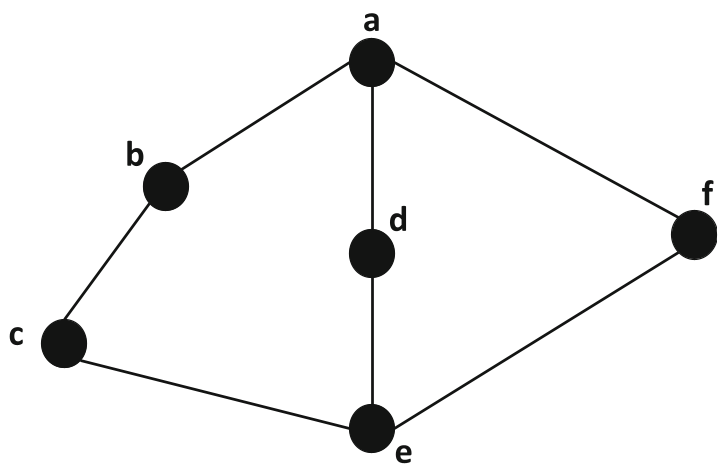
- Fundamental Cycles (FC): Any link NOT in the backbone (a chord) creates exactly one fundamental cycle.
- Selection: A link is selected based on its LB score (the ratio of negative fundamental cycles it participates in).
2. Status Theory Integration
Beyond balance, the paper incorporates Status Theory. Here, links are directed and represent status height. A positive link means "I look up to you." The algorithm modifies links where the status hierarchy is contradictory, using "generative" and "receptive" baselines to guide sign changes.
Experimental Results: Speed to Stability
The researchers tested their approach on networks ranging from 500 to 3,000 agents. The primary metric was the Global Balance (GB) degree—the fraction of negative (unstable) cycles.
Performance Highlights:
- Guaranteed Convergence: In every test case, the GB reached 0, meaning the network became 100% stable.
- Efficiency: As shown in the comparison with methods like Antal et al. (2005) or Radicchi et al. (2007), the localized approach required significantly fewer iterations to reach equilibrium.
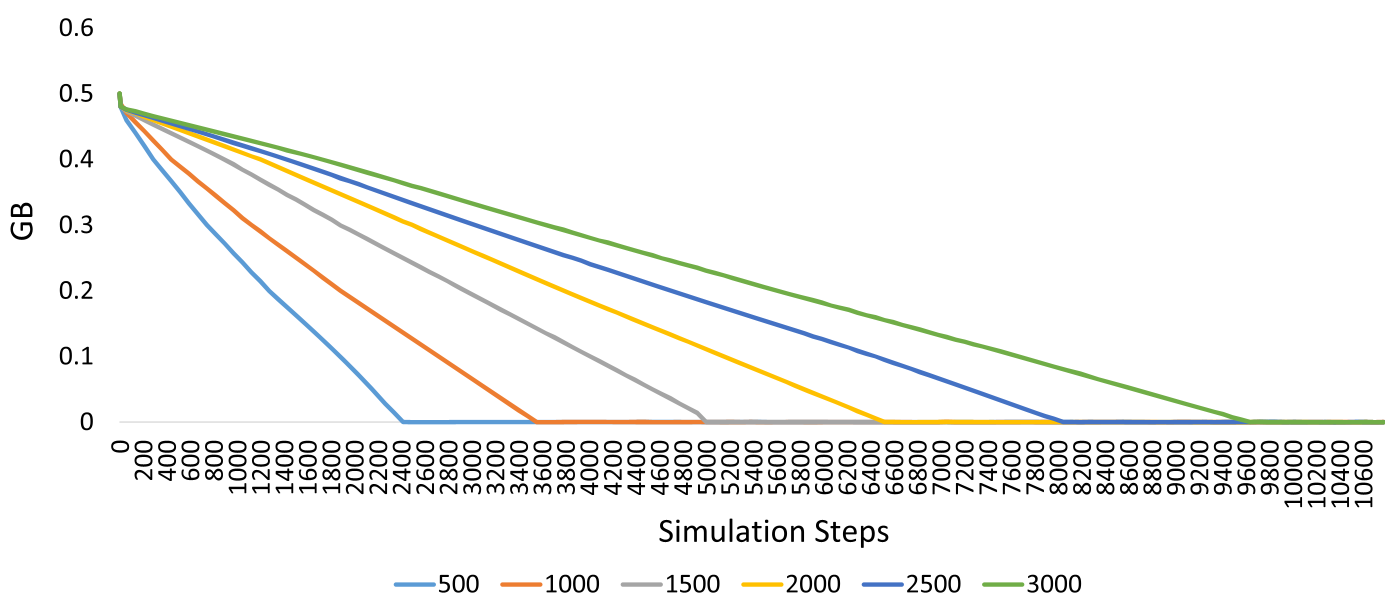
In the figure above, the proposed algorithm (identified as the one with significantly lower bar heights in the source context) outperforms traditional optimization and heuristic methods.
Critical Analysis & Insights
The core "Aha!" moment of this paper is the localized pressure mechanism. Instead of flipping signs randomly or trying to solve a global partition problem, the authors treat social tension as a physical force acting on a link (Deviation).
Pros:
- Scalability: Because it's localized, it can be applied to larger graphs where global matrix operations would fail.
- Realism: Individuals in real life only react to their immediate circle of friends, making this agent-based approach more sociologically sound.
Limitations:
- The model assumes weights change linearly towards a sign flip, which might not capture the "snap" decisions often seen in social ruptures.
- It treats all cycle lengths equally, though shorter cycles (triads) likely exert stronger psychological pressure than longer ones.
Conclusion
This work provides a robust framework for understanding how social structures evolve toward stability. By shifting the focus from global metrics to local "tension sources," the authors provide a tool that is not only mathematically efficient but also more representative of how human societies actually self-organize.
Keywords: Structural Balance, Agent-Based Simulation, Social Networks, Status Theory, Scale-Free Networks