
Stable Community Structures: Is Social Exclusion Inevitable?
Stable Community Structures and Social Exclusion
This paper investigates the emergence of social exclusion in social and information networks using a game-theoretic framework. By analyzing community structures in a one-dimensional metric space, the authors demonstrate that only community structures with marginalized agents are stable under perturbations, suggesting social exclusion is a structural necessity rather than an anomaly.
Executive Summary
TL;DR: Using a rigorous game-theoretic approach, this paper argues that social exclusion—where individuals are marginalized and belong to no community—is not just an unfortunate accident but a stable structural property of social networks. The authors prove that community structures including everyone are inherently unstable and will collapse under small perturbations, while structures that exclude some members remain robust over time.
Academic Context: This work transitions the study of social exclusion from qualitative sociology into formal mathematical modeling. It builds upon the existence proofs of Nash equilibria in information networks and introduces the critical lens of dynamic stability to explain the persistence of marginalized groups.
Problem & Motivation: Beyond "Who is Doing the Excluding"
In sociopolitical discourse, exclusion is often viewed through the lens of agency: a dominant group actively barring a minority. However, this paper shifts the focus to structural mechanics.
The authors ask: Even if every agent acts rationally to maximize their own information utility, does the system naturally converge to a state where some are left behind? Previous work identified that "Equilibria with exclusion" exist, but it didn't prove they were likely to last. This paper tackles the "why" by examining how communities react to the constant flux of members joining and leaving.
Methodology: The Geometry of Interest
The authors model social topics as points in a 1D metric space (an interval with a torus metric to avoid border effects).
- Demand and Supply: Agents have a "center of interest" . Their interest in a topic decreases as the distance increases.
- Utility Functions:
- Consumption Utility (): Reward from relevant content minus the time cost of reading.
- Production Utility (): The value of the content produced for the consuming community.
- The Perturbation Model: To test stability, the authors "nudge" the boundary between two adjacent communities. They define a set of differential equations where the boundary shift rate is proportional to the utility difference at the border:
 Note: The model explores how borders between community intervals shift based on utility gradients.
Key Results: The "Law" of Exclusion
The most striking finding is the categorical difference in stability between inclusive and exclusive structures:
1. The Instability of "Everyone Included"
Proposition 5.1 shows that Nash equilibria which attempt to cover the entire space (leaving no gaps) are unstable. Even a tiny change in agent behavior causes these structures to fragment. In these systems, border agents find themselves in a "utility tug-of-war" that the structure cannot resolve.
2. The Stability of Exclusion
Proposition 5.2 demonstrates that when communities are separated by "gaps" (marginalized agents who belong to nothing because the utility of joining is negative), the system becomes Neutral-Stable. These structures are robust; they can absorb small shocks without the communities dissolving.
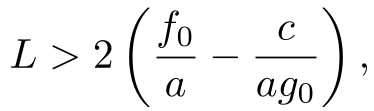 Condition for stable exclusion: If the content space is large enough relative to the cost of consumption, exclusion becomes the inevitable equilibrium.
Critical Insight & Conclusion
This paper provides a sobering mathematical perspective: social exclusion might be the "norm" or the default state of social networks.
Takeaways for the Future:
- Policy Implications: If exclusion is structural, simply "banning" discriminatory behavior may not work. Policies must fundamentally change the utility cost () or the "reach" of information to make inclusion stable.
- Limitations: The model currently uses a 1D torus. Real-world social manifolds are high-dimensional and non-Euclidean.
- Final Word: By shifting the question from "who is excluding" to "how does the system stabilize," the authors offer a new framework for designing algorithms that could potentially facilitate better social integration.