
Stacking Generalization: A High-Accuracy Frontier for Major Depressive Disorder Prediction
Realizing a Stacking Generalization Model to Improve the Prediction Accuracy of Major Depressive Disorder in Adults
Deep neural network approaches for Major Depressive Disorder (MDD) prediction were advanced through a new stacking generalization model. By combining KNN Imputation, a novel Random Forest-based Backward Elimination (RF-BE) feature selection, and an ensemble of MLP, SVM, and Random Forest base learners, the proposed system achieves a SOTA accuracy of 98.16% on adult MDD classification.
TL;DR
Diagnosis of Major Depressive Disorder (MDD) is notoriously difficult due to its "co-morbid" nature—it often hides behind other physical or mental symptoms. This paper presents a robust clinical decision-support system using a Stacking Generalization framework. By cleaning data with KNN Imputation and optimizing features through a novel Random Forest-based Backward Elimination (RF-BE), the authors achieved an impressive 98.16% prediction accuracy, setting a new benchmark for psychiatric AI models.
Problem & Motivation: The Clinical Gap
MDD affects over 300 million people globally, yet it remains under-reported and misdiagnosed. The core challenges are:
- Resource Inequality: Gold-standard diagnostics like brain imaging or genetic testing are too expensive for local clinics.
- Data Noise: Self-reported data often contains missing values or redundant features (e.g., age vs. sleep patterns might interact in complex ways).
- Model Limitations: Single algorithms like SVM or Random Forest often hit a ceiling because they either overfit to specific samples or fail to capture the deep correlations between symptoms.
The authors' insight was simple: If individual models have different "blind spots," why not build a hierarchy where a Meta-Learner learns how to correct the mistakes of the base models?
Methodology: The Stacking Pipeline
The workflow follows a rigorous three-stage architecture designed to refine raw survey data into high-confidence predictions.
1. Data Refinement (KNN Imputation)
Missing data is a death sentence for accuracy. Using KNN Imputation with Manhattan distance, the system fills gaps by looking at the "K" most similar patient profiles, ensuring the dataset remains statistically representative.
2. The RF-BE Feature Filter
Not all 22 symptoms are equally predictive. The authors introduced Random Forest-based Backward Elimination (RF-BE). Unlike simple filters, this "wrapper" method tests subsets of features by training models and iteratively removing the least significant ones based on P-values and weights. This reduced the feature set from 22 to the 12 most impactful dimensions.
3. The Stacking Architecture
This is the core innovation. The model employs a two-tier structure:
- Base Learners: Multilayer Perceptron (MLP), Support Vector Machine (SVM), and Random Forest (RF).
- Meta-Learner: A high-level MLP that takes the probability outputs from the base learners as its input features.
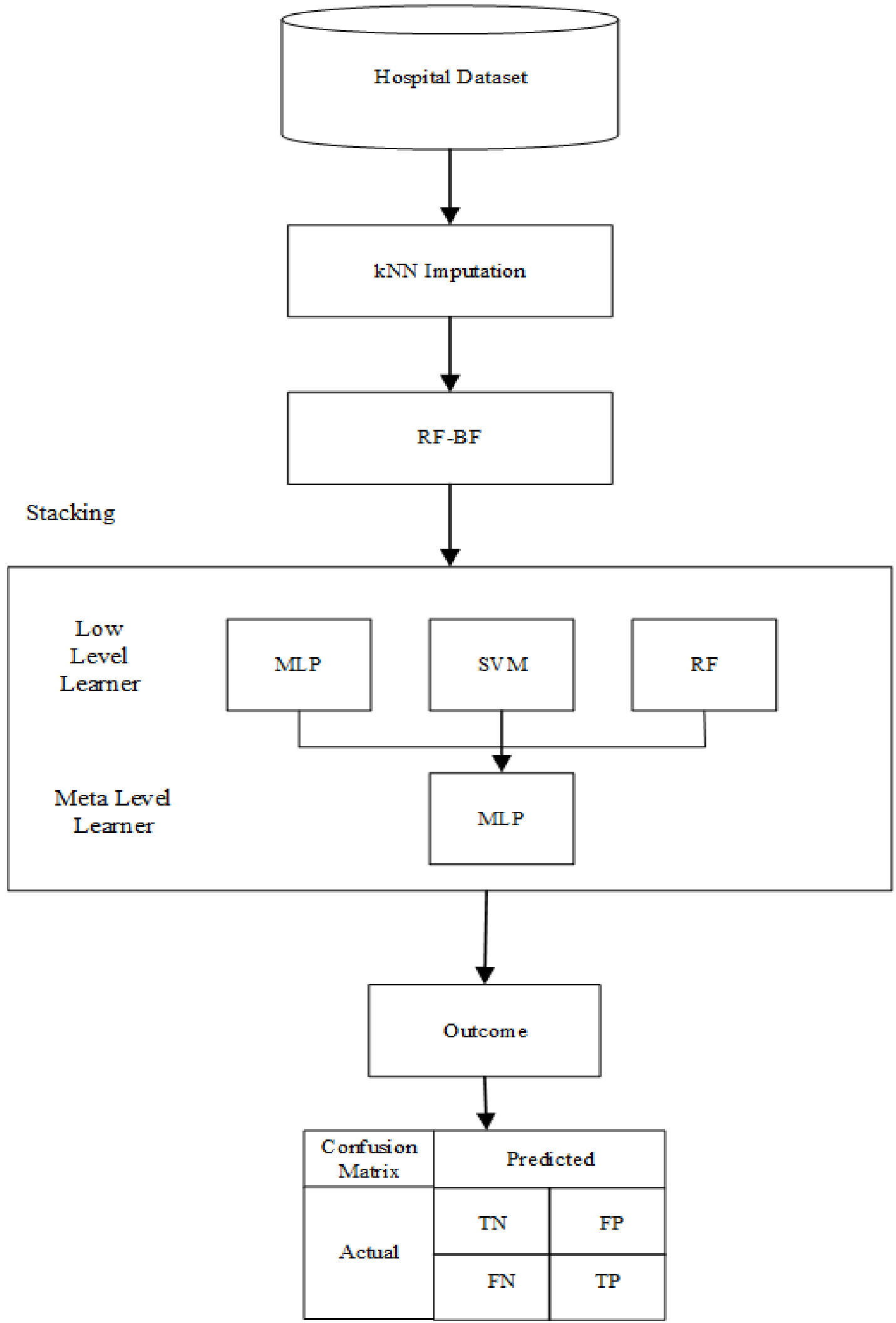 Figure 1: The full pipeline from symptoms to final MDD prognosis.
Experiments & Results: Superior Generalization
The results confirm that the "sum is greater than the parts." While Random Forest was the strongest individual learner (96.90%), the Stacking Model pushed performance to 98.16%.
SOTA Comparison
The model was benchmarked against iconic datasets like the KNHNE and ELSA-Wave 7:
- Proposed Model: ~98.16% Accuracy / 0.984 AUC
- Prior Stacking Models (Lee et al.): 86% Accuracy / 0.81 AUC
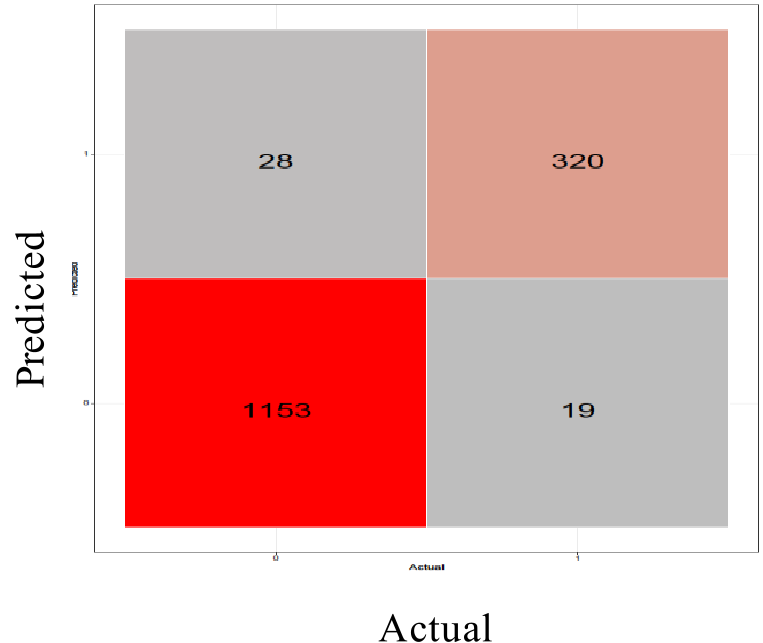 Figure 2: The AUC-ROC curve demonstrating near-perfect class separability (0.98).
The "Why" Behind the Success
Why did this work so much better?
- Variance Reduction: Random Forests handle outliers well, while SVMs find optimal boundaries in high-dimensional space. Stacking allows the Meta-learner to trust the RF when data is noisy and trust the SVM when boundaries are tight.
- RF-BE Synergy: By removing redundant features before stacking, the base learners were protected from the "curse of dimensionality," allowing for cleaner signals during the meta-training phase.
Critical Insight & Conclusion
The study demonstrates that high-end medical equipment isn't always a prerequisite for high-accuracy psychiatric diagnostics. A mathematically sound Ensemble Learning strategy can transform simple demographic and symptom surveys into powerful clinical tools.
Limitations: The dataset, while robust (3,040 records), is "in-housed." Future validation on broader, multi-ethnic datasets is required to ensure these accuracy levels hold across different cultural interpretations of "feeling sad" or "panic."
Future Outlook: This methodology paves the way for automated screening apps that could provide early warnings to clinicians, potentially reducing the 80% undertreatment rate for MDD patients.