
Statistical Response Method: Bridging Context and Gamification for Better Chatbots
Statistical Response Method and Learning Data Acquisition using Gamified Crowdsourcing for a Non-task-oriented Dialogue Agent
This paper proposes a "Statistical Response Method" for non-task-oriented dialogue agents (chatbots) that ranks pre-defined candidate utterances based on conversation context using the ListNet algorithm. To fuel this model, the authors developed a gamified crowdsourcing platform to acquire high-quality, labeled dialogue data at a low cost.
TL;DR
Building engaging non-task-oriented chatbots (chatbots that just "chat") is difficult because they often lose the thread of conversation. This paper introduces a Statistical Response Method that uses the ListNet ranking algorithm to pick the best response from a candidate pool based on the full conversation history. To get the data needed, the authors created a "Dialogue Skill Diagnosis Game" to crowdsource high-quality labels for free.
Background: Why Chatbots Fail at Context
Most classic chatbots follow one of two paths:
- Rule-based: If the user says X, say Y. (Expensive to build and very brittle).
- Example-based: Search a database for a sentence similar to the user's last input. (Fails to understand the "flow" of a multi-turn conversation).
The core problem is diversity. If you search for a specific multi-sentence context in a database, you'll likely find zero exact matches. This paper solves this by using machine learning to rank potential answers based on their statistical likelihood of being appropriate given the history.
Methodology: Ranking via ListNet
Instead of simple keyword matching, the authors treat the problem as Learning to Rank (LTR).
1. The Ranking Model
The system takes a Context () and a list of Candidate Utterances (). It extracts features (like noun pairs shared between the history and the candidate) and uses a linear function to calculate a score. The ListNet algorithm is then used to optimize the weights. ListNet is unique because it looks at the probability distribution of the entire list rather than just comparing pairs of sentences.
2. Gamified Data Acquisition
Machine learning requires massive amounts of data. To avoid the high costs of professional labeling or the low quality of paid crowdsourcing (like Mechanical Turk), the authors built a Gamified Platform.
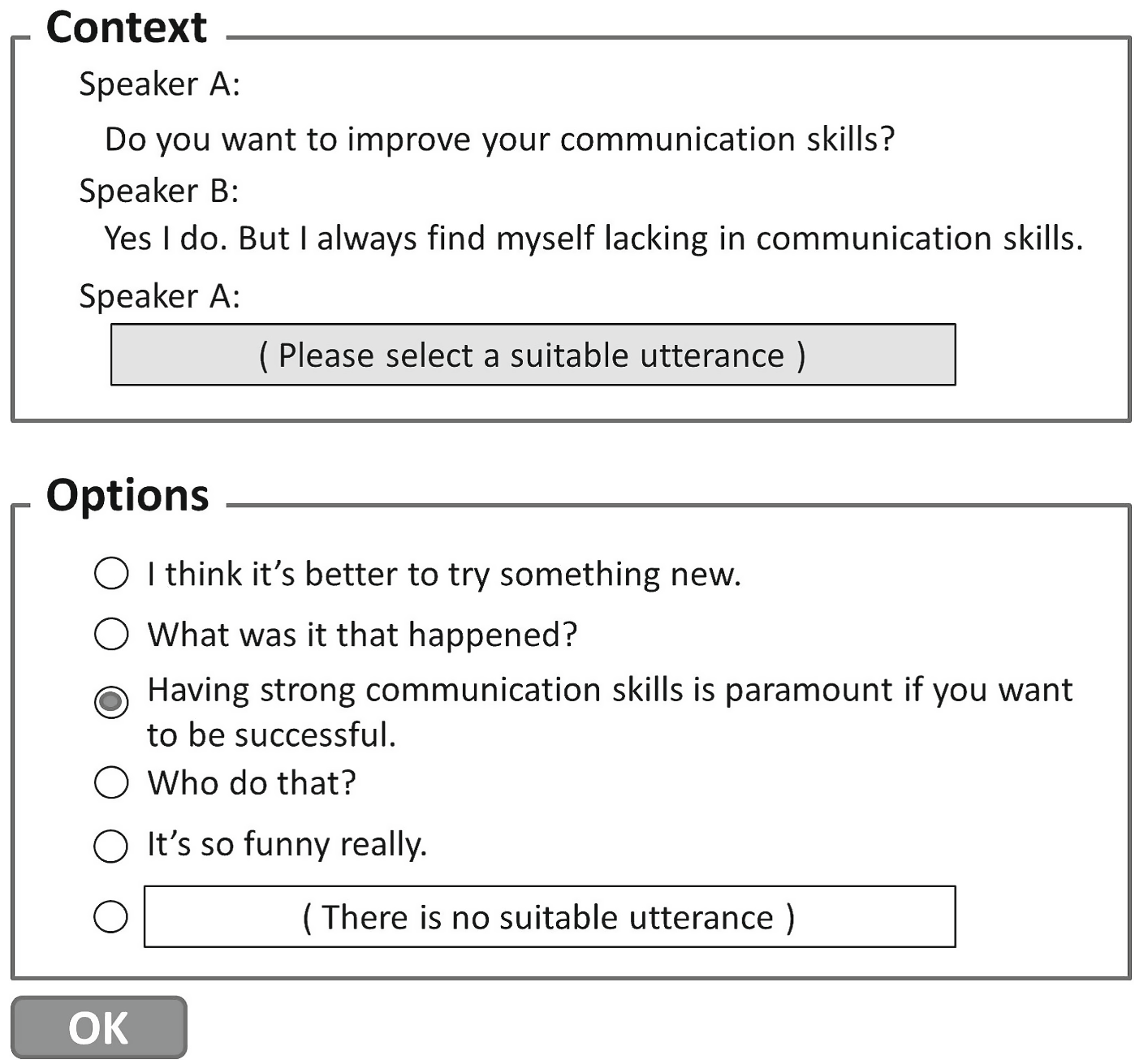
- Mechanics: Users play a "Diagnosis Game" where they pick the best response for a given dialogue.
- Quality Control: The system calculates a Confidence Score () for each user by sneaking in "gold standard" questions. If a user fails too many of these hidden tests, their data is discarded.
- Retention: Users are motivated by a "Dialogue Skill Score" (0-100) and can share their results on social media.
Experiments and Results
The authors tested their method against a standard Support Vector Machine (SVM) baseline.
Performance Metrics
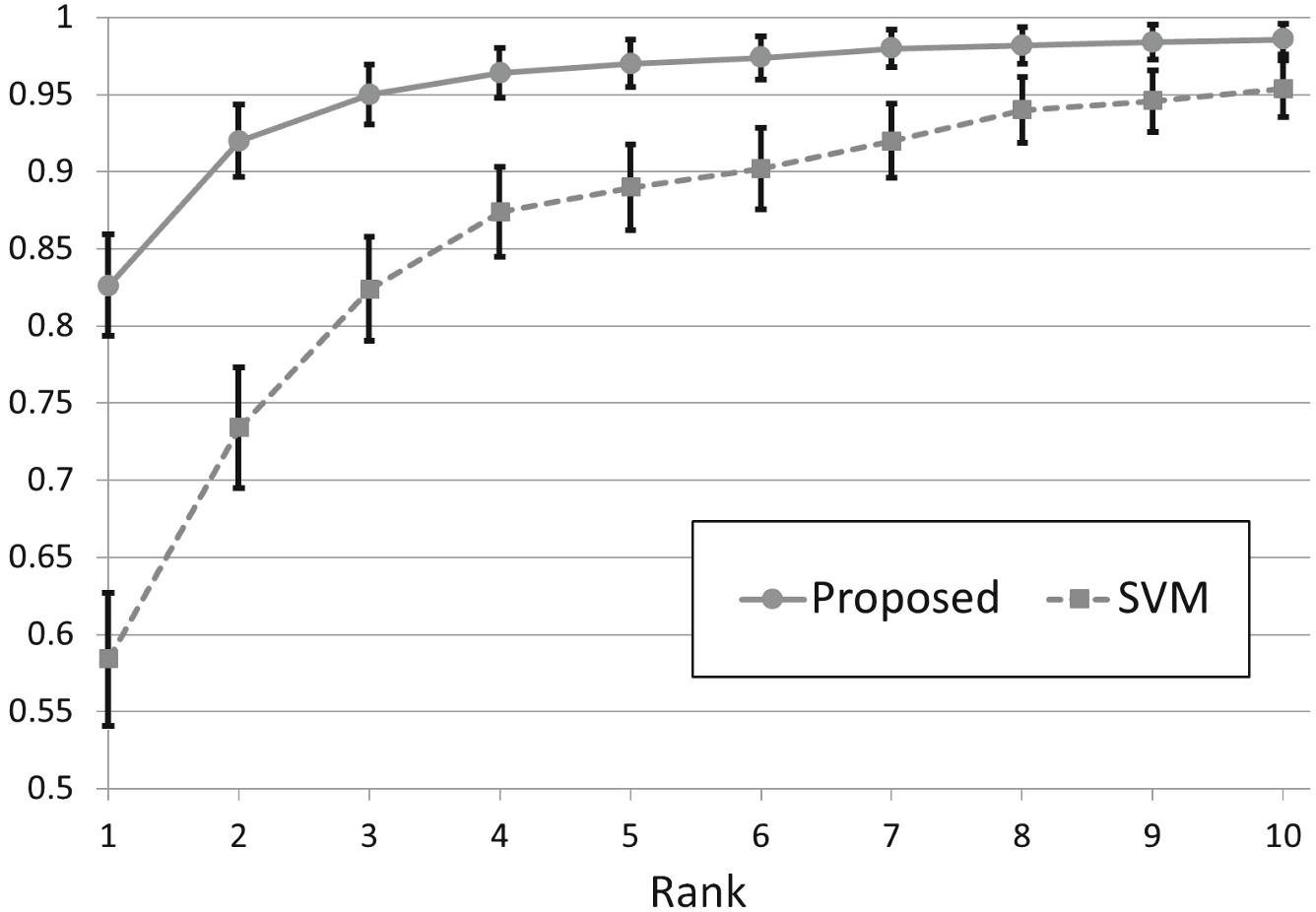
The results were clear: the Ranking approach is far superior for dialogue.
- Top-1 Accuracy: 82.6% (Proposed) vs 58.4% (SVM).
- Context Significance: When the authors removed the conversation history and only looked at the last utterance, accuracy dropped by over 13%. This proves that "Context is King" in non-task-oriented dialogue.
Critical Analysis & Conclusion
Takeaway
The synergy between statistical ranking and gamification creates a virtuous cycle. The game provides the data; the ranking model provides the intelligence. By viewing dialogue as a selection task rather than just a generation task, the authors ensure the chatbot remains grounded and coherent.
Limitations
- Candidate Bottleneck: The agent can only say what is in its pre-defined list. If the conversation moves to an niche topic not in the database, the agent will struggle.
- Semantic Depth: The current features (like noun pairs) are relatively "shallow." Modern versions of this work would likely use Transformer-based embeddings (like BERT or GPT) as the feature vectors.
Future Prospect
Integrating this ranking method with modern Generative AI could lead to "Hybrid Agents" that generate multiple response candidates and use this Statistical Method to pick the one that best fits the long-term personality and context of the conversation.