
Beyond the P-Value: Evolution of Risk Stratification in Heritable Cardiac Arrhythmias
Application of statistics and machine learning for risk stratification of heritable cardiac arrhythmias
2012-11-23
Summary
Problem
Method
Results
Takeaways
Abstract
This paper provides a comprehensive review of risk stratification for Heritable Cardiac Arrhythmias (HCAs), specifically Brugada and Long QT syndromes. It contrasts classical statistical benchmarks with emerging machine learning (ML) frameworks like SVMs, Neural Networks, and Random Forests to improve the identification of individuals at risk of sudden cardiac death.
## TL;DR
Risk stratification for heritable cardiac arrhythmias (HCAs) is transitioning from simple statistical thresholds to complex, data-driven machine learning models. This paper analyzes why traditional clinical tools are failing to identify patients at risk of sudden cardiac death and how methods like **Support Vector Machines (SVM)** and **Artificial Neural Networks (ANN)** provide superior predictive power by capturing non-linear genetic and clinical interactions.
## The Clinical Challenge: Hidden Lethality
Heritable Cardiac Arrhythmias, such as **Brugada Syndrome** and **Long QT Syndrome**, are particularly dangerous because they often lack structural heart warnings. Identification relies on "intermittent" patterns in ECGs or genetic markers with incomplete penetrance.
The core problem highlighted is the **"Univariate Trap"**:
- Classical methods (t-tests, Chi-squared) look at factors like the QT interval or specific gene mutations in isolation.
- In reality, risk is a result of **epistasis**—complex interactions between multiple genes and environmental triggers.
- Traditional models require data to fit specific distributions (normality), which rare disease data often violates.
## Methodology: The Machine Learning Shift
The authors advocate for a standardized workflow that moves beyond the "toolbox" of individual researchers toward an integrated pipeline:
### 1. The Workflow of Risk Stratification
The process begins with data acquisition (ECG, Genetic, Clinical), progresses through exploratory analysis, feature selection, and model training, and concludes with rigorous validation using ROC curves.

### 2. Core Machine Learning Architectures
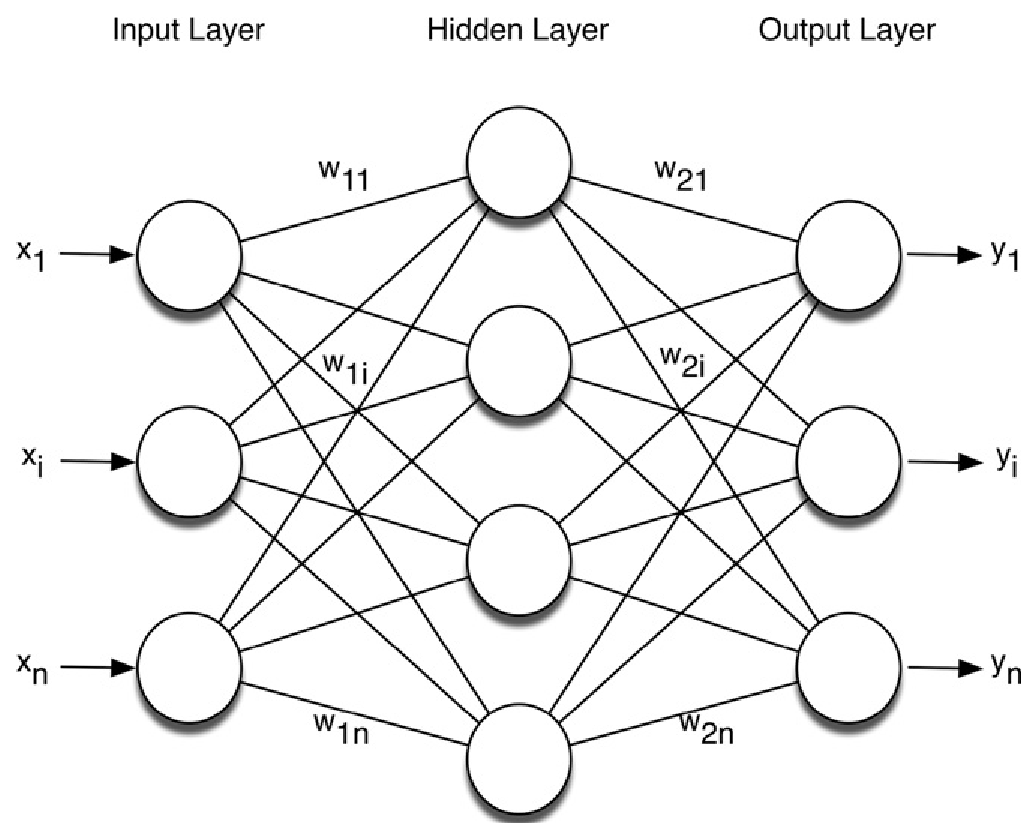
- **Artificial Neural Networks (ANN):** Specifically Multi-layer Perceptrons, which act as "universal approximators" capable of modeling the non-linear relationship between a patient's genetic profile and their clinical outcome.
- **Support Vector Machines (SVM):** These are identified as particularly effective for small sample sizes—a common constraint in rare HCA studies—by finding the optimal "hyperplane" to separate high-risk from low-risk subjects.
- **Bayesian Classifiers:** Praised for their flexibility and ability to integrate new evidence as it becomes available, mimicking the iterative nature of clinical diagnosis.
## Performance Comparison: ML vs. Statistics
The paper meticulously maps which methods are most appropriate for different stages of HCA analysis.
| Stage | Recommended Methods |
| :--- | :--- |
| **Exploratory** | PCA, Kohonen Maps, Summary Statistics |
| **Feature Selection** | CART (Decision Trees), Random Forests |
| **Model Building** | SVM, Neural Networks, Naive Bayes |
| **Validation** | ROC Curves, Cross-validation (Jackknifing) |
The primary advantage of ML in this domain is its **robustness to noise** and the ability to handle **high-dimensional collinearity**—where many genetic markers (SNPs) are correlated with one another, a scenario that breaks traditional logistic regression.
## Critical Analysis & Future Outlook
While machine learning offers higher accuracy, the authors acknowledge the **"Black Box"** problem. In mission-critical medical applications, the inability to easily extract the *logic* behind a neural network's decision remains a hurdle for clinical adoption.
**Conclusion:** The paper concludes that we should not replace statistics with machine learning, but rather integrate them. The use of resampling techniques like **Bootstrapping** and **Jackknifing** allows clinicians to make the most of limited patient data, while modern GUI-based workflow tools (like Weka or Galaxy) are lowering the barrier for entry for medical researchers.
The future of HCA risk stratification lies in **multi-factorial joint analysis**—treating the patient as a complex system rather than a collection of independent variables.