
Green IT and Healthcare: A STEAM-Driven Blueprint for the Climate Crisis
STEM Projects using Green Healthcare, Green IT, and Climate Change
This paper explores the integration of Green Healthcare, Green IT, and Climate Change into STEM/STEAM education to drive sustainability. It presents methodologies for reducing carbon footprints through energy-efficient computing, virtualization, and cloud-based healthcare systems, leveraging the author's extensive experience as an IBM Enterprise Architect.
TL;DR
The convergence of Green Information Technology (IT) and healthcare offers a potent solution to the escalating climate crisis. By utilizing virtualization, cloud computing, and energy-efficient hardware, organizations can slash carbon emissions. This paper positions these technical strategies as vital project-based learning opportunities for both STEM and STEAM (STEM + Arts) students.
Context: The Digital Carbon Heavyweight
While often perceived as "clean," the digital world has a massive physical footprint. Healthcare alone contributes 8% of the total U.S. carbon footprint. Most this is driven by inefficient data centers where servers frequently run at a dismal 5-10% utility. The author, a former IBM Enterprise Architect, argues that the "frog is in the water and the water is heating up"—requiring immediate technical and educational intervention.
Problem: The Efficiency Gap in Modern Computing
The core issue lies in under-utilization and thermal waste.
- Physical Infrastructure: Many data centers still operate on 120V power, which incurs higher transmission losses compared to 240V.
- Server Sprawl: Traditional "one-app-per-server" models lead to "zombie servers" that consume power without performing meaningful work.
- Human Behavior: A persistent myth suggests that turning computers off shortens their life, leading to thousands of devices running 24/7 unnecessarily.
Methodology: The Path to "Green"
The authors outline several critical shifts to move from traditional IT to Green IT:
1. The Virtualization Revolution
Virtualization (and by extension, Cloud Computing) is the most significant step toward a green data center. By using Logical Partitions (LPARs), multiple virtual servers can share the same physical hardware, dynamically reallocating CPU and RAM where needed.
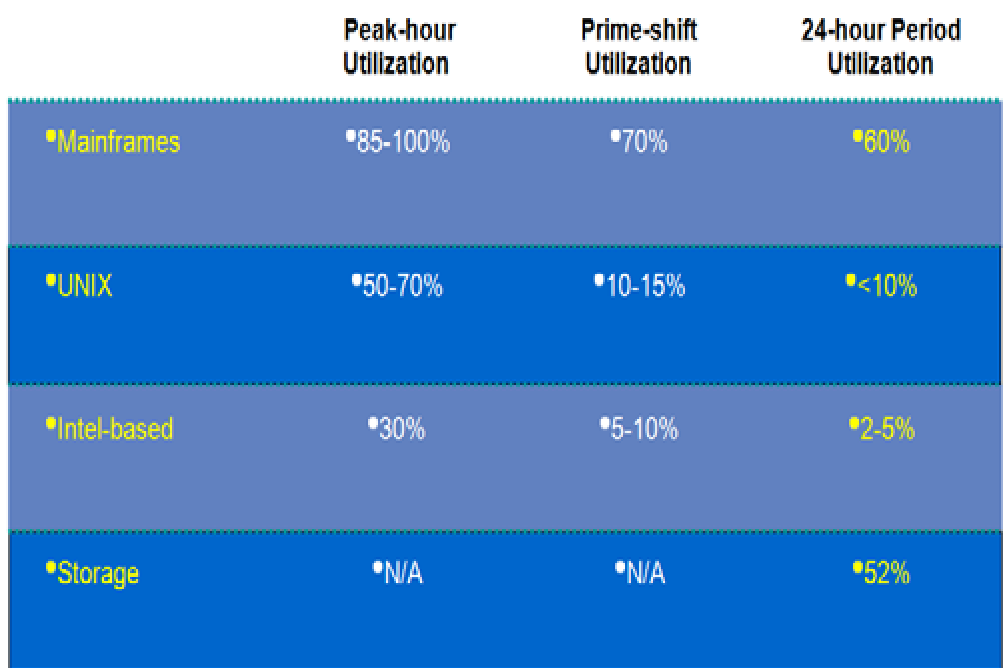 Table 1: Comparison of utilization rates across different platform types, highlighting the gap between Mainframes and Intel-based servers.
2. High-Voltage and Advanced Cooling
The paper advocates for Chip-level cooling and Embedded cooling (delivering cooling inside the rack). Furthermore, utilizing 240V service reduces energy transmission losses according to the formula . By doubling the voltage, we halve the current () for the same wattage, reducing losses by a factor of four.
3. Real-Time Monitoring (PUE)
"If you can’t measure it, you can’t manage it." The author showcases the Montpelier PSSC Green Data Center Dashboard, which tracks Power Usage Effectiveness (PUE) in real-time.
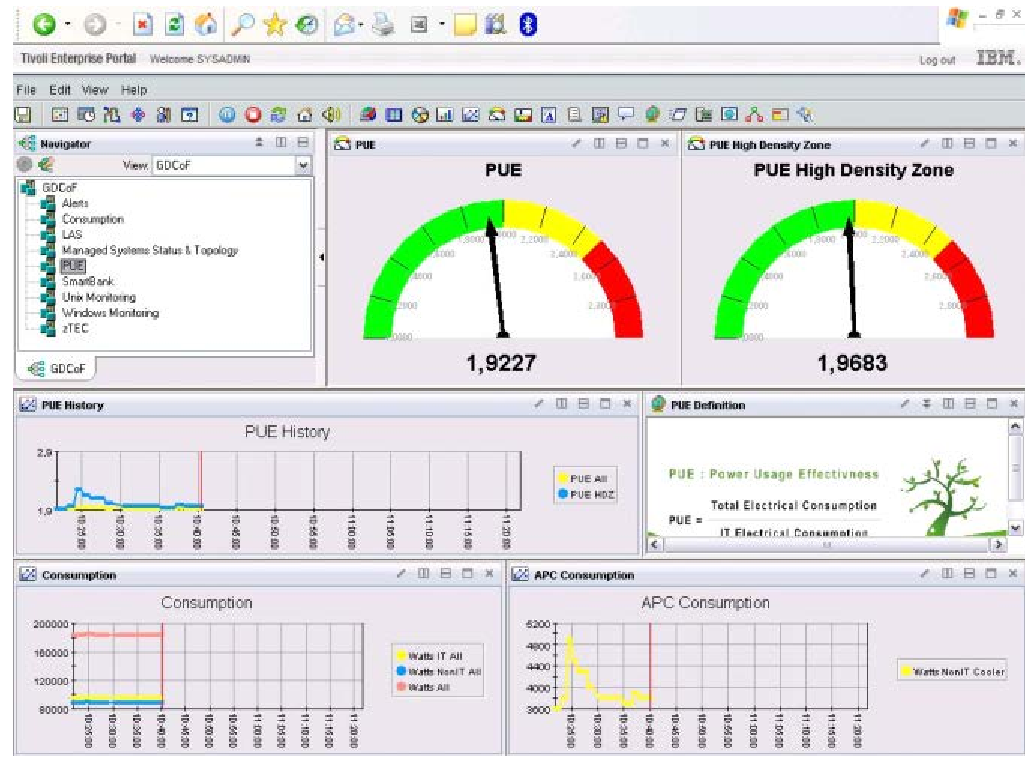 Figure 1: Real-time Energy Use Dashboard used to monitor PUE and thermal hotspots.
Why STEAM Matters
The transition from STEM to STEAM (adding Arts) is central to the author's argument. Sustainability requires better design. Whether it's the sleek efficiency of a Tesla or a user-friendly hospital portal, the "Arts" component ensures that technical solutions are adopted and used correctly by humans. High-efficiency design is as much an aesthetic challenge as it is an engineering one.
Critical Insight & Results
The numbers are compelling. At the University of Colorado, simply managing PC sleep modes and cooling led to potential annual savings of $400,000. On a national scale, the EPA estimates that widespread "sleep mode" adoption could cut CO2 emissions equivalent to removing 5 million cars from the road.
The transition to Multi-core processors and SSD technology adds another layer of efficiency, with chip manufacturers claiming heat and power reductions of up to 40%.
Conclusion: A Call to Education
Green IT isn't just for enterprise architects; it is a pedagogical tool. By engaging students with the devices they use daily—smartphones, laptops, and healthcare apps—educators can bridge the gap between abstract climate science and tangible engineering solutions.
Future Outlook: The next frontier involves Hydrogen Fuel Cells for data centers and deeper integration of Data Science to optimize healthcare delivery. As we move toward 2030, Green IT will shift from a "nice-to-have" to a fundamental requirement for institutional survival.