
The Social Economy of Data: Strengthening Nodal Cooperation via Credit Incentives
Strengthen nodal cooperation for data dissemination in mobile social networks
This paper introduces a credit-based incentive scheme to enhance data dissemination in Mobile Social Networks (MSNs). By employing "virtual currency" to motivate naturally selfish nodes to carry non-interested data, the researchers achieve significantly improved delivery ratios and reduced latency compared to traditional non-cooperative models.
TL;DR
Mobile Social Networks (MSNs) often struggle with data delivery because nodes (users) are naturally selfish. This paper proposes a credit-based "rental" market where nodes pay others to carry data. By treating data dissemination as a business market with a built-in "tax" system to prevent wealth concentration, the authors improve delivery ratios by over 10% while keeping network overhead dramatically lower than traditional flooding methods.
Background: Why Kindness is Rare in MSNs
In an ideal world, every mobile device would act as a selfless relay for others. In reality, carrying someone else's data consumes your battery and storage. This paper identifies a critical gap in current research: most protocols are "too optimistic" about human nature. The authors argue that for a protocol to be pragmatic, it must acknowledge selfishness and provide a tangible incentive (Credits) to overcome it.
The Core Insight: Interest Fetching Ability (IFA)
One cannot simply pay any node to help; some nodes are "better" at getting information than others. The authors define Interest Fetching Ability (IFA) as a composite score:
- IFA-AP: Efficiency of getting data directly from Access Points (APs).
- IFA-Prop: Efficiency of getting data from peers (Propagation).
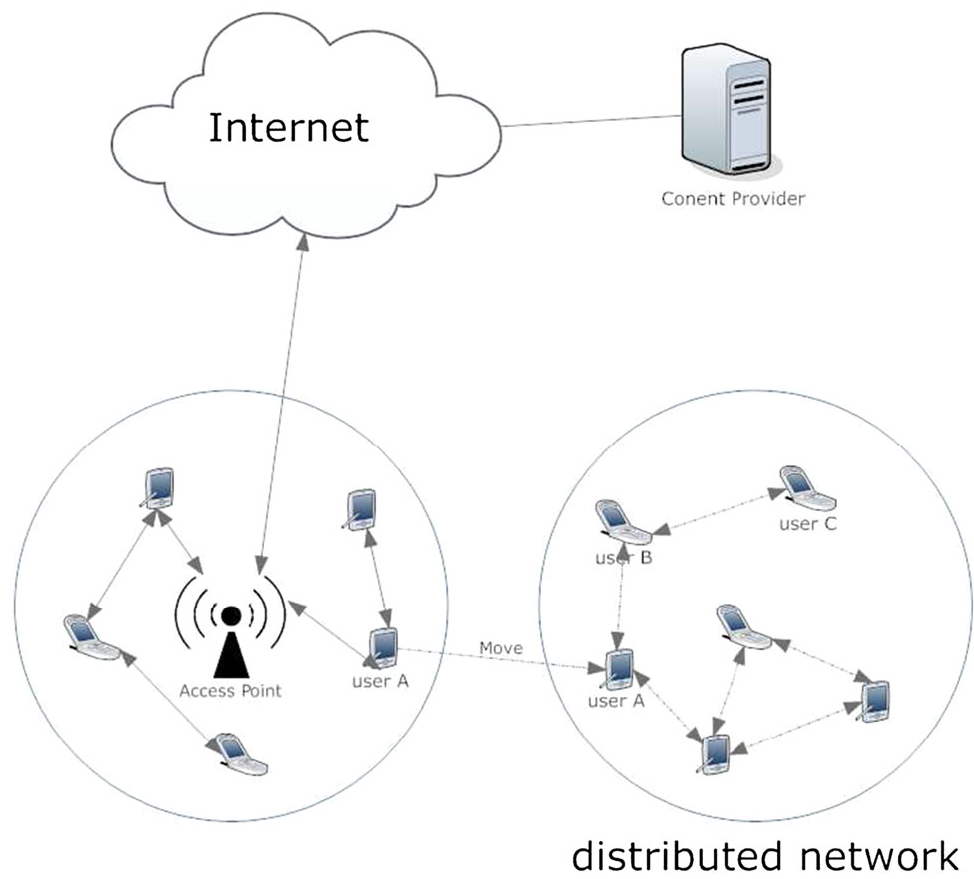 Figure 1: Hybrid MSN Architecture showing the interplay between APs and mobile nodes.
Using EWMA (Exponentially Weighted Moving Average), nodes dynamically update their perception of their neighbors' abilities without requiring heavy computation—a necessity for mobile devices.
The Market Mechanism: Rental Decisions
Instead of simple packet forwarding, this model allows node A to "rent" node B. If B has high IFA for an interest A cares about, A transfers credits to B.
The paper introduces two payment functions:
- Incentive1 (Fixed): A flat rate per rent.
- Incentive2 (Tax-like): Wealthier nodes pay more, and poorer nodes pay less. This ensures that credits don't get stuck in a few "super-relays," keeping the "market" liquid and active.
Experimental Battleground: Real-World Traces
The authors didn't just test in a vacuum; they used real-world movement data from INFOCOM conferences and bus networks (UMassDieselNet).
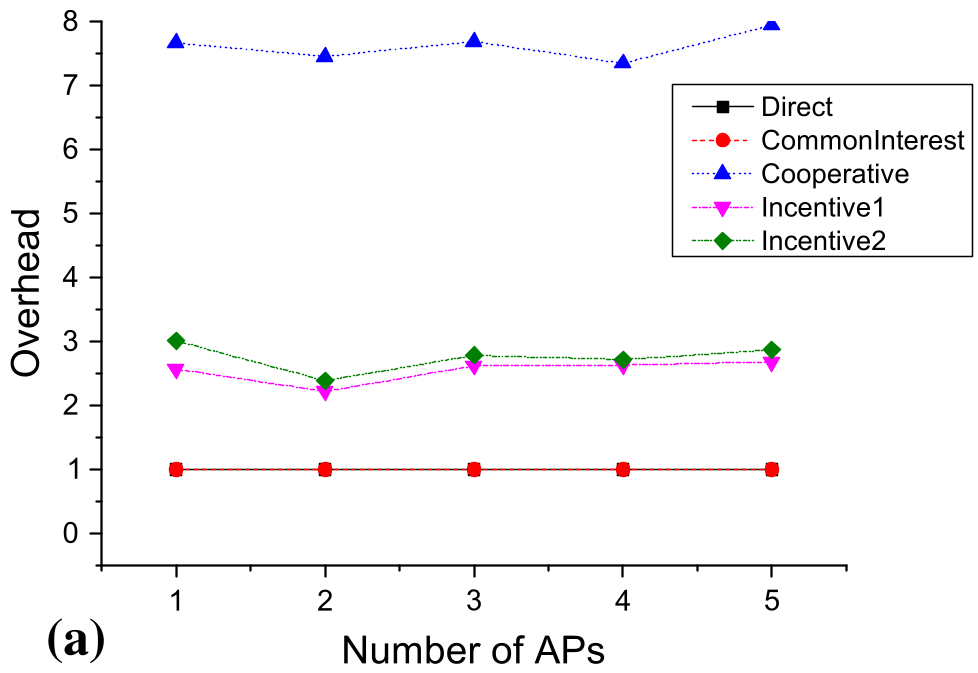 Figure 3: Delivery ratio comparison across different datasets. Notice how Incentive schemes (red/blue) consistently track closer to the 'Ideal/Cooperative' baseline than 'Common Interest' methods.
Key Takeaways from Results:
- Efficiency: Full cooperation (everyone carries everything) is the "Ground Truth" for speed, but it generates massive overhead (redundant copies).
- Optimized Overhead: The proposed credit scheme achieves near-SOTA delivery ratios but keeps the overhead at roughly 1/3 the cost of the cooperative model.
- Liquidity: The tax-like strategy (Incentive2) resulted in much higher "Credit Flow," meaning more nodes were actively participating in the economy rather than sitting idle.
Deep Insight: Beyond Just Routing
What makes this work stand out is its economic realism. By acknowledging that mobile nodes are essentially rational agents, the authors move away from pure graph theory into Mechanism Design. The realization that credit "hoarding" kills a network is a profound bridge between economics and distributed systems.
Future Outlook and Limitations
While the system is robust against simple collusion, it still faces challenges:
- Credit Origin: Where do the first credits come from? The paper suggests APs, but in a purely distributed MSN, this remains a challenge.
- Computation: While EWMA is light, the constant neighbor-list updating in high-density environments (like a stadium) might still strain battery life.
Conclusion
By strengthening nodal cooperation through a balanced, credit-based economy, we can turn a network of selfish agents into a highly efficient data delivery machine. This research paves the way for smarter, more pragmatic mobile social applications.