
Beyond Fingertips: Mastering the Envelope Family for Robust Manipulation
A Sufficient Condit ion for Manipulat ion of Envelope Family
This paper establishes a sufficient condition for the deterministic manipulation of the "Envelope Family" (multi-contact systems), proposing a control strategy that partitions robotic chains into Position-controlled (P-chains) and Torque-controlled (T-chains). The method ensures that specific torque commands for T-chains move an object in a designated direction along P-chain surfaces, overcoming the indeterminacy of multi-contact forces.
TL;DR
While most robotic manipulation relies on precision at the fingertips, the "Envelope Family" utilizes the entire surface of the robotic arm to grasp and move objects. This paper introduces a rigorous sufficient condition to solve the primary challenge of this style: force indeterminacy. By splitting the robot into position-controlled and torque-controlled chains, the authors prove that we can guarantee object motion direction even when we cannot see or measure every individual contact force.
Background: The Power of Enveloping
Enveloping grasps (or "Power Grasps") are fundamentally more robust than fingertip grasps. Imagine a humanoid robot carrying a large, heavy crate or a legged robot navigating a steep, rocky slope (the "Envelope Walk"). In these scenarios, the robot doesn't just touch with its tips; it "hugs" the environment or the object.
The technical roadblock is that multi-contact systems are statically indeterminate. A single joint torque can correspond to an infinite variety of contact force distributions. If we can't determine the forces, how can we guarantee the object moves where we want it to?
The Core Insight: P-Chains vs. T-Chains
The authors propose a clever division of labor:
- P-chains (Position-controlled): These act as a moving guide or a controlled environment. They define the "track" along which the object should move.
- T-chains (Torque-controlled): These provide the motive "push."
The goal is to find a set of torques for the T-chains such that, no matter which contact forces actually manifest, their resultant effect always forces the object against the P-chain and slides it in the desired direction.
Methodology: Taming Indeterminacy with Geometry
The paper utilizes the theory of Polyhedral Convex Cones.
- Friction Cone Approximation: The non-linear circular friction cone is approximated by a polyhedral cone. Crucially, the authors use an outer approximation. By ensuring the condition holds for a larger, more "slippery" set of forces, they guarantee it holds for the real, smaller friction cone.
- Mapping Torque to Resultant Force: They prove that under constant torque control, the contact force set is a convex set formed by the intersection of the friction cone and two parallel planes.
- The Sufficient Condition: If all vertices of the calculated "Total Force/Moment Set" satisfy the motion constraints (pushing into the P-chain and resisting gravity), then any force distribution within that set will move the object correctly.
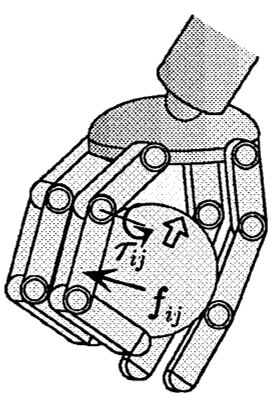 Figure 1: The conceptual framework where T-chains push the object along the surface of P-chains.
Experiments and Results
The authors validated this with the Hiroshima-hand, a three-fingered robot. In the experiment, two fingers were P-chains setting the path, and one was a T-chain providing force.
- Observation: A steel cylinder was successfully lifted.
- Significance: The object moved predictably even though the exact contact points and forces between the cylinder and the T-finger were changing and unmeasured.
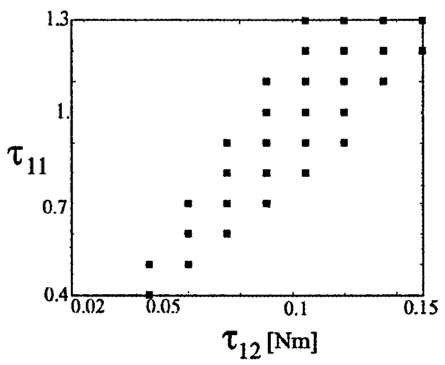 Figure 2: Time-lapse of the Hiroshima-hand performing envelope manipulation on a cylinder.
Critical Insight: Why it Works
The beauty of this approach is that it ignores the micro-state. Whether a specific contact point is currently rolling or sliding doesn't matter, as long as the cumulative force (the T-total set) is trapped within a "success region." This is a massive leap for practical robotics because it reduces the need for high-density tactile sensors across every millimeter of the robot's arm.
Summary and Future Outlook
This work provides the mathematical "safety rails" for whole-arm manipulation.
- Takeaway: Robustness in robotics often comes from embracing constraints rather than trying to perfectly sense every variable.
- Limitations: The current model assumes negligible link mass and 2D-projected motion for the proof of Theorem 6.
- Future Work: Transitioning these geometric conditions into real-time optimization loops will enable robots to manipulate heavy, irregular objects in the wild, using their entire bodies as tools.