
Saving Lives with Sensors: Democratizing AI for Small-Scale Dairy Farmers
The Role of Supervised Climate Data Models and Dairy IoT Edge Devices in Democratizing Artificial Intelligence to Small Scale Dairy Farmers Worldwide
This paper introduces a democratization of AI framework for small-scale dairy farmers using low-cost IoT edge devices and supervised climate models. By integrating real-time cattle vitals with global climate data via a machine learning edge approach, the system enables predictive heat-stress notifications and milk productivity forecasting.
TL;DR
This research tackles a profound humanitarian crisis: the rise of farmer suicides due to climate-driven economic stress. By deploying $20 IoT "cow necklaces" and using supervised machine learning, the authors provide small-scale farmers with enterprise-grade predictive analytics to combat heat stress, effectively turning "climate" into a solvable data problem.
Background: Climate as a Data Problem
In developing countries, a slight shift in temperature can push a small-scale farmer below the poverty line. Increased heat stress reduces milk yields, leading to financial ruin and, tragically, a suicide epidemic in the agricultural sector. The authors argue that while climate change is an environmental phenomenon, its impact on dairy is a data problem. The path forward isn't just better farming, but the democratization of Artificial Intelligence to the "bottom of the pyramid."
The Pain Points of Traditional Dairy Analytics
Current precision agriculture tools suffer from several flaws when applied to small-scale global farming:
- The Cold Start Problem: There is a severe lack of historical data linking specific cattle breeds in developing regions to localized climate markers.
- Cost Prohibitiveness: Most SOTA dairy sensors are priced for industrial-scale Western farms.
- Data Stratification: Standard models fail to account for the unique thermal profiles of different geolocations, such as the high humidity of coastal Andhra Pradesh versus the dry heat of Punjab.
Methodology: The Climate-Aware Edge Architecture
The core innovation lies in the Hanumayamma Dairy IoT Sensor, a wearable device (Class 10 veterinary apparatus) that captures vitals and activity.
1. Mathematical Modeling of Climate Events
The authors move beyond simple thresholds by using partial derivatives. By holding specific cattle variables fixed and differentiating with respect to climate markers (like Humidity or Flooding ), they can calculate the "Climate Factor" for specific cohorts.
2. The Predictive Engine
The system utilizes multiple ML techniques:
- Decision Trees (ID3): Used for heat-stress classification with 73% accuracy.
- Linear Regression & ANOVA: Applied to predict water consumption and milk productivity (65% accuracy).
- Adaptive Edge Analytics: The sensors process "data in motion" at the edge to provide near-instant warnings, even with limited cloud connectivity.
Experimental Results and Real-World Impact
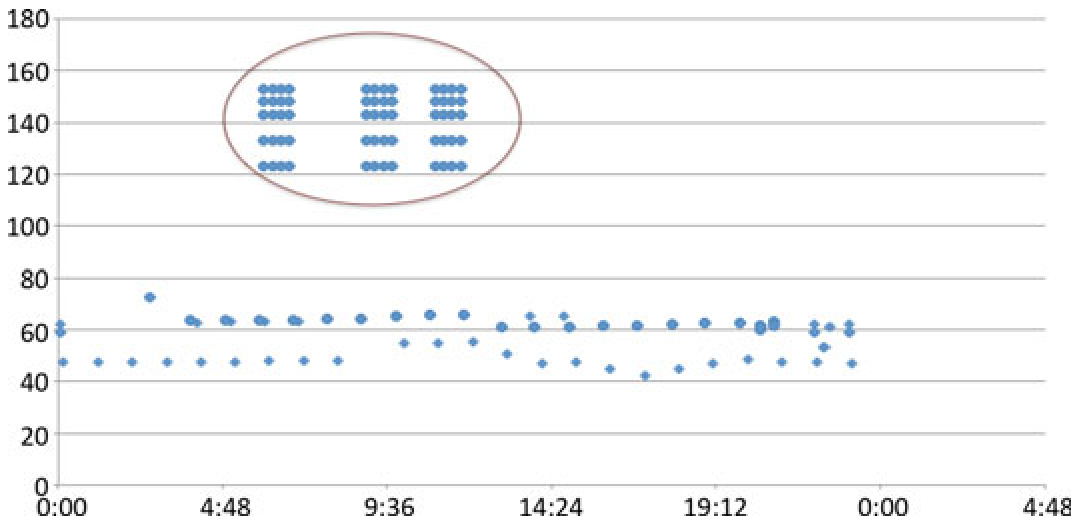
The study deployed 150 sensors in Punjab and Telangana, India. A critical finding was the identification of sensor hysteresis and environmental corruption (e.g., humidity readings exceeding 140% in coastal areas), which the supervised models had to account for to remain reliable.

- Proactive Mitigation: Farmers received alerts to water their cattle or improve airflow before milk production dropped.
- Network Effects: By storing "climate partials" in a global database, the system allows a farmer in one region to benefit from the "collective intelligence" of others facing similar thermal stresses.
Critical Insight & Conclusion
The true SOTA achievement here isn't just the 73% prediction accuracy—it's the extensibility of the model. By categorizing climate events into a parametric model (Equations 1-7 in the paper), the authors have created a framework where "Wind Chill Warnings" or "Heat Waves" can be superimposed onto raw sensor data to simulate future risks.
Limitations & Future Work
While the system shows great promise, the 65% accuracy for milk productivity suggests that biological variables (genetics, nutrition) are still complex to model with sensors alone. Future work should focus on integrating Air Quality Index (AQI) and more granular nutritional data into the parametric equations.
Final Takeaway: AI democratization isn't just a tech trend; it is a life-saving necessity. When data provides a "best defense," it empowers the world's most vulnerable populations to survive a changing planet.