
Decoding Digital Hostility: A Linguistic-Supervised Approach to Indonesian Cyberbullying
Supervised Learning Model for Combating Cyberbullying: Indonesian Capital City 2017 Governor Election Case
This paper presents a supervised learning framework tailored for detecting cyberbullying in Bahasa Indonesia, specifically within the political context of the 2017 Jakarta Gubernatorial Election. The authors developed a specialized corpus and a feature space design validated by linguists to overcome the challenges of informal language and local slang.
TL;DR
This research tackles the rising tide of online harassment in Indonesia by developing a specialized supervised learning model. Focusing on the high-intensity environment of the 2017 Jakarta Gubernatorial Election, the authors moved beyond simple "bad word" lists. By combining linguistic expertise with machine learning feature design—incorporating emojis, hashtags, and specific political phrases—they created a robust framework for identifying cyberbullying in informal Bahasa Indonesia.
The Challenge: Slang, Context, and Politics
Cyberbullying in Indonesia is a "moving target." Traditional detection methods struggle with the Indonesian internet landscape for two main reasons:
- Informal Dialects: Users rarely use formal Bahasa Indonesia; they use slang, local dialects, and intentional misspellings.
- Contextual Sarcasm: In a political heated environment, words that seem neutral in a dictionary (like "minister" or "seeds") can become vicious insults when paired with specific modifiers.
The authors recognized that to "combat" this, the model needed to understand the intent and combination of signals, rather than just scanning for a list of swear words.
Methodology: The Feature Space Design
The core innovation of this paper is the Feature Space. Instead of feeding raw text into a black-box model, the researchers worked with linguists to categorize linguistic "cues" into six distinct buckets:
- Words & Phrases: Specific insults like "pecatan" (dismissed) or "pecundang" (loser).
- Emojis & Punctuation: Excessive exclamation marks (!!!) or specific negative emojis.
- Hashtags & Cue Words: Political tags like #ahokpastitumbang and informal fillers like "ckckck" or "wkwkwk."
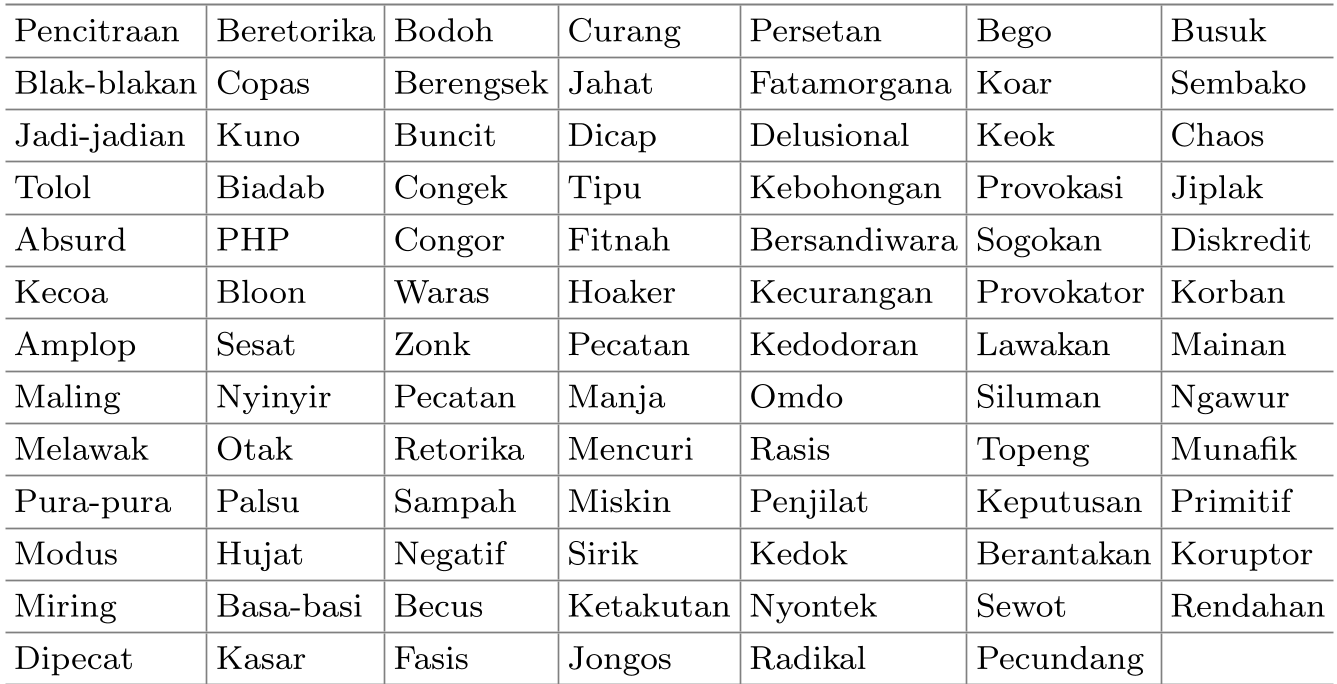 Table: Examples of the custom word feature space developed for the Indonesian context.
The "Rule of Combinations"
The methodology proposes that cyberbullying is often an additive phenomenon. Based on the linguists' analysis, five rules were established:
- Rule 1: If 2 or 3 different feature types (e.g., a word + an emoji + a cue word) appear together, it is likely bullying.
- Rule 2: If the same feature type appears multiple times (e.g., repeated insults), the probability of it being bullying increases.
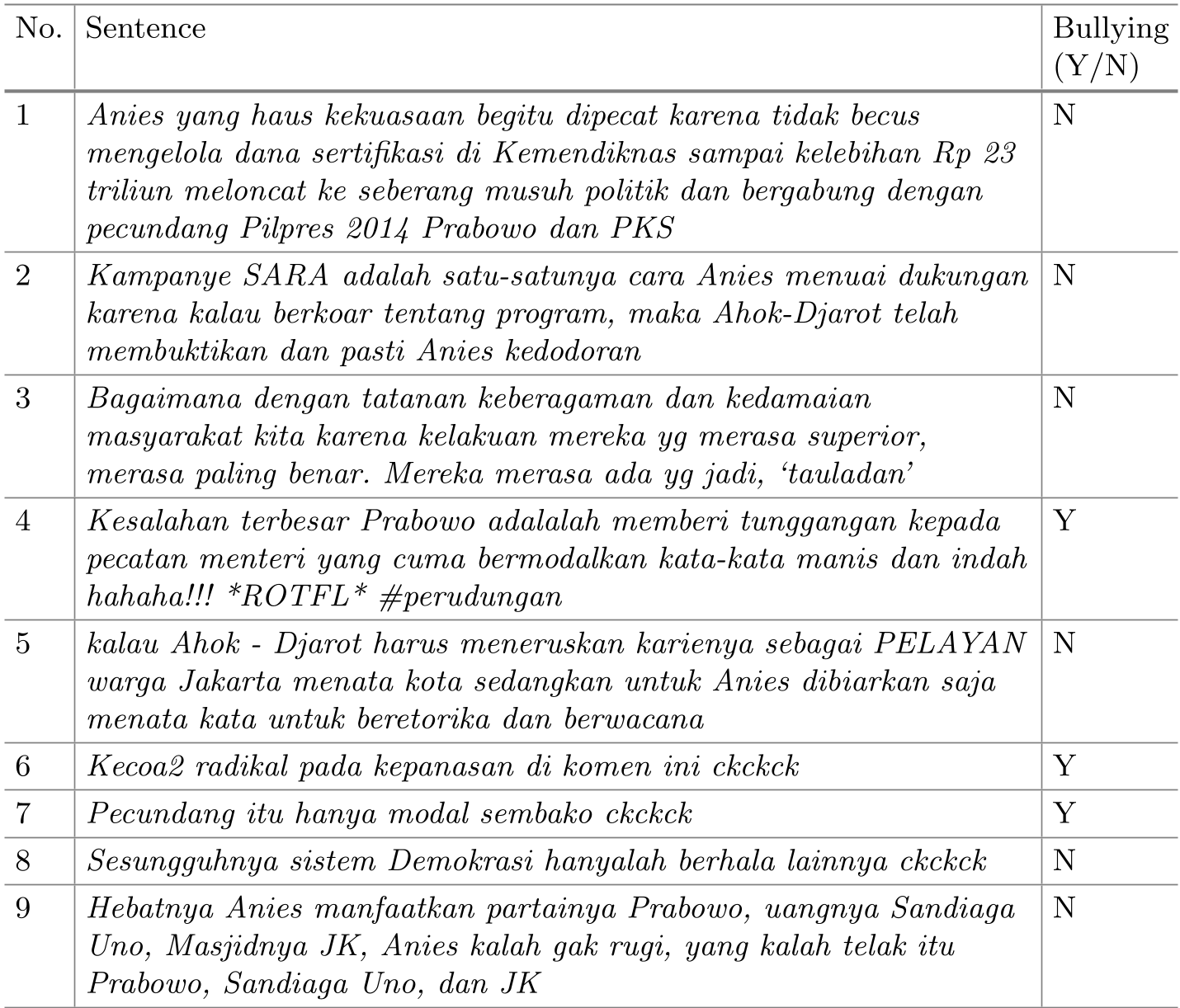 Table: How the linguist expert classified real-world sentences into Bullying (Y/N).
Experimental Insights
The research used a dataset of 5,000 cleaned tweets. A striking finding was that a sentence like "The ex-minister who only has lips service" was classified as bullying specifically because it combined a Word (pecatan), a Phrase (kata-kata manis), and a Cue Word (hahaha).
Conversely, a sentence expressing a political opinion without these cumulative markers was classified as "Not Bullying," even if the sentiment was negative. This distinction is crucial for maintaining free speech while curbing actual harassment.
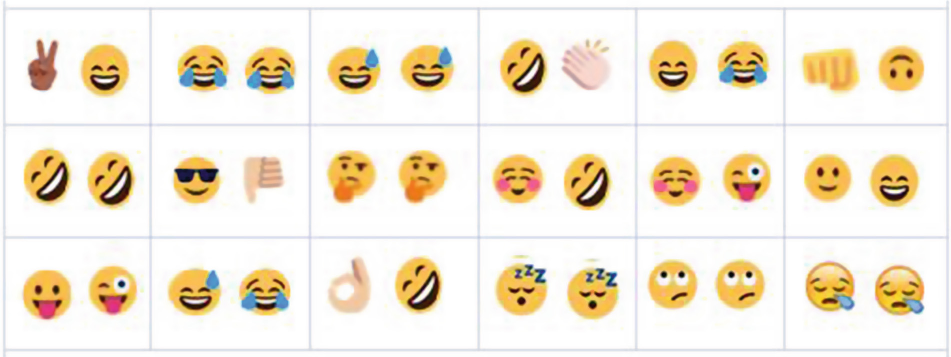 Figure: The specialized Emoji feature space used to identify emotional aggression.
Conclusion and Takeaways
The paper makes a compelling case for Linguistic-Informed AI. In regions with high linguistic diversity and informal social media cultures like Indonesia, generic global models fall short.
Key Takeaways:
- Multi-modal context is king: You cannot ignore emojis and hashtags in modern bullying detection.
- Expert validation: Involving linguists to define the feature space ensures the model doesn't just learn noise, but learns the actual structure of local "hate speech."
- Limitations: While effective for the 2017 election, these feature spaces must be updated constantly as slang and political climates evolve.
This work provides a foundational roadmap for building culturally aware safety tools in the Southeast Asian tech ecosystem.